
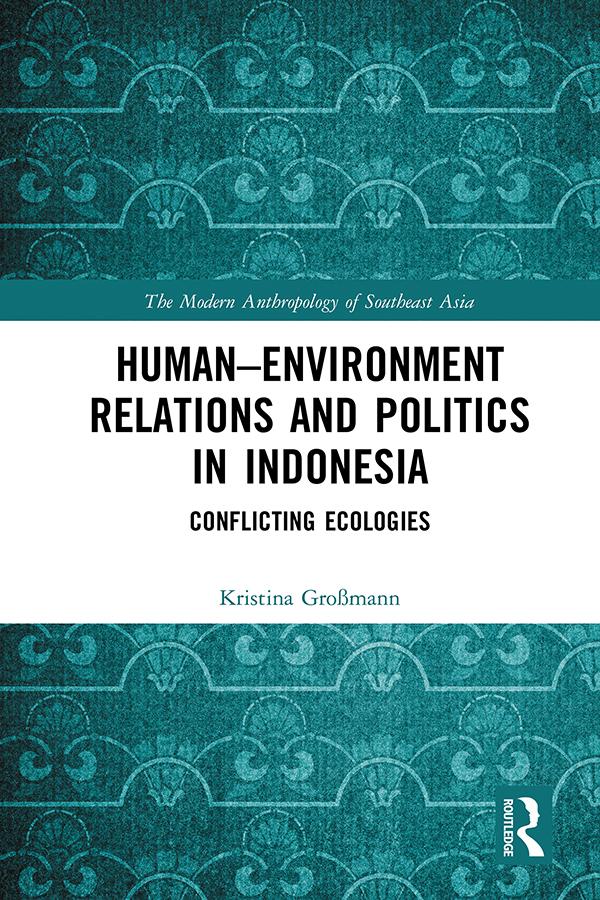
This book analyses how people in Kalimantan, the Indonesian part of the island of Borneo, relate to their environment in different political and historical contexts.
Drawing on multi-sited ethnographic studies of Dayak people, the indigenous inhabitants of Borneo, the book examines how human-environment relationships differ and collide. These "conflicting ecologies" are based on people's relation to the "environment", which encompasses the non-human realm in the widest sense, including forests, rivers, land, natural resources, animals and spirits. The author argues that relationality and power are decisive factors for the understanding and analysis of peoples’ ecologies. The book integrates different theoretical approaches, sheds light upon the environmental transformation taking place in Indonesia, as well as the social exclusion it entails, and highlights the conceptual shortcomings of universalistic concepts of human-environment relations.
An exploration of evolving human-nature relations, this book will be of interest to academics studying political ecology, environmental anthropology, sustainability sciences, political sciences, development studies, human geography, human ecology, Southeast Asian studies, and Asian studies.
Betala smidigt med kort, Klarna, Apple Pay eller Google Pay. Är du inte nöjd har du alltid 14 dagars ångerrätt. Läs mer i våra villkor. Har du några frågor, mejla oss på hello@memmo.org.
Memmo gör det enklare att plugga – var du än är i världen. Hos oss samlar du kursböcker och smarta studieverktyg på ett och samma ställe: sammanfattningar, quiz, poddar och flashcards. Och så Ted, din studiekompis som svarar på allt du undrar. Över 50 000 studenter pluggar redan här – byggt för att du ska lära dig snabbare och stressa mindre.