
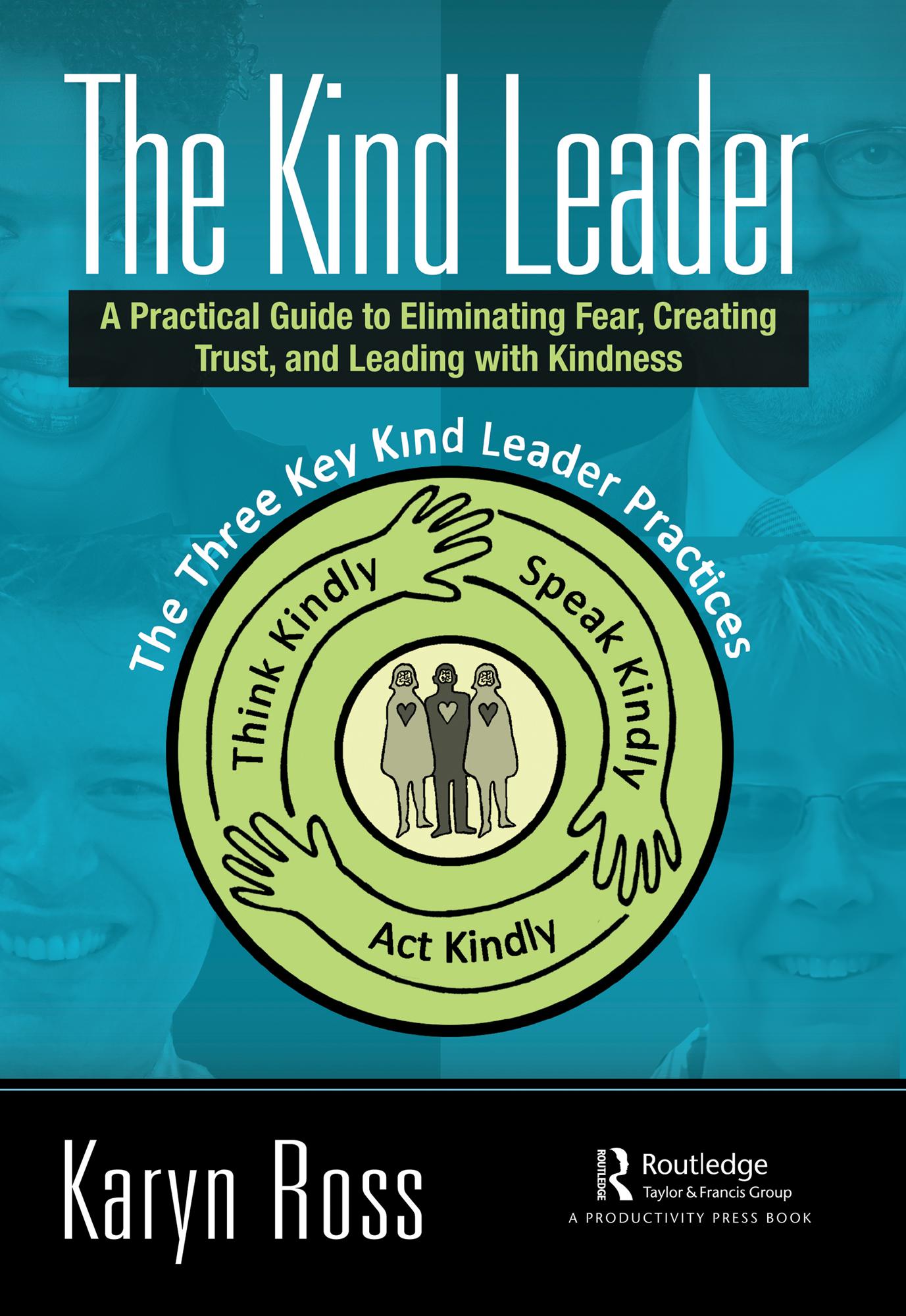
Kindness and leadership aren’t often synonymous. Ask someone to describe "good leadership" to you and you will hear many adjectives used: authentic, bold, challenging, charismatic, decisive, empowering, fearless, goal-oriented, humble, inspiring, original, passionate, role-model, strategic and transparent, to name of a few. And though there are many more that come to mind, kindness isn’t one of them. And here’s the problem with that.
Leaders lead. And the way a leader leads – how they do what they do – influences those they lead. From the president of the country, to the president of a company, from middle managers, right down to front-line supervisors, what a leader models – how they think, speak and act – influences the people they lead. Leaders who think, speak and act unkindly give legitimacy and permission to those they lead to think, speak, and act in exactly the same unkind ways. Today, in a world where a leaders’ words and actions travel quickly through social media channels such as Twitter, their influence – unkind or kind – is amplified through repeated views and sharing. In an increasingly fragmented, polarized and divided world, we need leaders who will bring people together not divide them. Leaders who value and model cooperation and collaboration over competition. And who model ways to think kindly, speak kindly and act kindly. We need kindness to become synonymous with good leadership. So that when someone is asked to describe the traits of a good leader, kindness will be the first word that comes to mind.
Essentially, the purpose of this book is to teach leaders how to lead with kindness so they can influence the people they lead to create kinder workplaces, organizations and the world. Each chapter contains a mixture of theory, case studies and reflections from leaders and the people they influence. As well, the book follows the fictional stories of Kay’La Janson and Kevin Landrell, as they become leaders in a failing organization that is ultimately turned around through kind leadership. Between chapters there are a series of practical exercises based on concepts presented in the previous chapter with space to record outcomes and reflections on the practice process.
This book gives you a deep theoretical understanding of the importance of leading with kindness and also provides practical exercises for you to use to turn theory into practice. Because "change means doing things differently," and because we only really "learn by doing" to create kinder organizations, kinder communities and a kinder world, leaders must be able to begin practicing kindness right away. By the time you finish the book, you will feel confident in your ability to lead with kindness and also to address organizational problems at work, at home and in the community, with kindness.
Betala smidigt med kort, Klarna, Apple Pay eller Google Pay. Är du inte nöjd har du alltid 14 dagars ångerrätt. Läs mer i våra villkor. Har du några frågor, mejla oss på hello@memmo.org.
Memmo gör det enklare att plugga – var du än är i världen. Hos oss samlar du kursböcker och smarta studieverktyg på ett och samma ställe: sammanfattningar, quiz, poddar och flashcards. Och så Ted, din studiekompis som svarar på allt du undrar. Över 50 000 studenter pluggar redan här – byggt för att du ska lära dig snabbare och stressa mindre.