
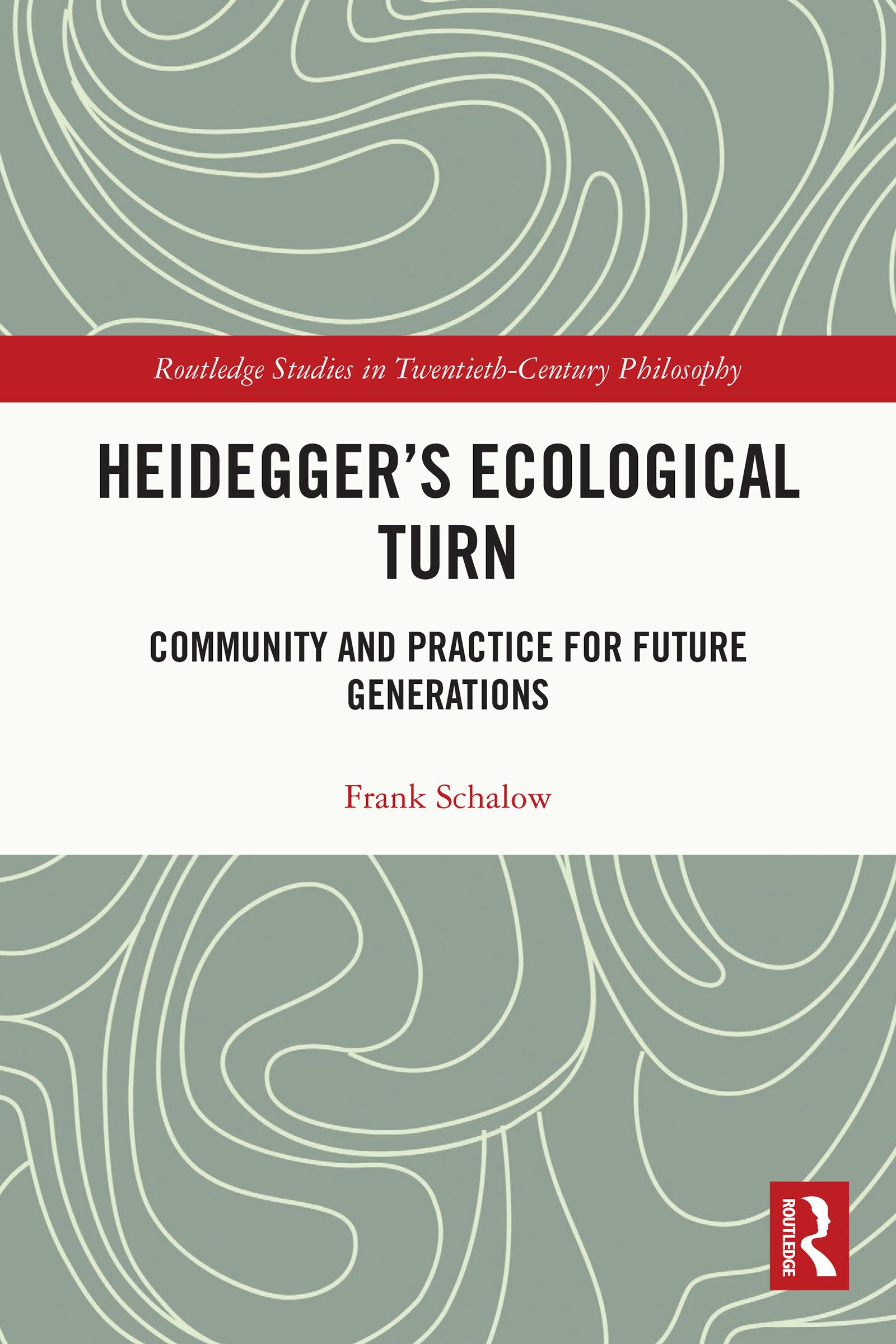
This book makes explicit the ecological implications of Martin Heidegger. It examines how the trajectory of Heidegger’s thinking harbors an "ecological turn," which comes to the forefront in his attempt to anticipate the impending crisis precipitated by modern technology.
Schalow’s emphasis on such key motifs as stewardship, dwelling, and "letting be" (Gelassenheit) serves to coalesce the problem of freedom in a new and innovative way, in order to expand the interpretive or hermeneutic horizon for re-examining Heidegger’s philosophy. By prioritizing a response to today’s environmental crisis and the possible impact upon future generations, the author traverses a divide within Heidegger scholarship by developing a deeper, critical outlook on his philosophy—without either reiterating standard interpretations or rejecting them wholesale. He develops a trans-human approach to ethics, which, by prioritizing the welfare of the earth, nature, and animals, counters the anthropocentric bias and destructive premise of modern technology.
Heidegger’s Ecological Turn will be of interest to Heidegger scholars and researchers working in phenomenology, hermeneutics, continental philosophy, and environmental philosophy.
Betala smidigt med kort, Klarna, Apple Pay eller Google Pay. Är du inte nöjd har du alltid 14 dagars ångerrätt. Läs mer i våra villkor. Har du några frågor, mejla oss på hello@memmo.org.
Memmo gör det enklare att plugga – var du än är i världen. Hos oss samlar du kursböcker och smarta studieverktyg på ett och samma ställe: sammanfattningar, quiz, poddar och flashcards. Och så Ted, din studiekompis som svarar på allt du undrar. Över 50 000 studenter pluggar redan här – byggt för att du ska lära dig snabbare och stressa mindre.