
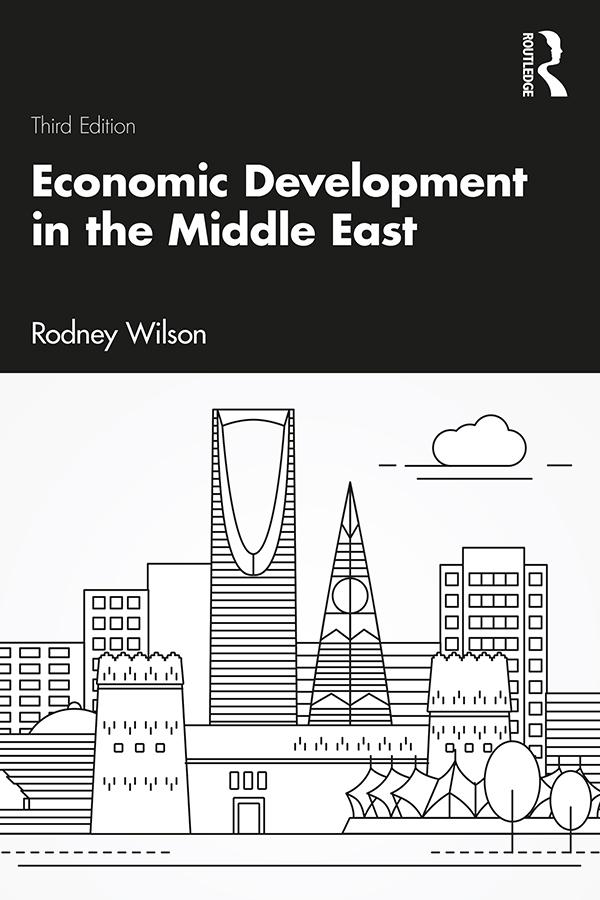
This new edition examines how development in the Middle East is being influenced by global economic change. This comparative textbook focuses on the region’s strengths, and highlights development success, especially in the Gulf, Turkey and Israel. The major structural changes in the economies of the Middle East are analysed and current employment challenges are discussed.
The impact of demographic changes is considered, notably the dramatic decline in birth rates which will have implications for future employment. The contribution of banks and capital markets to the region’s development is appraised, including that of Islamic financial institutions which play a prominent role in the Gulf Cooperation Council (GCC) countries but are on the margins of the financial systems elsewhere. Historically, development in the GCC was linked to oil and gas production and prices, a key issue being whether these are being decoupled as economies diversify and become more self-sustaining. The evidence on this from the GCC is encouraging, with transparent and accountable financial management and major improvements in economic governance despite the lack of democracy.
Examining the drivers of economic development in the Middle East in a regional and global context, this fully updated textbook is a key resource for students and academics interested in economic development and the political economy of the Middle East.
Betala smidigt med kort, Klarna, Apple Pay eller Google Pay. Är du inte nöjd har du alltid 14 dagars ångerrätt. Läs mer i våra villkor. Har du några frågor, mejla oss på hello@memmo.org.
Memmo gör det enklare att plugga – var du än är i världen. Hos oss samlar du kursböcker och smarta studieverktyg på ett och samma ställe: sammanfattningar, quiz, poddar och flashcards. Och så Ted, din studiekompis som svarar på allt du undrar. Över 50 000 studenter pluggar redan här – byggt för att du ska lära dig snabbare och stressa mindre.