
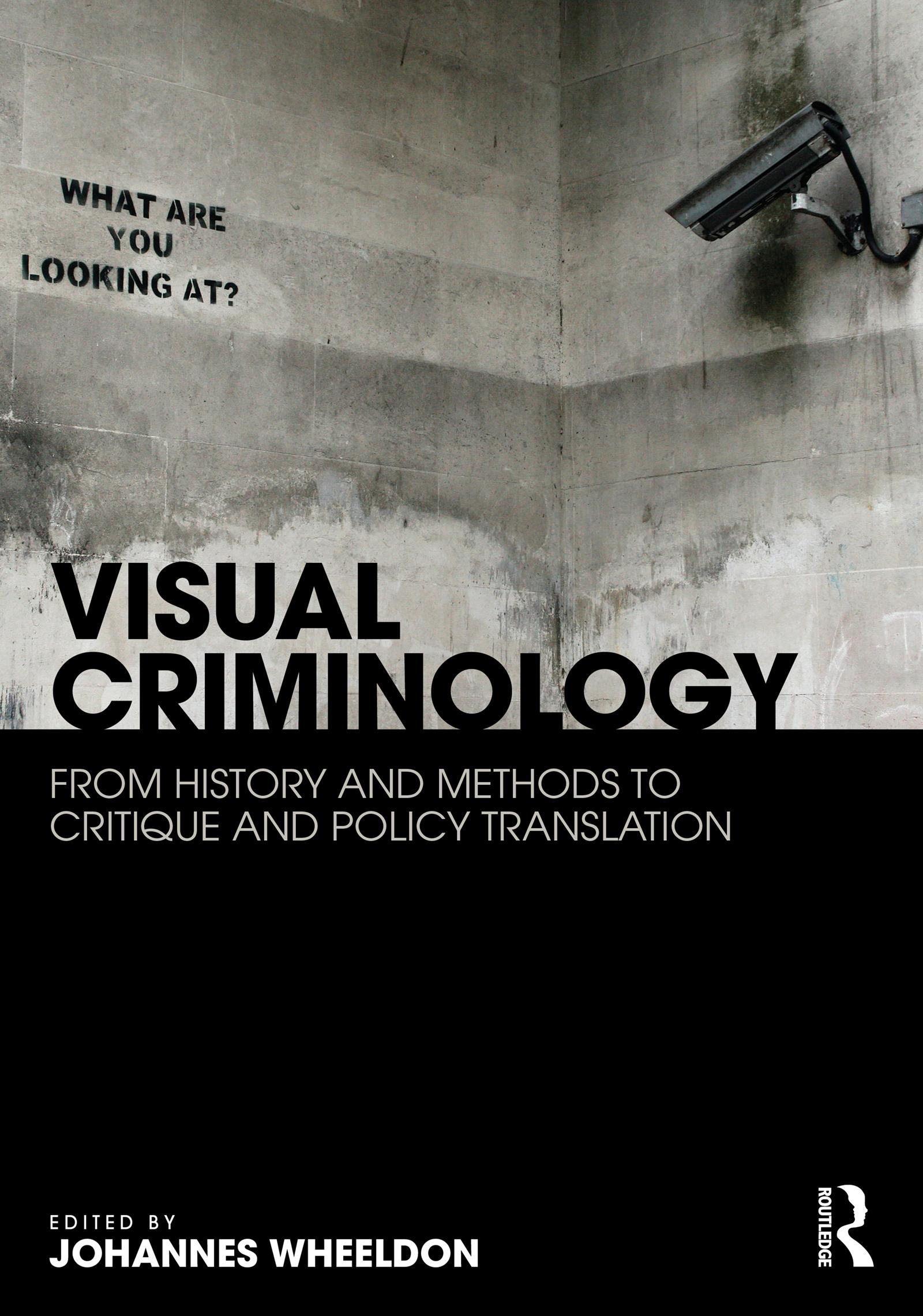
This edited collection captures the expertise of scholars from the US, the UK, Australia, and Canada to catalog the rise in visual approaches in criminology. It presents examples of visual methods, uses, and approaches in criminology; assesses the potential for new graphic approaches to collect, analyze, and present data; and provides some analysis of the use of images in teaching, to spur social critique, and guide policy translation.
The collection visually connects theory and practice by highlighting the work of criminologists who have embraced the visual turn. Contributors explore the use of cognitive maps, concept and mind maps, life history calendars, CCTV, life plots, GIS and hot spot research, policy graphs, visual abstracts and research summaries,and other visual tools in the context of criminology. Approaches building on visual sociology are also featured, including a discussion of developments in documentary photography and film, visual ethnography, and sensory phenomenology. The book is organized thematically, with each chapter following logically upon the last, introducing readers to a variety of visual approaches and their application in criminology.
The goals of this collected volume are three-fold. The first is to highlight how the visual has been used in criminology historically to present data, contest meaning and complicate social control, and make more transparent the research process. The second is to work toward some sort of definitional consistency. While a worthy endeavor, this remains elusive given the assortment of uses and varying traditions from which visual criminology has emerged. The third is to try to think clearly about the role of humility. This means a willingness to acknowledge an epistemological framework and note the variety of limitations associated with trying to understand in deep and meaningful ways. For visual criminology specifically, it involves the recognition that part of the power of images (whatever their construction), comes from whether we think they are beautiful or whether and/or to what extent they disrupt our understanding in one way or another.
This interdisciplinary book will be of interest to criminologists, sociologists, visual ethnographers, historians and those engaged with media studies. It is a valuable supplementary text for courses in introductory criminology and criminal justice, criminological theory, research methods, and other upper-level and senior capstone courses.
Betala smidigt med kort, Klarna, Apple Pay eller Google Pay. Är du inte nöjd har du alltid 14 dagars ångerrätt. Läs mer i våra villkor. Har du några frågor, mejla oss på hello@memmo.org.
Memmo gör det enklare att plugga – var du än är i världen. Hos oss samlar du kursböcker och smarta studieverktyg på ett och samma ställe: sammanfattningar, quiz, poddar och flashcards. Och så Ted, din studiekompis som svarar på allt du undrar. Över 50 000 studenter pluggar redan här – byggt för att du ska lära dig snabbare och stressa mindre.