
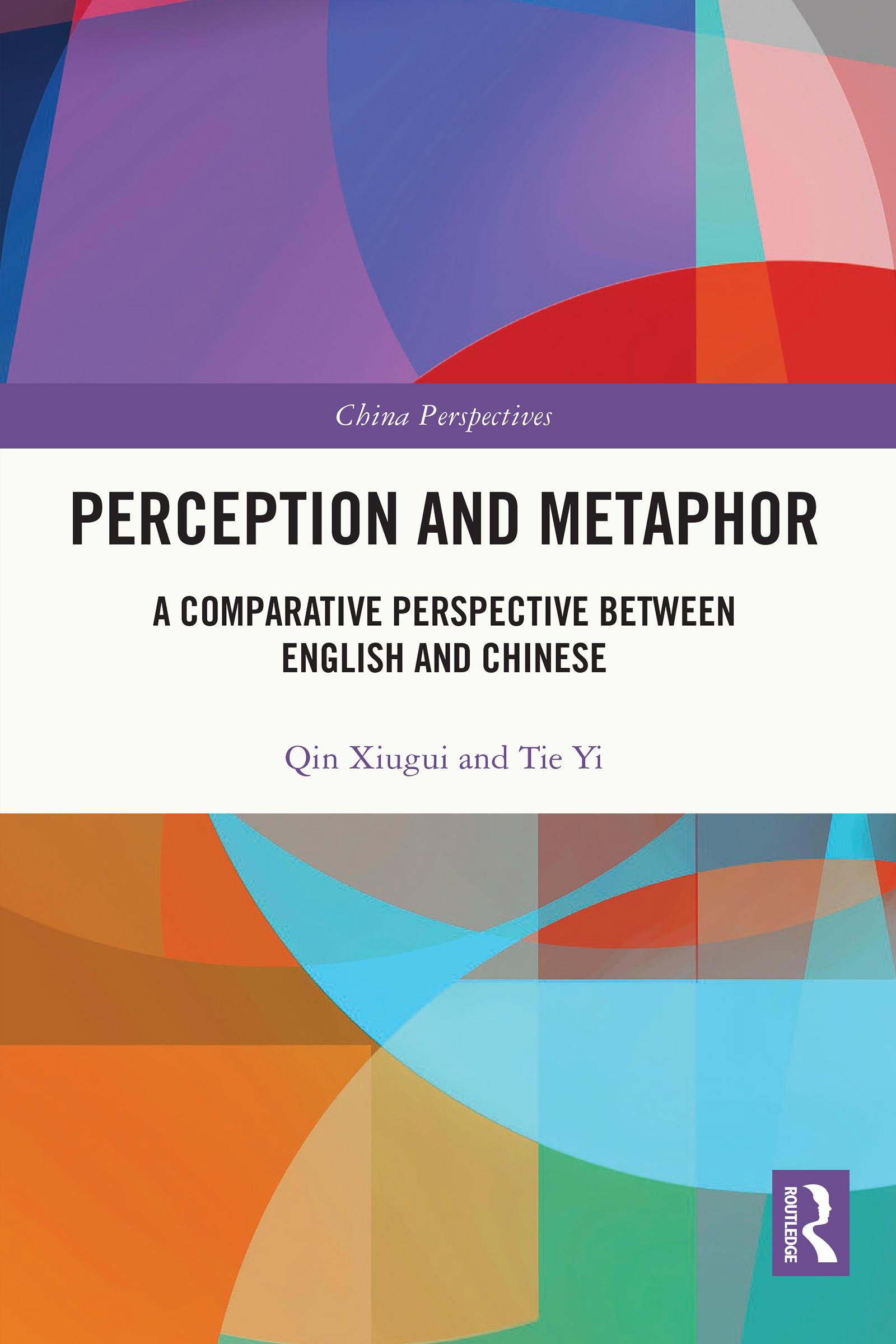
Cognitive linguists believe that metaphors are prevalent in human thought, while metaphorical structures are reflected at the linguistic level. Therefore, analysing extensive language data can aid in revealing the metaphorical mappings of embodied experience with the senses of vision, hearing, smell, taste, touch, and temperature.
This volume seeks to discover the similarities and differences between the metaphorical systems of the English and Chinese languages. Adopting a comparative view, the authors examine the semantic extensions of perception words in English and Chinese, in order to reveal the metaphorical scope of each sense and the metaphorical system behind it. They argue that the metaphorical systems of the senses not only help us understand and use conventionalised metaphorical expressions but also allow us to create novel expressions. The findings also unveil how abstract concepts are constructed via cognitive mechanisms, such as image schema and metaphor.
This title is a useful reference for scholars and students who are interested in cognitive linguistics, comparative linguistics, and the philosophy of language.
Betala smidigt med kort, Klarna, Apple Pay eller Google Pay. Är du inte nöjd har du alltid 14 dagars ångerrätt. Läs mer i våra villkor. Har du några frågor, mejla oss på hello@memmo.org.
Memmo gör det enklare att plugga – var du än är i världen. Hos oss samlar du kursböcker och smarta studieverktyg på ett och samma ställe: sammanfattningar, quiz, poddar och flashcards. Och så Ted, din studiekompis som svarar på allt du undrar. Över 75 000 studenter pluggar redan här – byggt för att du ska lära dig snabbare och stressa mindre.