
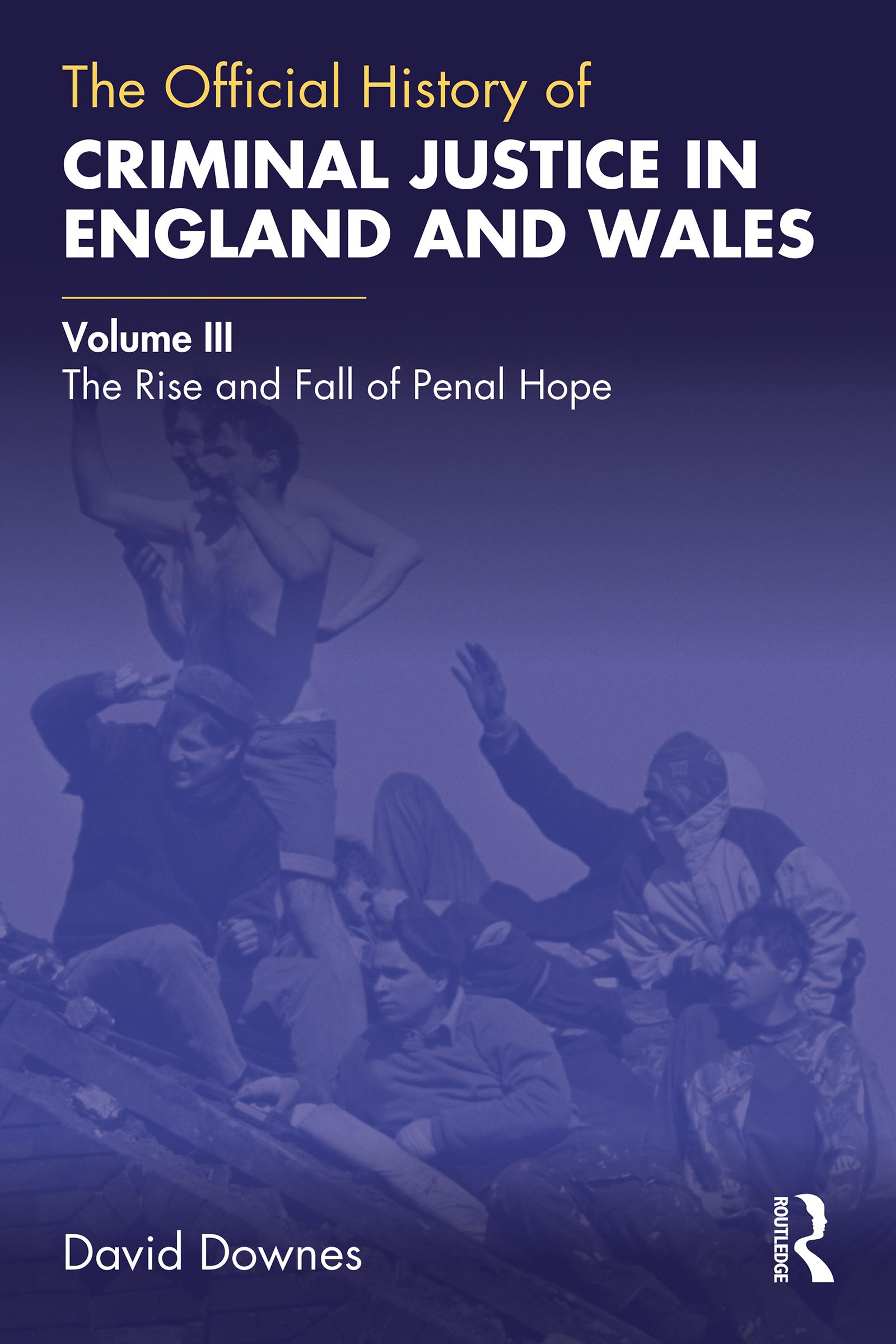
Volume III of The Official History of Criminal Justice in England and Wales draws on archival sources and individual accounts to offer a history of penal policymaking in England and Wales between 1959 and 1997.
The book studies the changes underlying penal policymaking in the period, from a belief in the rehabilitative potential of imprisonment to a reaffirmation in 1993 that ‘Prison Works’ as a deterrent to crime. A need to curb the rising prison population initially focussed on developing alternatives to prison and a new system of parole; however, their relative ineffectiveness led to sentencing becoming the key to penal reform. A slackening of faith in rehabilitation led to pressure for greater emphasis on humane containment and the rebalancing of security, order and justice in prison regimes. Thus, 1991 was the climactic year for what became largely unfulfilled hopes for lasting penal reform. Escapes, riots and prison occupations were prime catalysts for changes, often highly contentious, in penal policymaking. Notably, there was no simple equation between political party, minister and policy choice. Both Labour and Conservative governments had distinctly liberal Home Secretaries and, after 1992, both parties took a more punitive approach.
This book will be of much interest to students of criminology and British history, politics and law.
Betala smidigt med kort, Klarna, Apple Pay eller Google Pay. Är du inte nöjd har du alltid 14 dagars ångerrätt. Läs mer i våra villkor. Har du några frågor, mejla oss på hello@memmo.org.
Memmo gör det enklare att plugga – var du än är i världen. Hos oss samlar du kursböcker och smarta studieverktyg på ett och samma ställe: sammanfattningar, quiz, poddar och flashcards. Och så Ted, din studiekompis som svarar på allt du undrar. Över 50 000 studenter pluggar redan här – byggt för att du ska lära dig snabbare och stressa mindre.