
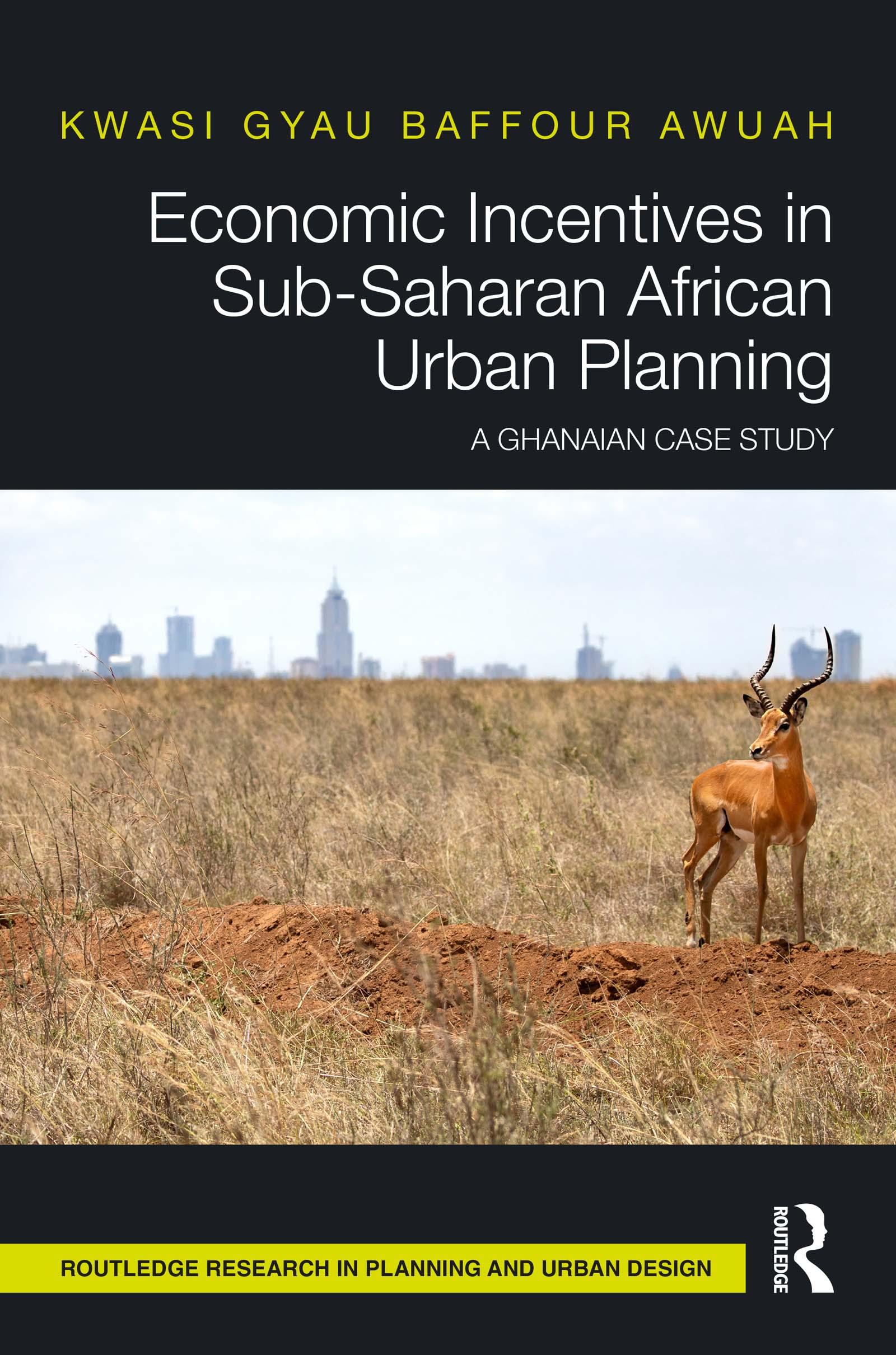
This book explores incentives capable of enhancing the effectiveness of urban planning systems in Sub-Saharan Africa using economic theory as a framework. It argues that urban planning is fundamental to the achievement of sustainable and resilient cities, but against the backdrop of rising levels of urbanisation and growth, poverty, informal development, and climate change, such systems are failing to be promoted and successfully maintained in the region.
Across ten chapters, it analyses the connection between urban planning and socio-economic development, indicators of effective urban planning systems, and the role and influence of incentives with real-world evidence. It develops quantitative models to estimate the costs and benefits of urban planning systems, focussing on the developing world where organised data is less accessible. Using Ghana as a case study, it demonstrates a step-by-step approach on how to implement the quantitative models discussed.
Economic Incentives in Sub-Saharan African Urban Planning will be useful reading for researchers, policy-makers, development agencies, and students in urban planning, sustainable development, and economics.
Betala smidigt med kort, Klarna, Apple Pay eller Google Pay. Är du inte nöjd har du alltid 14 dagars ångerrätt. Läs mer i våra villkor. Har du några frågor, mejla oss på hello@memmo.org.
Memmo gör det enklare att plugga – var du än är i världen. Hos oss samlar du kursböcker och smarta studieverktyg på ett och samma ställe: sammanfattningar, quiz, poddar och flashcards. Och så Ted, din studiekompis som svarar på allt du undrar. Över 75 000 studenter pluggar redan här – byggt för att du ska lära dig snabbare och stressa mindre.