
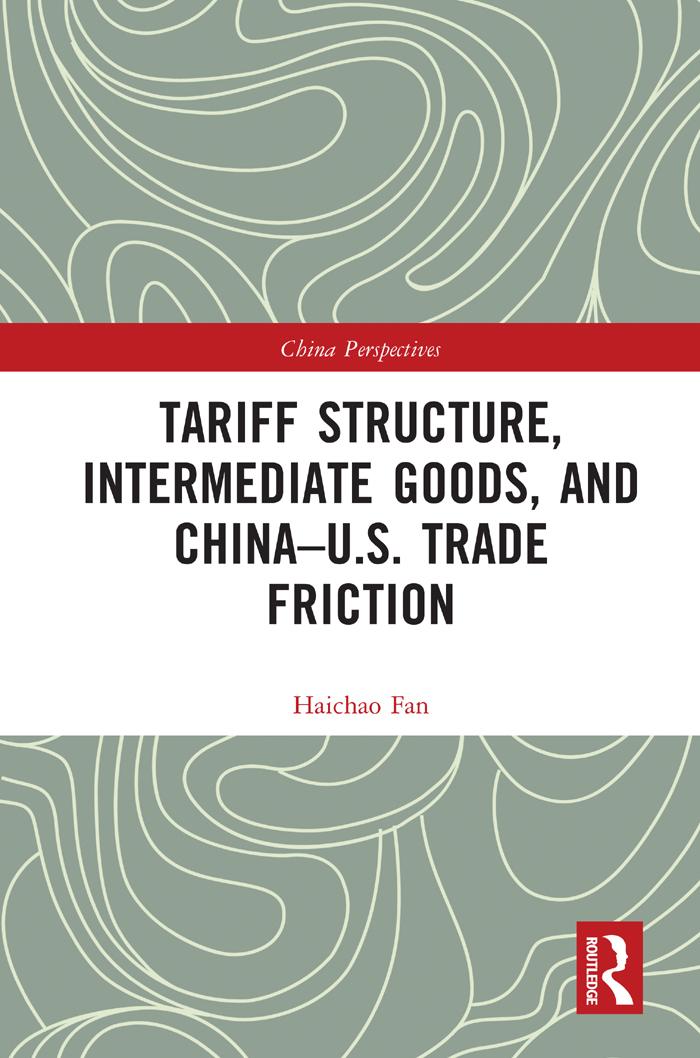
Focusing on the interconnection of tariff structure, international trade and welfare evaluation, the book investigates the characteristics of tariff structures of China and the U.S. in recent years and measures the impact of the Sino–U.S. trade friction that started in 2018. The first part of the book discusses levels and evolution trends of tariff systems of China and the U.S. from 2000 to 2014 and makes a comparison between the two countries' tariff structures. The second part centers on the Sino–U.S. trade friction in 2018, analyzing its development, overall impact on welfare, and relevant impact mechanisms. The author draws on the quantitative analysis method currently prevailing in the field of international trade, taking global value chains, intermediate goods, and variable markup into consideration. In contrast to the research conclusion applying standard trade theory, the result indicates that either unilateral imposition of additional tariffs or bilateral tariff friction will give rise to the deteriorated welfare level of both countries. The book will appeal to academics and policy makers interested in international trade, China–U.S. relation and the trade friction.
Betala smidigt med kort, Klarna, Apple Pay eller Google Pay. Är du inte nöjd har du alltid 14 dagars ångerrätt. Läs mer i våra villkor. Har du några frågor, mejla oss på hello@memmo.org.
Memmo gör det enklare att plugga – var du än är i världen. Hos oss samlar du kursböcker och smarta studieverktyg på ett och samma ställe: sammanfattningar, quiz, poddar och flashcards. Och så Ted, din studiekompis som svarar på allt du undrar. Över 50 000 studenter pluggar redan här – byggt för att du ska lära dig snabbare och stressa mindre.