
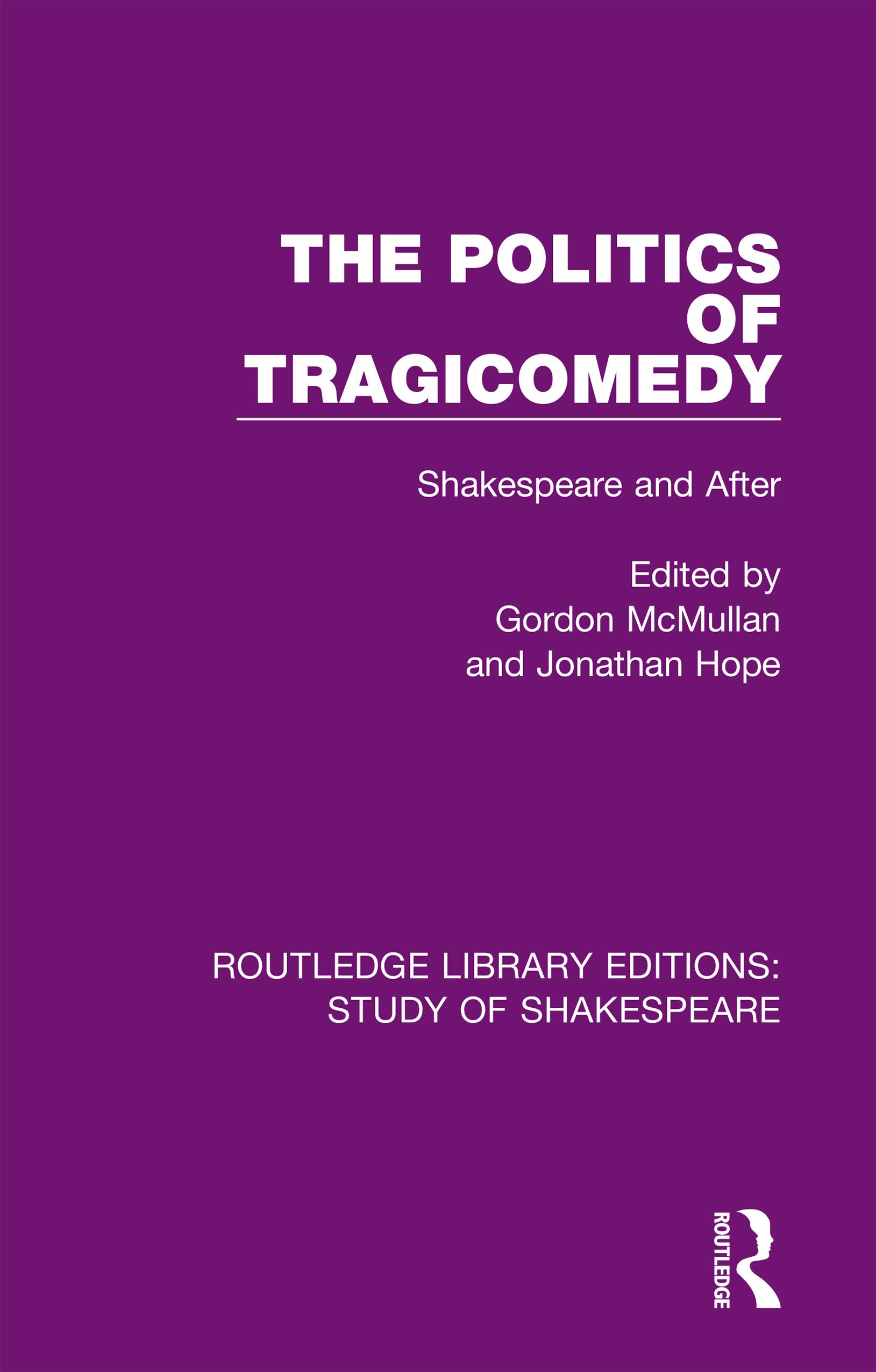
The Politics of Tragicomedy: Shakespeare and After offers a series of sophisticated and powerful readings of tragicomedy from Shakespeare’s late plays to the drama of the Interregnum. Rejecting both the customary chronological span bounded by the years 1603-42 (which presumes dramatic activity stopped with the closing of the theatres) and the negative critical attitudes that have dogged the study of tragicomedy, the essays in this collection examine a series of issues central to the possibility of a politics for the genre.
Individual essays offer important contributions to continuing debates over the role of the drama in the years preceding the Civil War, the colonial contexts of The Tempest, the political character of Jonson’s late plays, and the agency of women as public and theatre actors. The introduction presents a strong challenge to previous definitions of tragicomedy in the English context, and the collection as a whole is characterized by its rejection of absolutist strategies for reading tragicomedy.
This collection will prove essential reading for all with an interest in the politics of Renaissance drama; for specialists in the work of Shakespeare, Fletcher, and Jonson; for those interested in genre and dramatic forms; and for historians of early Stuart England.
Betala smidigt med kort, Klarna, Apple Pay eller Google Pay. Är du inte nöjd har du alltid 14 dagars ångerrätt. Läs mer i våra villkor. Har du några frågor, mejla oss på hello@memmo.org.
Memmo gör det enklare att plugga – var du än är i världen. Hos oss samlar du kursböcker och smarta studieverktyg på ett och samma ställe: sammanfattningar, quiz, poddar och flashcards. Och så Ted, din studiekompis som svarar på allt du undrar. Över 50 000 studenter pluggar redan här – byggt för att du ska lära dig snabbare och stressa mindre.