
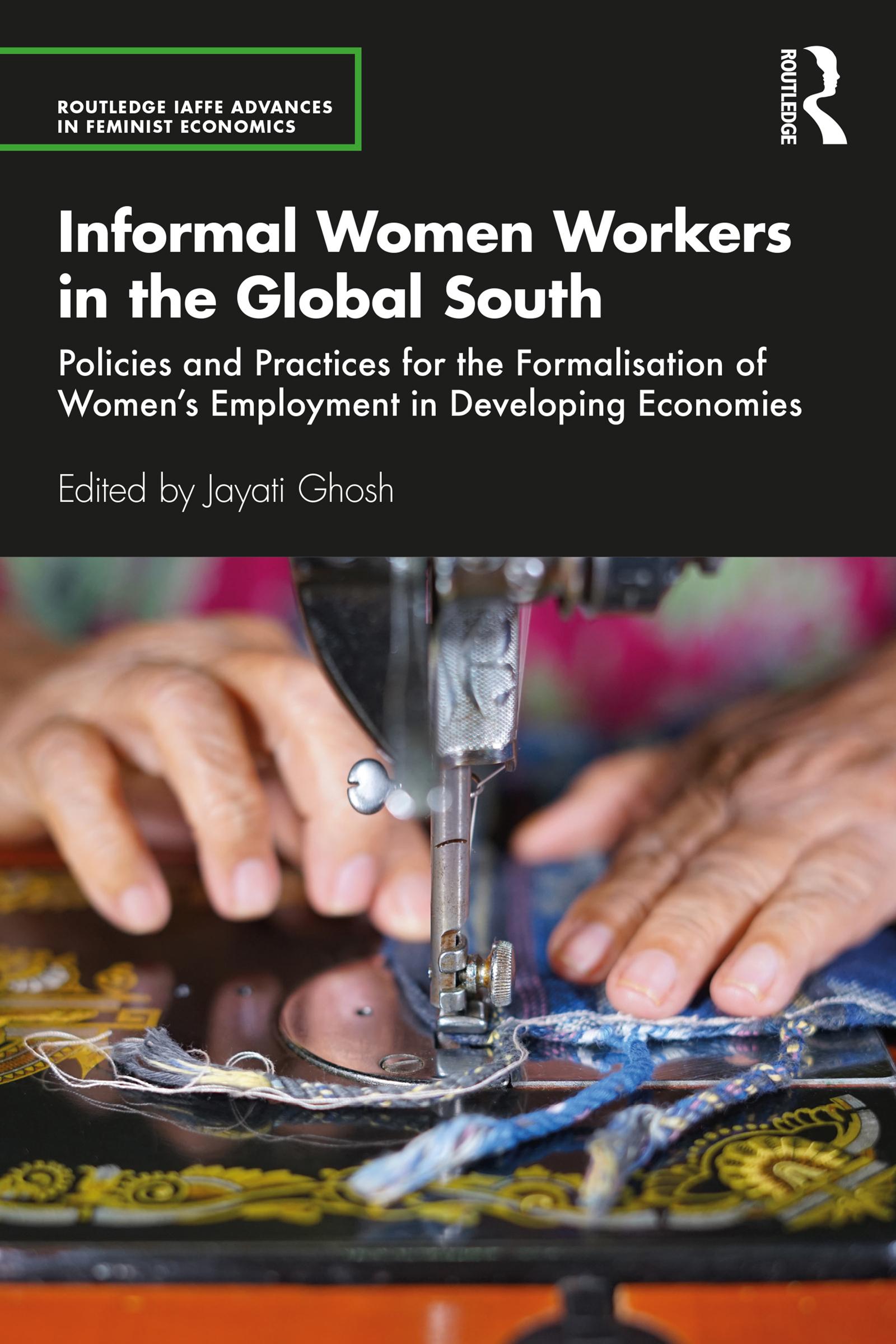
Formalising employment is a desirable policy goal, but how it is done matters greatly, especially for women workers. Indeed, formalisation policies that do not recognise gendered realities and prevailing socio-economic conditions may be less effective and even counterproductive.
This book examines the varying trajectories of formalisation and their impact on women workers in five developing countries in Asia and Africa: India, Thailand, South Africa, Ghana and Morocco. They range from low- to middle-income countries, which are integrated into global financial and goods markets to differing degrees and have varying labour market and macroeconomic conditions.
The case studies, using macro and survey data as well as in-depth analysis of particular sectors, provide interesting and sometimes surprising insights. Despite some limited successes in providing social protection benefits to some informal workers, most formalisation policies have not really improved the working conditions of women workers. In many cases, that is because the policies are gender-blind and insensitive to the specific needs of women workers.
The impact of formalisation policies on women in developing countries is relatively under-researched. This book provides new evidence that will be applicable across a wide range of developing country contexts and will be of interest to policymakers, feminist economists and students of economics, labour, gender and development studies, public policy, politics and sociology.
Betala smidigt med kort, Klarna, Apple Pay eller Google Pay. Är du inte nöjd har du alltid 14 dagars ångerrätt. Läs mer i våra villkor. Har du några frågor, mejla oss på hello@memmo.org.
Memmo gör det enklare att plugga – var du än är i världen. Hos oss samlar du kursböcker och smarta studieverktyg på ett och samma ställe: sammanfattningar, quiz, poddar och flashcards. Och så Ted, din studiekompis som svarar på allt du undrar. Över 50 000 studenter pluggar redan här – byggt för att du ska lära dig snabbare och stressa mindre.