
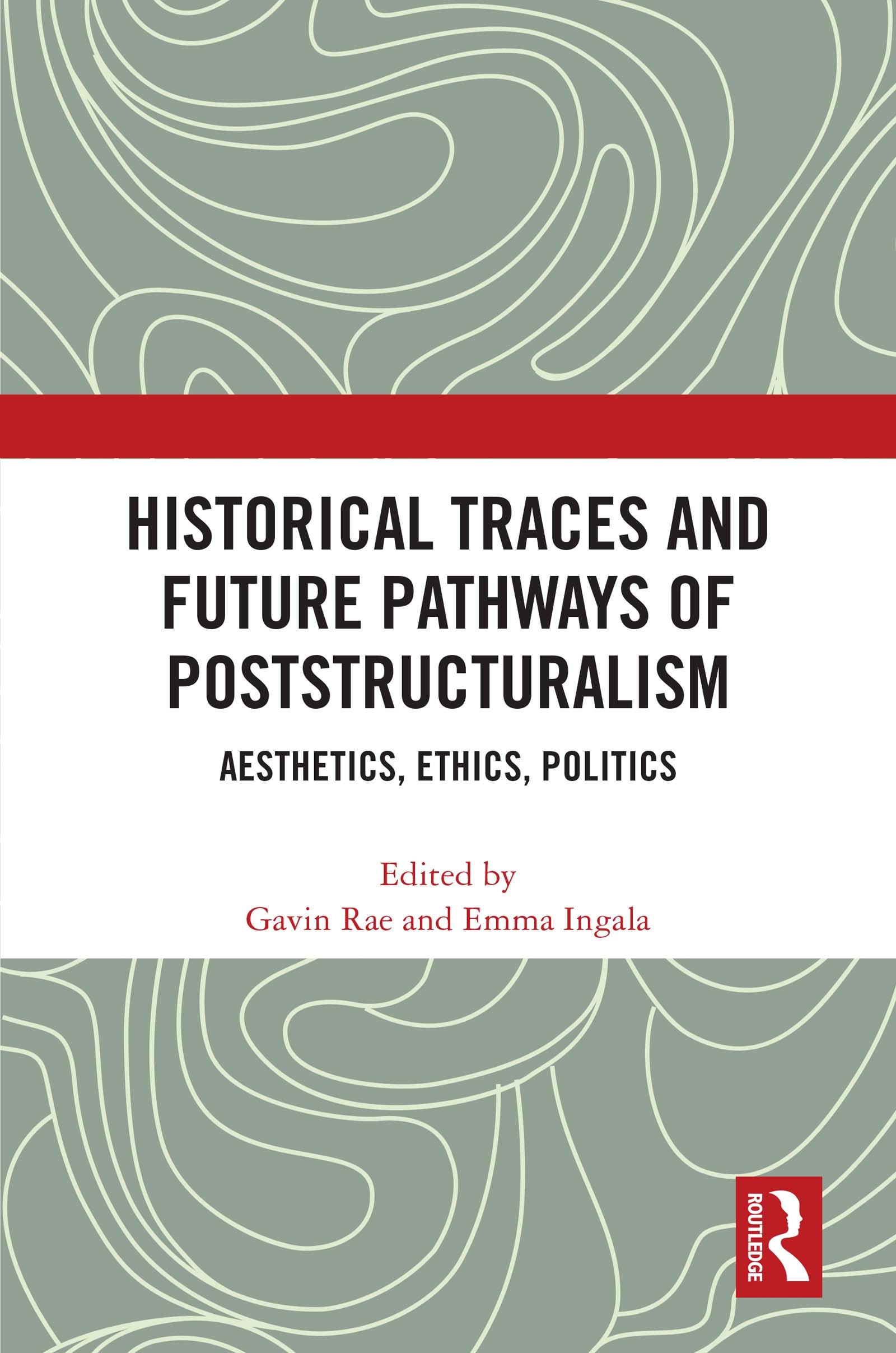
This volume brings together an international array of scholars to reconsider the meaning and place of poststructuralism historically and demonstrate some of the ways in which it continues to be relevant, especially for debates in aesthetics, ethics, and politics.
The book’s chapters focus on the works of Butler, Deleuze, Derrida, Foucault, Irigaray, Kristeva, Lacan, and Lyotard—in combination with those of Agamben, Luhman, Nancy, and Nietzsche—and examine issues including biopolitics, culture, embodiment, epistemology, history, music, temporality, political resistance, psychoanalysis, revolt, and the visual arts. The contributors use poststructuralism as a hermeneutical strategy that rejects the traditional affirmation of unity, totality, transparency, and representation to instead focus on the foundational importance of open-ended becoming, difference, the unknowable, and expression. This approach allows for a more expansive definition of poststructuralism and helps demonstrate how it has contributed to debates across philosophy and other disciplines.
Historical Traces and Future Pathways of Poststructuralism will be of particular interest to researchers in philosophy, politics, political theory, critical theory, aesthetics, feminist theory, cultural studies, intellectual history, psychoanalysis, and sociology.
Betala smidigt med kort, Klarna, Apple Pay eller Google Pay. Är du inte nöjd har du alltid 14 dagars ångerrätt. Läs mer i våra villkor. Har du några frågor, mejla oss på hello@memmo.org.
Memmo gör det enklare att plugga – var du än är i världen. Hos oss samlar du kursböcker och smarta studieverktyg på ett och samma ställe: sammanfattningar, quiz, poddar och flashcards. Och så Ted, din studiekompis som svarar på allt du undrar. Över 50 000 studenter pluggar redan här – byggt för att du ska lära dig snabbare och stressa mindre.