
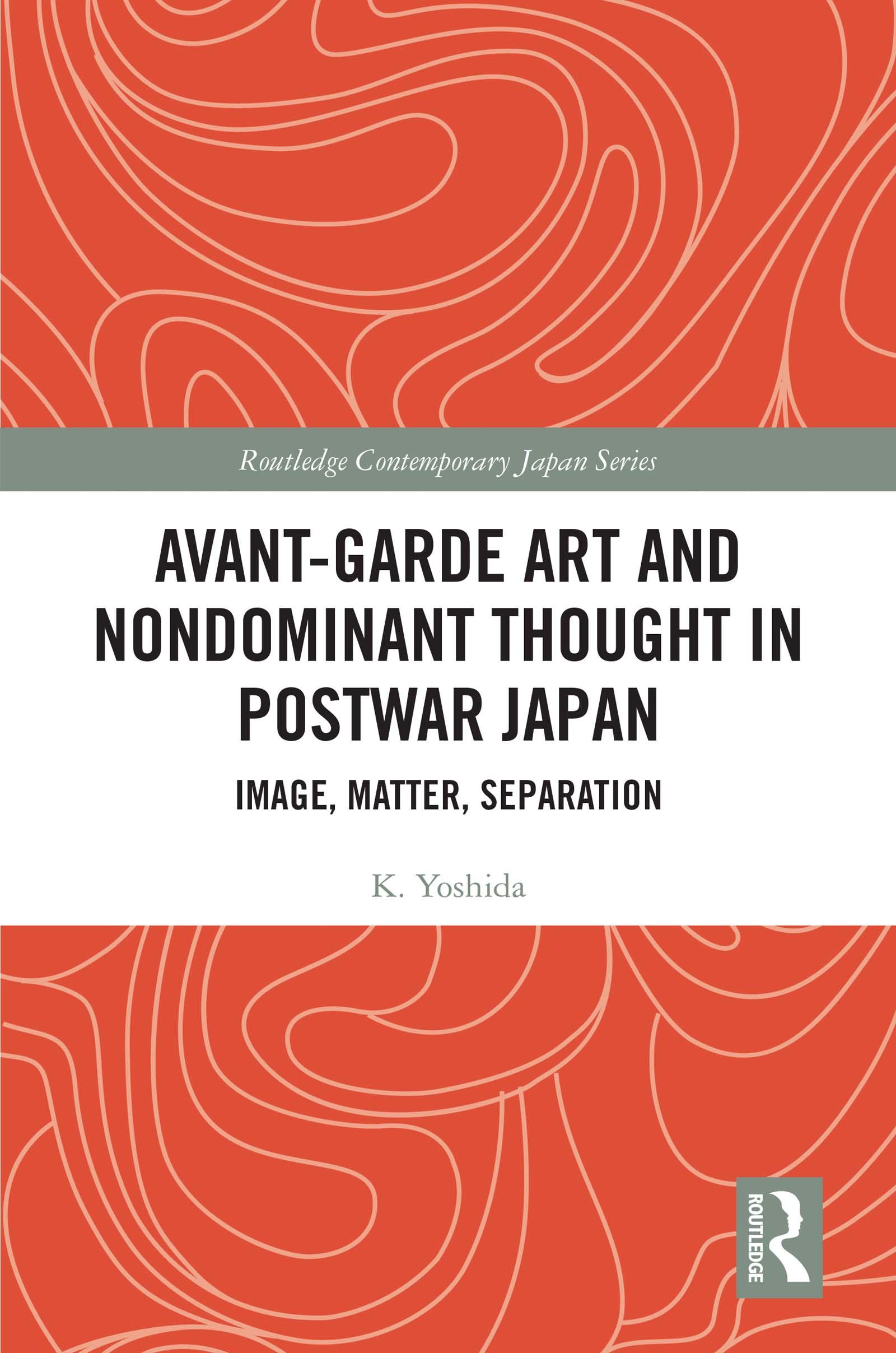
This book offers a reassessment of how "matter" – in the context of art history, criticism, and architecture – pursued a radical definition of "multiplicity", against the dominant and hierarchical tendencies underwriting post-fascist Japan.
Through theoretical analysis of works by artists and critics such as Okamoto Taro, Hanada Kiyoteru, Kawara On, Isozaki Arata, Kawaguchi Tatsuo, and Nakahira Takuma, this highly illustrated text identifies formal oppositions frequently evoked in the Japanese avant-garde, between cognition and image, self and other, human and thing, and one and many, in mediums ranging from painting and photography, to sculpture and architecture. In addition to an "aesthetics of separation" which refuses the integrationist implications of the human, the author proposes the "anthropofugal" – meaning fleeing the human – as an original concept through which to understand matter in the epistemic universe of the postwar Japanese avant-garde. Chapters in this publication offer critical insights into how artists and critics grounded their work in active disengagement, to advance an ethics of nondominance.
Avant-Garde Art and Nondominant Thought in Postwar Japan will appeal to students and scholars of Japanese studies, art history, and visual cultures more widely.
Betala smidigt med kort, Klarna, Apple Pay eller Google Pay. Är du inte nöjd har du alltid 14 dagars ångerrätt. Läs mer i våra villkor. Har du några frågor, mejla oss på hello@memmo.org.
Memmo gör det enklare att plugga – var du än är i världen. Hos oss samlar du kursböcker och smarta studieverktyg på ett och samma ställe: sammanfattningar, quiz, poddar och flashcards. Och så Ted, din studiekompis som svarar på allt du undrar. Över 75 000 studenter pluggar redan här – byggt för att du ska lära dig snabbare och stressa mindre.