
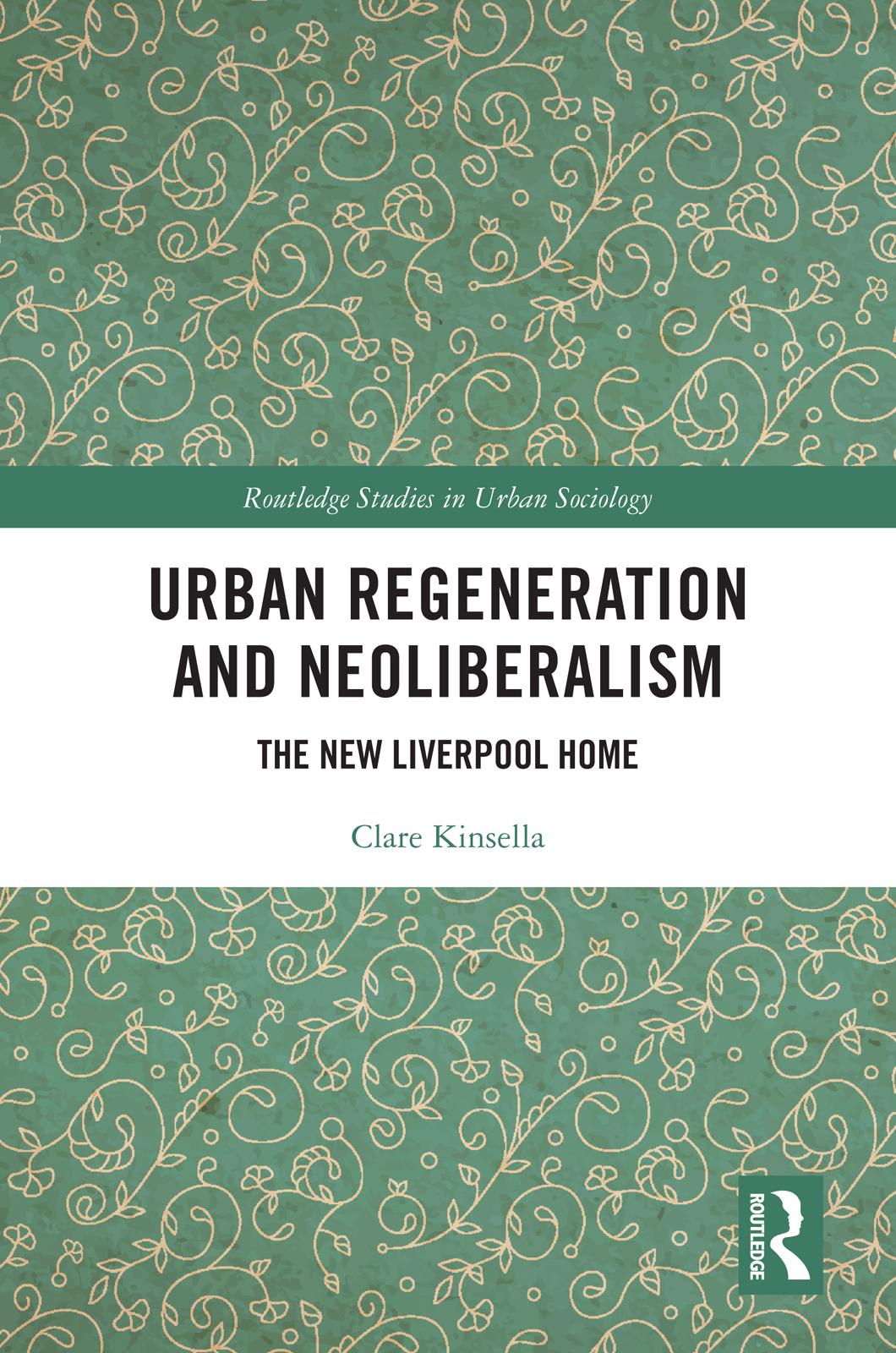
This book explores the concept of ‘home’ in Liverpool over phases of ‘regeneration’ following the Second World War. Using qualitative research in the oral history tradition, it explores what the author conceptualises as ‘forward-facing’ regeneration in the period up to the 1980s, and neoliberal regeneration interventions that ‘prioritise the past’ from the 1980s to the present. The author examines how the shift towards city centre-focused redevelopment and ‘event-led’ initiatives has implications for the way residents make sense of their conceptualisations of ‘home’, and demonstrates how the shift in regeneration focus, discourse, and practice, away from Liverpool’s neighbourhood districts and towards the city centre, has produced changes in the ways that residents identify with neighbourhoods and the city centre, with prominence being given to the latter. Employing Pierre Bourdieu’s concepts of habitus and field as mechanisms for understanding different senses of home and shifts from localised views to globalised views, this book will appeal to those with interests in urban sociology, regeneration, geography, sociology, home cultures, and cities.
Betala smidigt med kort, Klarna, Apple Pay eller Google Pay. Är du inte nöjd har du alltid 14 dagars ångerrätt. Läs mer i våra villkor. Har du några frågor, mejla oss på hello@memmo.org.
Memmo gör det enklare att plugga – var du än är i världen. Hos oss samlar du kursböcker och smarta studieverktyg på ett och samma ställe: sammanfattningar, quiz, poddar och flashcards. Och så Ted, din studiekompis som svarar på allt du undrar. Över 75 000 studenter pluggar redan här – byggt för att du ska lära dig snabbare och stressa mindre.