
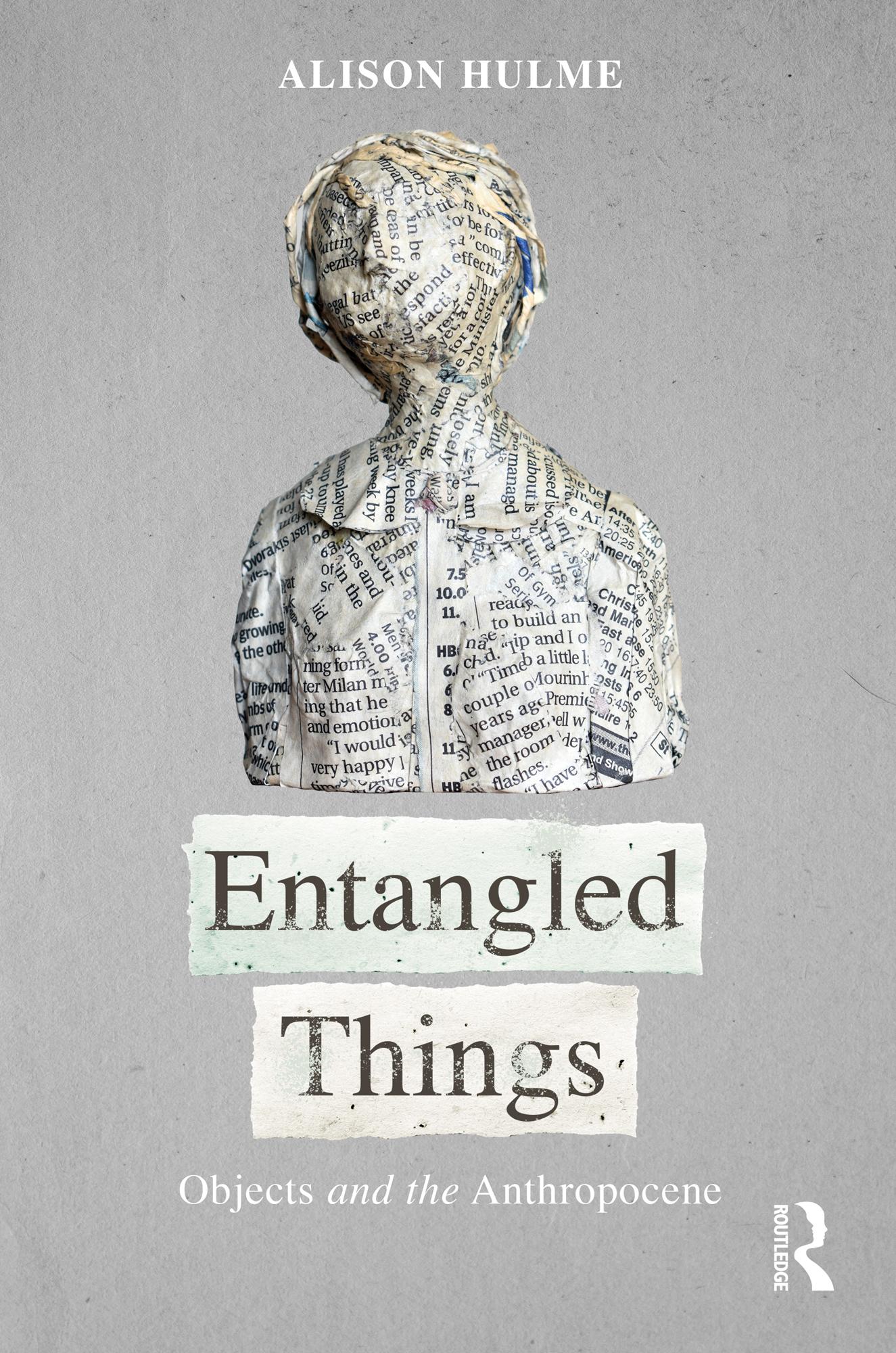
Entangled Things takes the concept of entanglement as its starting point in investigating the relationship between us and the material things we engage with. Each chapter illustrates a particular form of entanglement – desiring things, hoarding things, creating things, ridding ourselves of things – using ethnographic examples and theoretical perspectives. Hulme encourages a wider consideration of the place of humans in the world, and the kind of choices we enact when influenced by the material things around us. She explores our relationships with material objects in light of both personal and planetary ‘space’, and personal and historical time, from the space in our homes, storage spaces, landfill and oceans; to the times in our lives and the times in wider shared histories that things connect us to, not to mention our sense of time and our own place in the world. In so doing, Hulme intentionally places discussions on our entanglement with things squarely back into the context of the Anthropocene, with a provocative analysis in which the Anthropocene is posited as a concept which on one hand takes away human agency, placing us in the context of immense geological epochs, whilst on the other hand pushes agency upon humans, blaming us for the extreme challenges of the current era and looking to us to solve those challenges. For Hulme, material things are instrumental in helping us to grasp our existential place in the world and weave a way through the complications of living in epochal times.
Betala smidigt med kort, Klarna, Apple Pay eller Google Pay. Är du inte nöjd har du alltid 14 dagars ångerrätt. Läs mer i våra villkor. Har du några frågor, mejla oss på hello@memmo.org.
Memmo gör det enklare att plugga – var du än är i världen. Hos oss samlar du kursböcker och smarta studieverktyg på ett och samma ställe: sammanfattningar, quiz, poddar och flashcards. Och så Ted, din studiekompis som svarar på allt du undrar. Över 50 000 studenter pluggar redan här – byggt för att du ska lära dig snabbare och stressa mindre.