
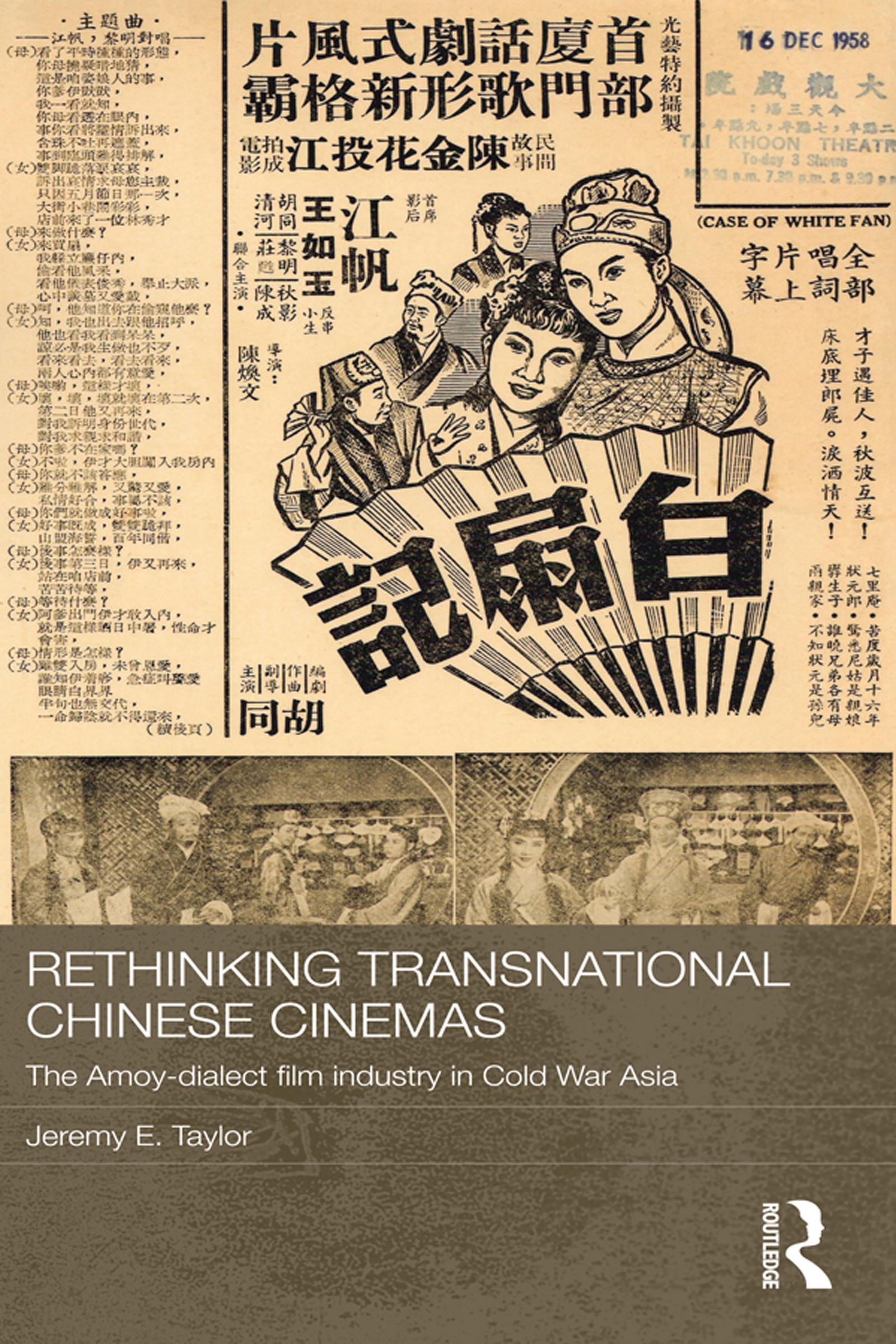
The Amoy-dialect film industry emerged in the 1950s, producing cheap, b-grade films in Hong Kong for direct export to the theatres of Manila Chinatown, southern Taiwan and Singapore. Films made in Amoy dialect - a dialect of Chinese - reflected a particular period in the history of the Chinese diaspora, and have been little studied due to their ambiguous place within the wider realm of Chinese and East Asian film history. This book represents the first full length, critical study of the origin, significant rise and rapid decline of the Amoy-dialect film industry.
Rather than examining the industry for its own sake, however, this book focuses on its broader cultural, political and economic significance in the region. It questions many of the assumptions currently made about the ‘recentness’ of transnationalism in Chinese cultural production, particularly when addressing Chinese cinema in the Cold War years, as well as the prominence given to ‘the nation’ and ‘transnationalism’ in studies of Chinese cinemas and of the Chinese Diaspora. By examining a cinema that did not fit many of the scholarly models of ‘transnationalism’, that was not grounded in any particular national tradition of filmmaking and that was largely unconcerned with ‘nation-building’ in post-war Southeast Asia, this book challenges the ways in which the history of Chinese cinemas has been studied in the recent past.
Betala smidigt med kort, Klarna, Apple Pay eller Google Pay. Är du inte nöjd har du alltid 14 dagars ångerrätt. Läs mer i våra villkor. Har du några frågor, mejla oss på hello@memmo.org.
Memmo gör det enklare att plugga – var du än är i världen. Hos oss samlar du kursböcker och smarta studieverktyg på ett och samma ställe: sammanfattningar, quiz, poddar och flashcards. Och så Ted, din studiekompis som svarar på allt du undrar. Över 50 000 studenter pluggar redan här – byggt för att du ska lära dig snabbare och stressa mindre.