
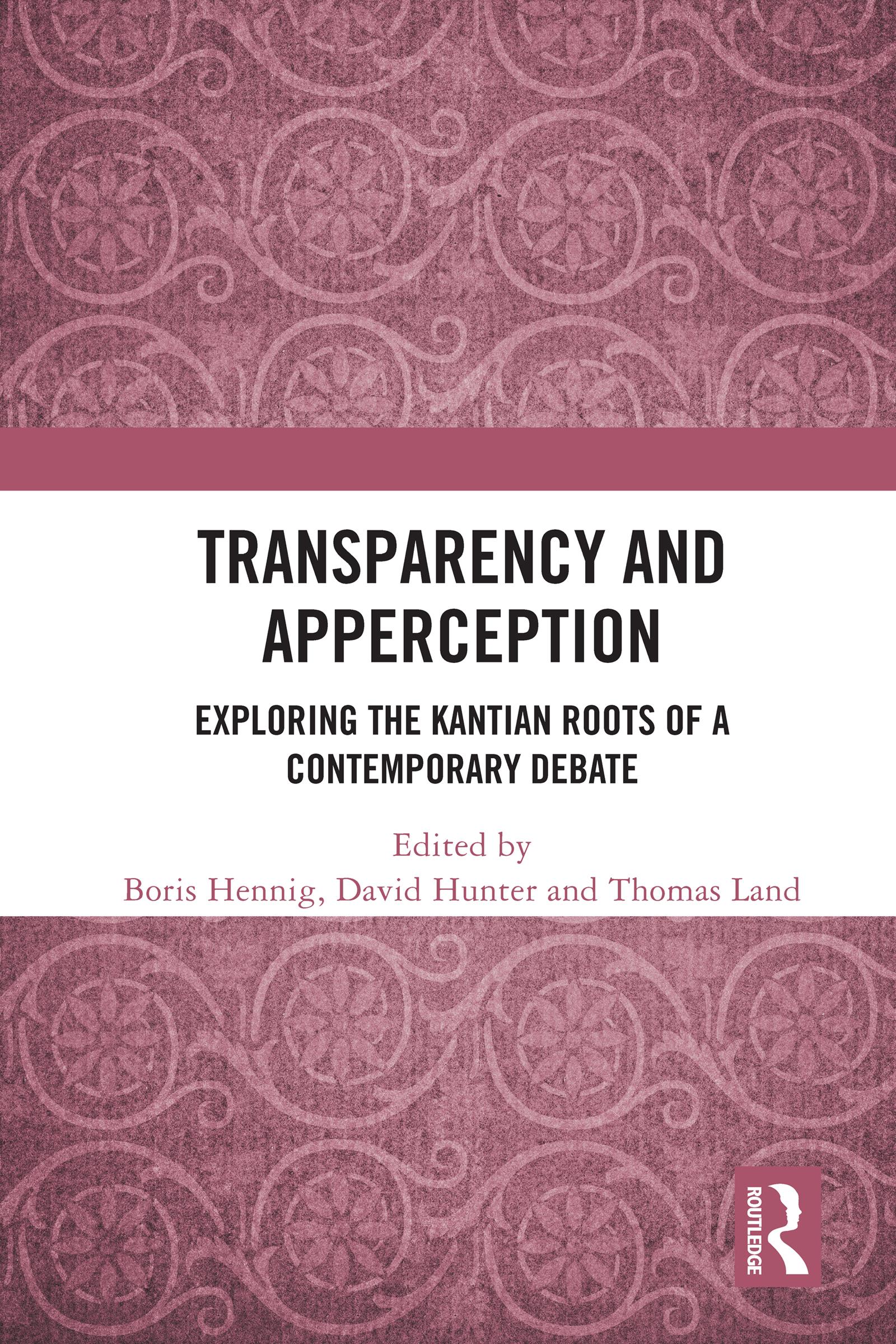
Transparency and Apperception: Exploring the Kantian Roots of a Contemporary Debate explores the links between the idea that belief is transparent and Kant’s claims about apperception.
Transparency is the idea that a person can answer questions about whether she, for instance, believes something by considering, not her own psychological states, but the objects and properties the belief is about. This marks a sharp contrast between a first-person and third-person perspective on one’s current mental states. This idea has deep roots in Kant’s doctrine of apperception, the claim that the human mind is essentially self-conscious, and Kant held that it underlies the responsibility that a person has for certain of their own mental states. Nevertheless, the idea of transparency and its roots in apperception remain obscure and give rise to difficult methodological and exegetical questions. The contributions in this work address these questions and will be required reading for anyone working on this intersection of the philosophy of mind and language, and epistemology.
The chapters in this book were originally published in a special issue of the Canadian Journal of Philosophy.
Betala smidigt med kort, Klarna, Apple Pay eller Google Pay. Är du inte nöjd har du alltid 14 dagars ångerrätt. Läs mer i våra villkor. Har du några frågor, mejla oss på hello@memmo.org.
Memmo gör det enklare att plugga – var du än är i världen. Hos oss samlar du kursböcker och smarta studieverktyg på ett och samma ställe: sammanfattningar, quiz, poddar och flashcards. Och så Ted, din studiekompis som svarar på allt du undrar. Över 50 000 studenter pluggar redan här – byggt för att du ska lära dig snabbare och stressa mindre.