
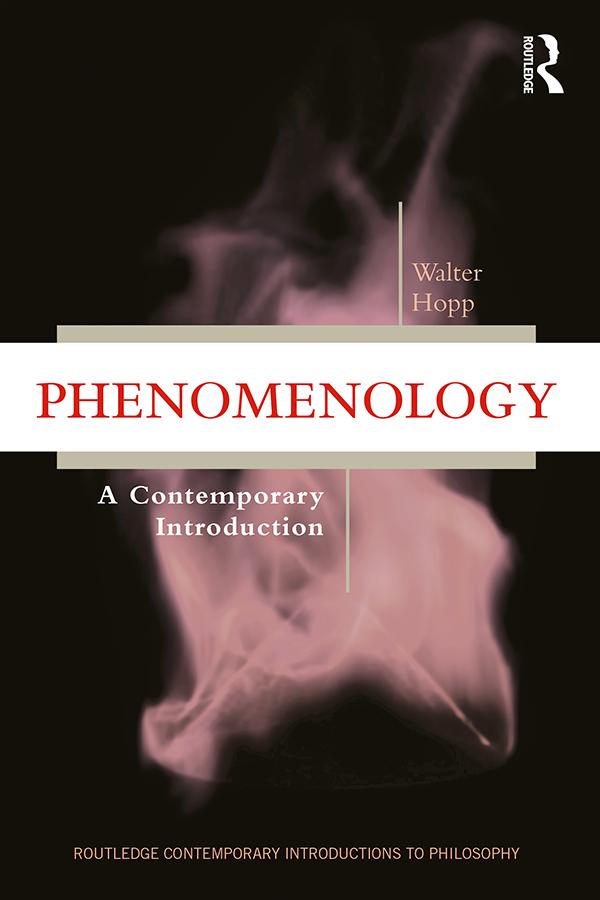
The central task of phenomenology is to investigate the nature of consciousness and its relations to objects of various types. The present book introduces students and other readers to several foundational topics of phenomenological inquiry, and illustrates phenomenology’s contemporary relevance. The main topics include consciousness, intentionality, perception, meaning, and knowledge. The book also contains critical assessments of Edmund Husserl’s phenomenological method. It argues that knowledge is the most fundamental mode of consciousness, and that the central theses constitutive of Husserl’s "transcendental idealism" are compatible with metaphysical realism regarding the objects of thought, perception, and knowledge.
Helpful tools include introductions that help the reader segue from the previous chapter to the new one, chapter conclusions, and suggested reading lists of primary and some key secondary sources.
Key Features:
- Elucidates and engages with contemporary work in analytic epistemology and philosophy of mind
- Provides clear prose explanations of the necessary distinctions and arguments required for understanding the subject
- Places knowledge at the center of phenomenological inquiry
Betala smidigt med kort, Klarna, Apple Pay eller Google Pay. Är du inte nöjd har du alltid 14 dagars ångerrätt. Läs mer i våra villkor. Har du några frågor, mejla oss på hello@memmo.org.
Memmo gör det enklare att plugga – var du än är i världen. Hos oss samlar du kursböcker och smarta studieverktyg på ett och samma ställe: sammanfattningar, quiz, poddar och flashcards. Och så Ted, din studiekompis som svarar på allt du undrar. Över 50 000 studenter pluggar redan här – byggt för att du ska lära dig snabbare och stressa mindre.