
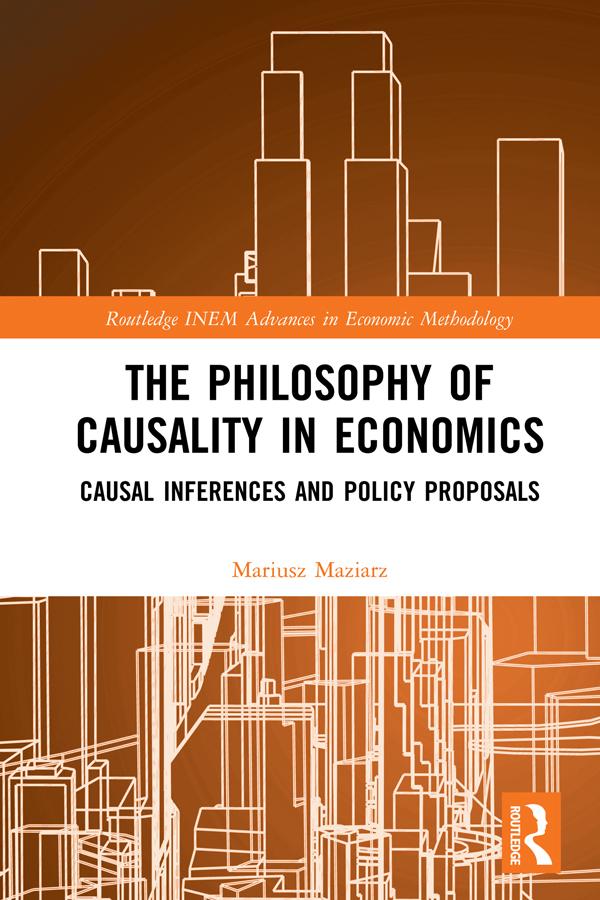
Approximately one in six top economic research papers draws an explicitly causal conclusion. But what do economists mean when they conclude that A ‘causes’ B? Does ‘cause’ say that we can influence B by intervening on A, or is it only a label for the correlation of variables? Do quantitative analyses of observational data followed by such causal inferences constitute sufficient grounds for guiding economic policymaking?
The Philosophy of Causality in Economics addresses these questions by analyzing the meaning of causal claims made by economists and the philosophical presuppositions underlying the research methods used. The book considers five key causal approaches: the regularity approach, probabilistic theories, counterfactual theories, mechanisms, and interventions and manipulability. Each chapter opens with a summary of literature on the relevant approach and discusses its reception among economists. The text details case studies, and goes on to examine papers which have adopted the approach in order to highlight the methods of causal inference used in contemporary economics. It analyzes the meaning of the causal claim put forward, and finally reconstructs the philosophical presuppositions accepted implicitly by economists. The strengths and limitations of each method of causal inference are also considered in the context of using the results as evidence for policymaking.
This book is essential reading to those interested in literature on the philosophy of economics, as well as the philosophy of causality and economic methodology in general.
Betala smidigt med kort, Klarna, Apple Pay eller Google Pay. Är du inte nöjd har du alltid 14 dagars ångerrätt. Läs mer i våra villkor. Har du några frågor, mejla oss på hello@memmo.org.
Memmo gör det enklare att plugga – var du än är i världen. Hos oss samlar du kursböcker och smarta studieverktyg på ett och samma ställe: sammanfattningar, quiz, poddar och flashcards. Och så Ted, din studiekompis som svarar på allt du undrar. Över 50 000 studenter pluggar redan här – byggt för att du ska lära dig snabbare och stressa mindre.