
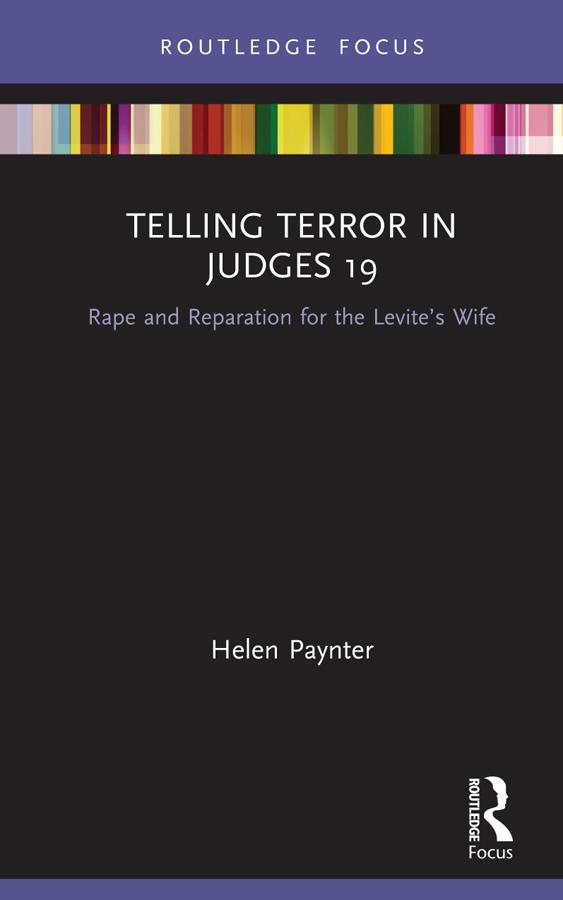
Telling Terror in Judges 19 explores the value of performing a ‘reparative reading’ of the terror-filled story of the Levite’s pilegesh (commonly referred to as the Levite’s concubine) in Judges 19, and how such a reparative reading can be brought to bear upon elements of modern rape culture. Historically, the story has been used as a morality tale to warn young women about what constitutes appropriate behaviour. More recently, (mainly male) commentators have tended to write the woman out of the story, by making claims about its purpose and theme which bear no relation to her suffering. In response to this, feminist critics have attempted to write the woman back into the story, generally using the hermeneutics of suspicion. This book begins by surveying some of the traditional commentators, and the three great feminist commentators of the text (Bal, Exum and Trible). It then offers a reparative reading by attending to the pilegesh’s surprising prominence, her moral and marital agency, and her speaking voice. In the final chapter, there is a detailed comparison of the story with elements of modern rape culture.
Betala smidigt med kort, Klarna, Apple Pay eller Google Pay. Är du inte nöjd har du alltid 14 dagars ångerrätt. Läs mer i våra villkor. Har du några frågor, mejla oss på hello@memmo.org.
Memmo gör det enklare att plugga – var du än är i världen. Hos oss samlar du kursböcker och smarta studieverktyg på ett och samma ställe: sammanfattningar, quiz, poddar och flashcards. Och så Ted, din studiekompis som svarar på allt du undrar. Över 50 000 studenter pluggar redan här – byggt för att du ska lära dig snabbare och stressa mindre.