
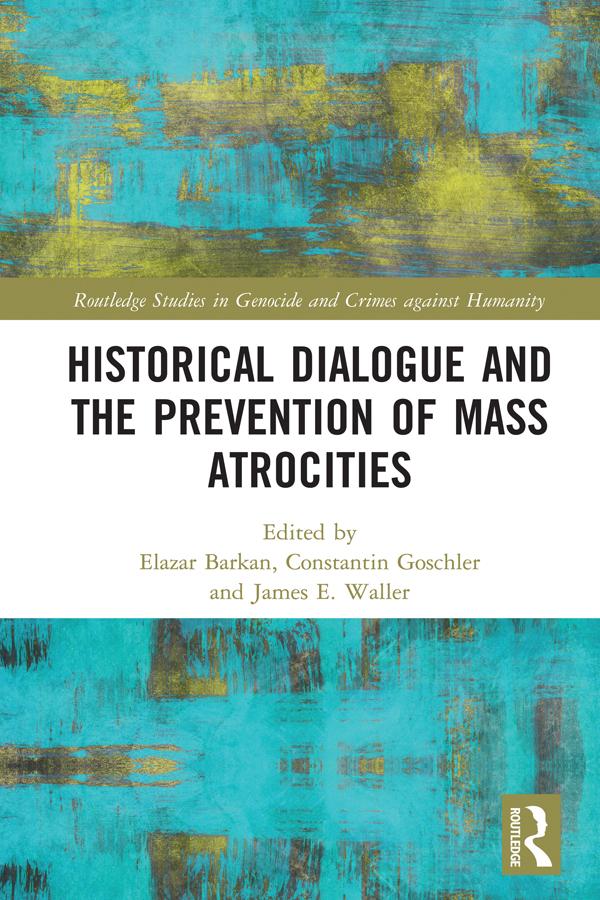
This book brings together a diverse range of international voices from academia, policymaking and civil society to address the failure to connect historical dialogue with atrocity prevention discourse and provide insight into how conflict histories and historical memory act as dynamic forces, actively facilitating or deterring current and future conflict.
Established on a variety of international case studies combining theoretical and practical points of view, the book envisions an integrated understanding of how historical dialogue can inform policy, education, and the practice of atrocity prevention. In doing so, it provides a vital basis for the development of preventive policies sensitive to the importance of conflict histories and for further academic study on the topic.
It will be of interest to all scholars and students of history, psychology, peace studies, international relations and political science.
Betala smidigt med kort, Klarna, Apple Pay eller Google Pay. Är du inte nöjd har du alltid 14 dagars ångerrätt. Läs mer i våra villkor. Har du några frågor, mejla oss på hello@memmo.org.
Memmo gör det enklare att plugga – var du än är i världen. Hos oss samlar du kursböcker och smarta studieverktyg på ett och samma ställe: sammanfattningar, quiz, poddar och flashcards. Och så Ted, din studiekompis som svarar på allt du undrar. Över 50 000 studenter pluggar redan här – byggt för att du ska lära dig snabbare och stressa mindre.