
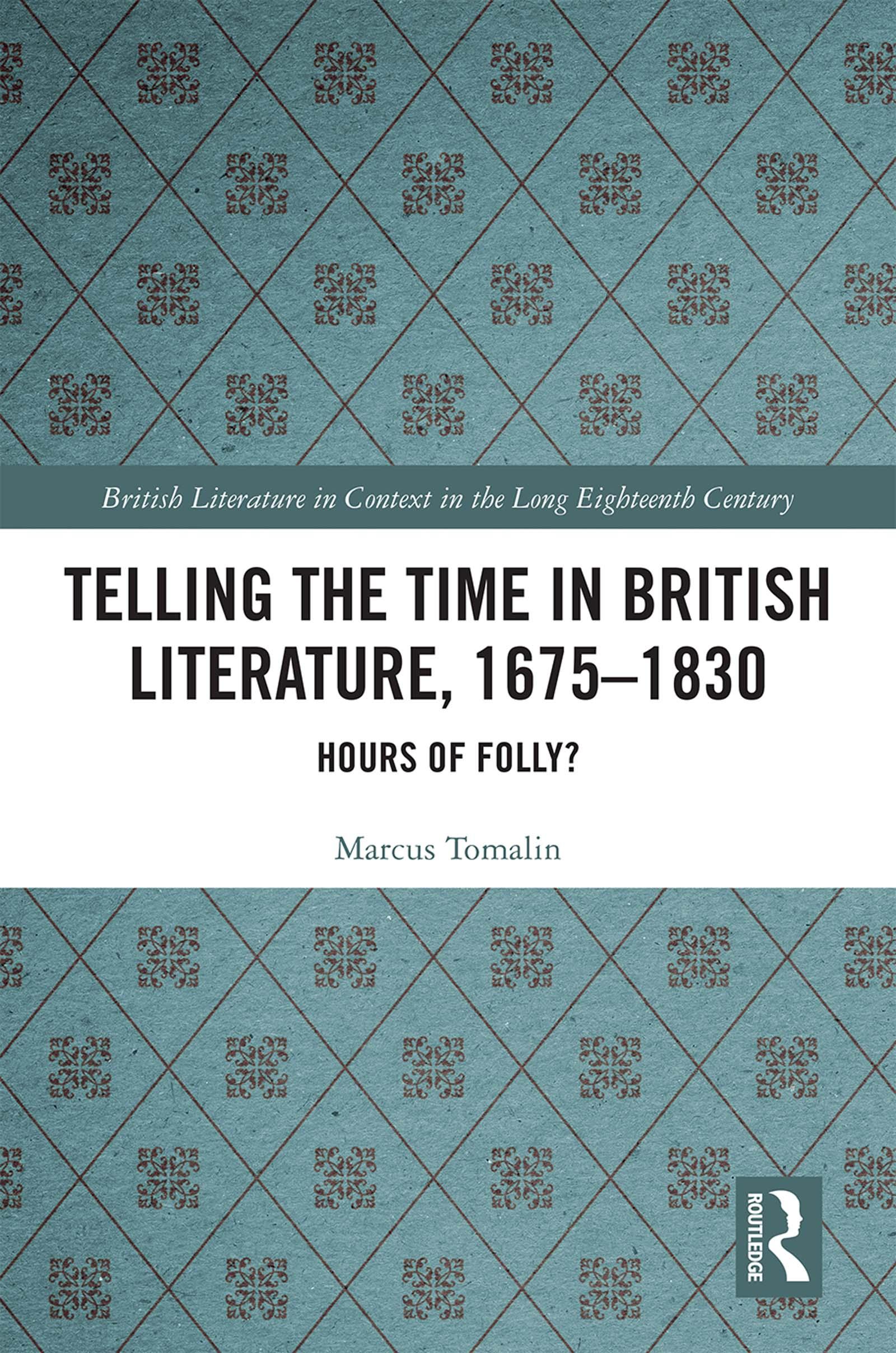
Although the broad topic of time and literature in the long eighteenth century has received focused attention from successive generations of literary critics, this book adopts a radically new approach to the subject. Taking inspiration from recent revisionist accounts of the horological practices of the age, as well as current trends in ecocriticism, historical prosody, sensory history, social history, and new materialism, it offers a pioneering investigation of themes that have never previously received sustained critical scrutiny. Specifically, it explores how the essayists, poets, playwrights, and novelists of the period meditated deeply upon the physical form, social functions, and philosophical implications of particular time-telling objects. Consequently, each chapter considers a different device – mechanical watches, pendulums, sandglasses, sundials, flowers, and bells – and the literary responses of significant figures such as Alexander Pope, Anne Steele, William Wordsworth, Samuel Taylor Coleridge, Charlotte Smith, and William Hazlitt are carefully examined.
Betala smidigt med kort, Klarna, Apple Pay eller Google Pay. Är du inte nöjd har du alltid 14 dagars ångerrätt. Läs mer i våra villkor. Har du några frågor, mejla oss på hello@memmo.org.
Memmo gör det enklare att plugga – var du än är i världen. Hos oss samlar du kursböcker och smarta studieverktyg på ett och samma ställe: sammanfattningar, quiz, poddar och flashcards. Och så Ted, din studiekompis som svarar på allt du undrar. Över 50 000 studenter pluggar redan här – byggt för att du ska lära dig snabbare och stressa mindre.