
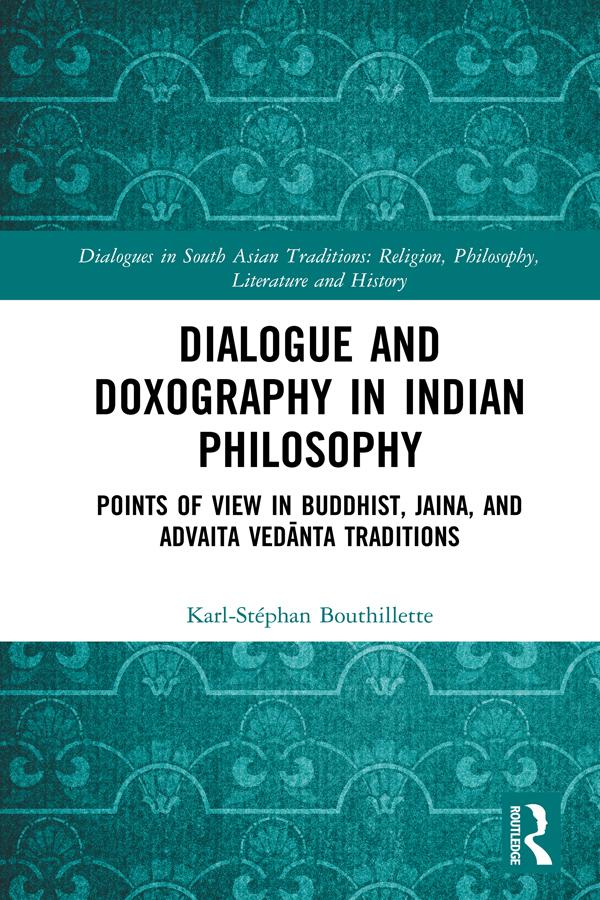
This is the first book fully dedicated to Indian philosophical doxography. It examines the function such dialectical texts were intended to serve in the intellectual and religious life of their public. It looks at Indian doxography both as a witness of inter- and intra-sectarian dialogues and as a religious phenomenon. It argues that doxographies represent dialectical exercises, indicative of a peculiar religious attitude to plurality, and locate these ‘exercises’ within a known form of ‘yoga’ dedicated to the cultivation of ‘knowledge’ or ‘gnosis’ (jñāna).
Concretely, the book presents a critical examination of three Sanskrit doxographies: the Madhyamakahṛdayakārikā of the Buddhist Bhāviveka, the Ṣaḍdarśanasamuccaya of the Jain Haribhadra, and the Sarvasiddhāntasaṅgraha attributed to the Advaitin Śaṅkara, focusing on each of their respective presentation of the Mīmāṃsā view.
It is the first time that the genre of doxography is considered beyond its literary format to ponder its performative dimension, as a spiritual exercise. Theoretically broad, the book reaches out to academics in religious studies, Indian philosophy, Indology, and classical studies.
Betala smidigt med kort, Klarna, Apple Pay eller Google Pay. Är du inte nöjd har du alltid 14 dagars ångerrätt. Läs mer i våra villkor. Har du några frågor, mejla oss på hello@memmo.org.
Memmo gör det enklare att plugga – var du än är i världen. Hos oss samlar du kursböcker och smarta studieverktyg på ett och samma ställe: sammanfattningar, quiz, poddar och flashcards. Och så Ted, din studiekompis som svarar på allt du undrar. Över 50 000 studenter pluggar redan här – byggt för att du ska lära dig snabbare och stressa mindre.