
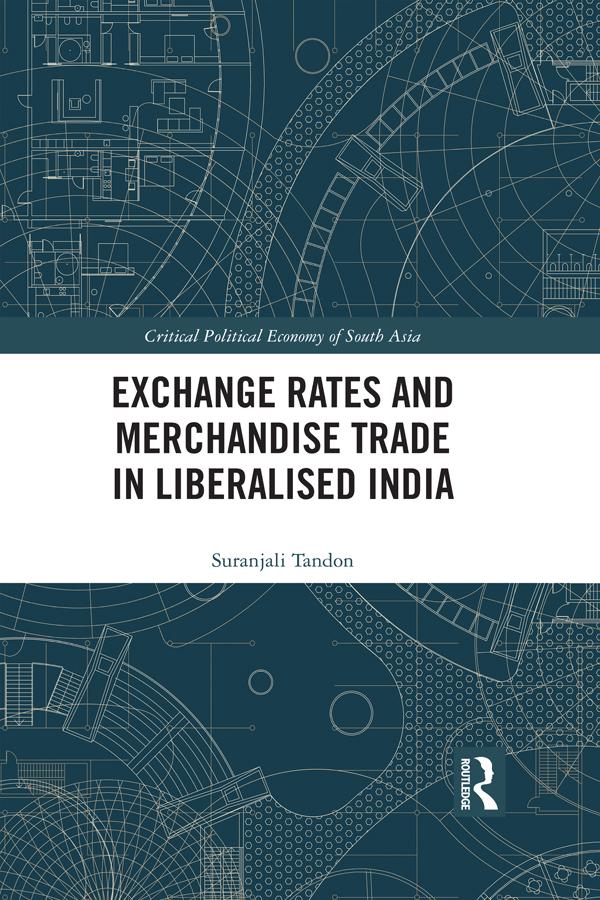
This book examines the linkages between exchange rates and India’s merchandise trade since the 1990s. It looks at India’s trade in the post-liberalisation period through its two main components: commodities and trading partners, and provides a bird’s eye view through aggregate analyses accompanied by a historical narrative of the evolution of trade and exchange rate dynamics. Presenting a comprehensive analysis of bilateral and product-specific trade, the book explores the impact of exchange rate on labour intensive sectors and charts out major development. It also offers compelling evidence to suggest that if some commodities are identified as integral to India’s export plans, then the impact of exchange rate must be weighed by the Reserve Bank of India (RBI) prior to a market intervention.
This timely volume will be of interest to scholars and researchers of economics, business and finance, development studies, trade, business, and industry as well as practitioners, think-tanks, and policy makers.
Betala smidigt med kort, Klarna, Apple Pay eller Google Pay. Är du inte nöjd har du alltid 14 dagars ångerrätt. Läs mer i våra villkor. Har du några frågor, mejla oss på hello@memmo.org.
Memmo gör det enklare att plugga – var du än är i världen. Hos oss samlar du kursböcker och smarta studieverktyg på ett och samma ställe: sammanfattningar, quiz, poddar och flashcards. Och så Ted, din studiekompis som svarar på allt du undrar. Över 50 000 studenter pluggar redan här – byggt för att du ska lära dig snabbare och stressa mindre.