
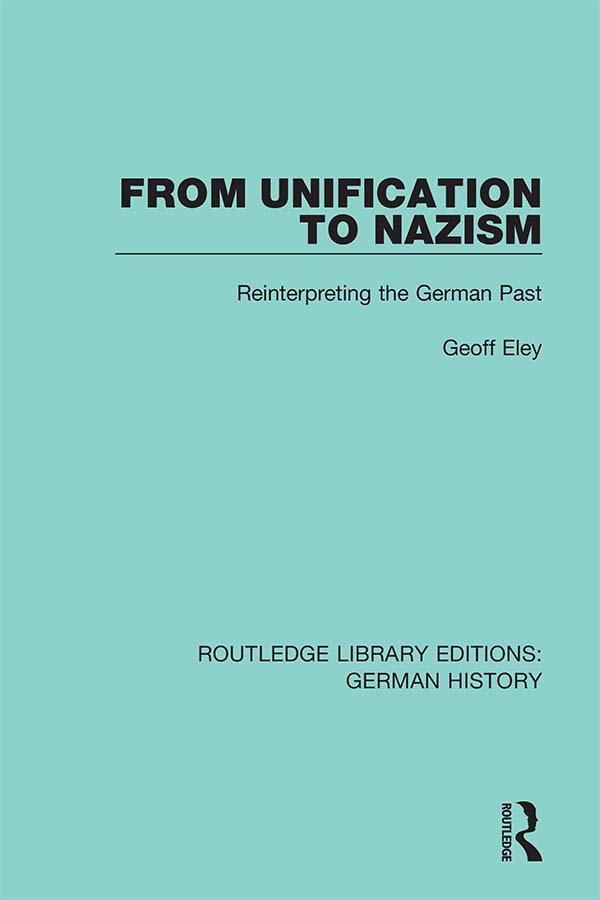
Originally published in 1986, and bringing together essays written over a 10 year period, this volume offers a coherent and challenging interpretation of the German past. The book argues that the German Empire between 1971 and 1914 may have enjoyed greater stability and cohesion than is often assumed. It suggests that Imperial Germany’s political institutions showed considerable flexibility and capacity for growth and puts forward the idea that without WWI, or in the event of a German victory, the Empire might well have demonstrated its viability as a modern state. In that case, the origins of fascism should be sought mainly in the subsequent experiences of war, revolution and economic crisis and not so much in the Empire’s so-called structural backwardness.
Betala smidigt med kort, Klarna, Apple Pay eller Google Pay. Är du inte nöjd har du alltid 14 dagars ångerrätt. Läs mer i våra villkor. Har du några frågor, mejla oss på hello@memmo.org.
Memmo gör det enklare att plugga – var du än är i världen. Hos oss samlar du kursböcker och smarta studieverktyg på ett och samma ställe: sammanfattningar, quiz, poddar och flashcards. Och så Ted, din studiekompis som svarar på allt du undrar. Över 50 000 studenter pluggar redan här – byggt för att du ska lära dig snabbare och stressa mindre.