
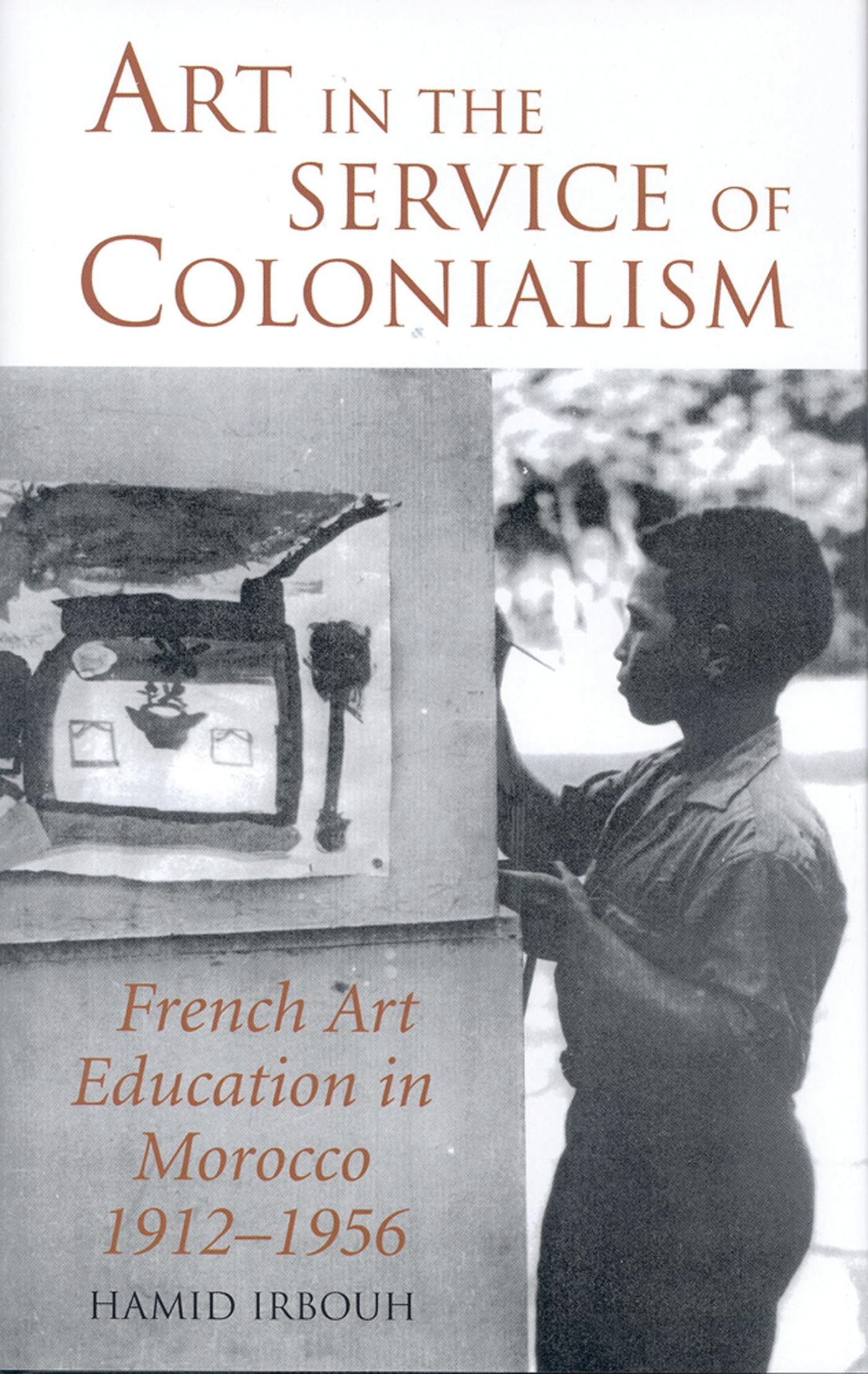
In the Moroccan French Protectorate (1912-1956), the French established vocational and fine art schools, imposed modern systems of industrial production and pedagogy and reinvented old traditions. Hamid Irbouh argues that the French used this systematic modernisation of local arts and crafts regulation to impose their control. He looks in particular at the role and place of women in the structures of art production and education created by the French- that transformed and dominated Moroccan society during the colonial period. French women infiltrated the Moroccan milieu, to buttress colonial ideology, yet at critical moments, Moroccan women rejected traditional roles and sabotaged colonial plans. Meanwhile, the contradictions between reformist goals and the old order added to social dislocations and led to rebellion against French hegemony. Irbouh examines and analyses these processes and demonstrates how Moroccan artists have struggled to exorcise French influences and rediscover an authentic visual culture since decolonisation. This book reveals that the weight of colonial history continues to weigh heavily on artistic practice and production.
Betala smidigt med kort, Klarna, Apple Pay eller Google Pay. Är du inte nöjd har du alltid 14 dagars ångerrätt. Läs mer i våra villkor. Har du några frågor, mejla oss på hello@memmo.org.
Memmo gör det enklare att plugga – var du än är i världen. Hos oss samlar du kursböcker och smarta studieverktyg på ett och samma ställe: sammanfattningar, quiz, poddar och flashcards. Och så Ted, din studiekompis som svarar på allt du undrar. Över 50 000 studenter pluggar redan här – byggt för att du ska lära dig snabbare och stressa mindre.