
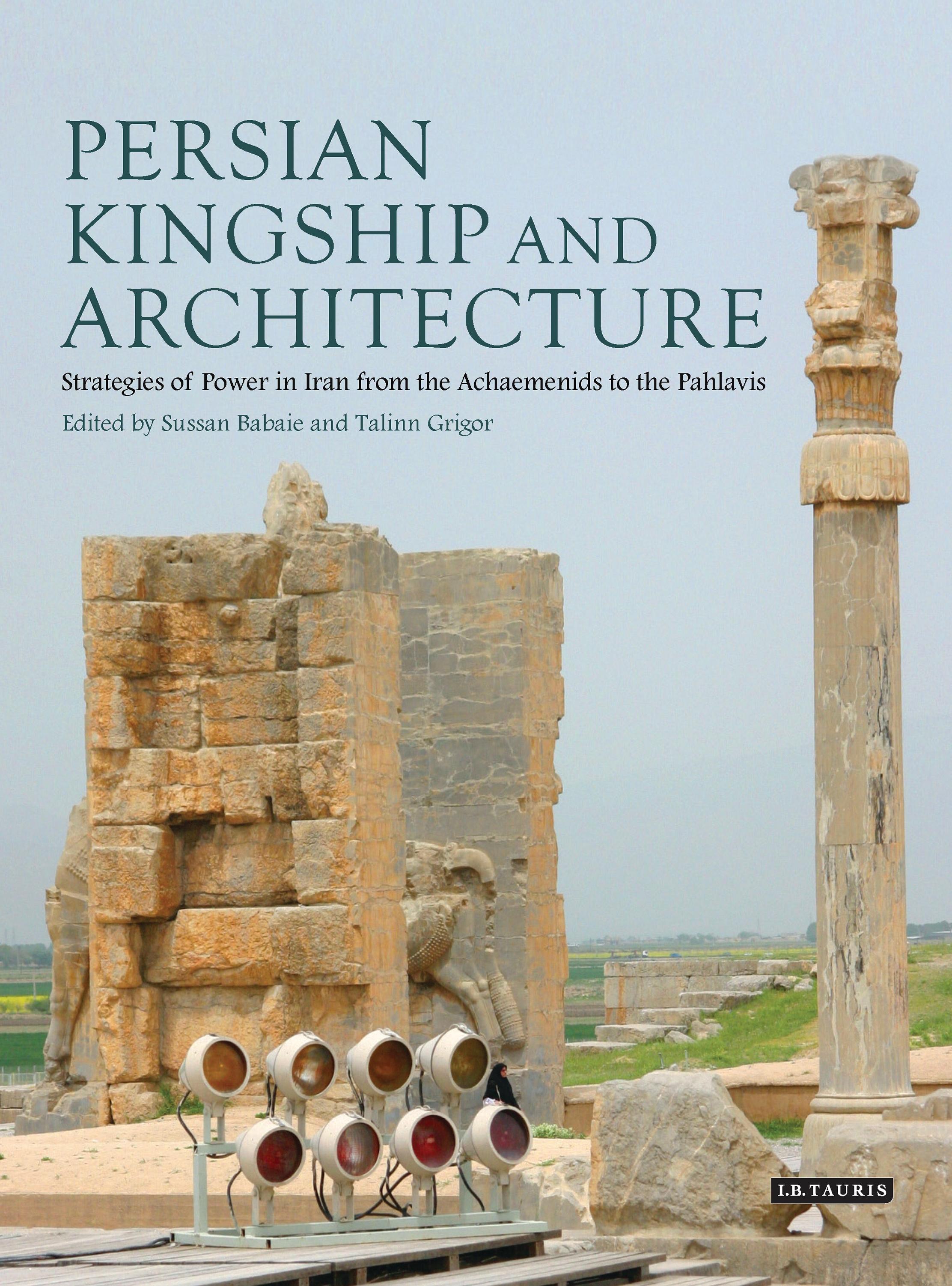
Since the Shah went into exile and the Islamic Republic was established in 1979 in the wake of the Iranian Revolution, the very idea of monarchy in Iran has been contentious. Yet, as Persian Kingship and Architecture argues, the institution of kingship has historically played a pivotal role in articulating the abstract notion of 'Iran' since antiquity. These ideas surrounding kingship and nation have, in turn, served as a unifying cultural force despite shifting political and religious allegiances. Through analyses of palaces, mausolea, art, architectural decoration and urban design the authors show how architecture was appropriated by different rulers as an integral part of their strategies of legitimising power. They refer to a variety of examples, from the monuments of Persepolis under the Achamenids, the Sassanian palaces at Kish, the Safavid public squares of Isfahan, the Qajar palaces at Shiraz and to the modernisation and urban agendas of the Pahlavis. Drawing on archaeology, ancient, medieval, early and modern architectural history, both Islamic and secular, this book is indispensable for all those interested in Iranian studies and visual culture.
Betala smidigt med kort, Klarna, Apple Pay eller Google Pay. Är du inte nöjd har du alltid 14 dagars ångerrätt. Läs mer i våra villkor. Har du några frågor, mejla oss på hello@memmo.org.
Memmo gör det enklare att plugga – var du än är i världen. Hos oss samlar du kursböcker och smarta studieverktyg på ett och samma ställe: sammanfattningar, quiz, poddar och flashcards. Och så Ted, din studiekompis som svarar på allt du undrar. Över 75 000 studenter pluggar redan här – byggt för att du ska lära dig snabbare och stressa mindre.