
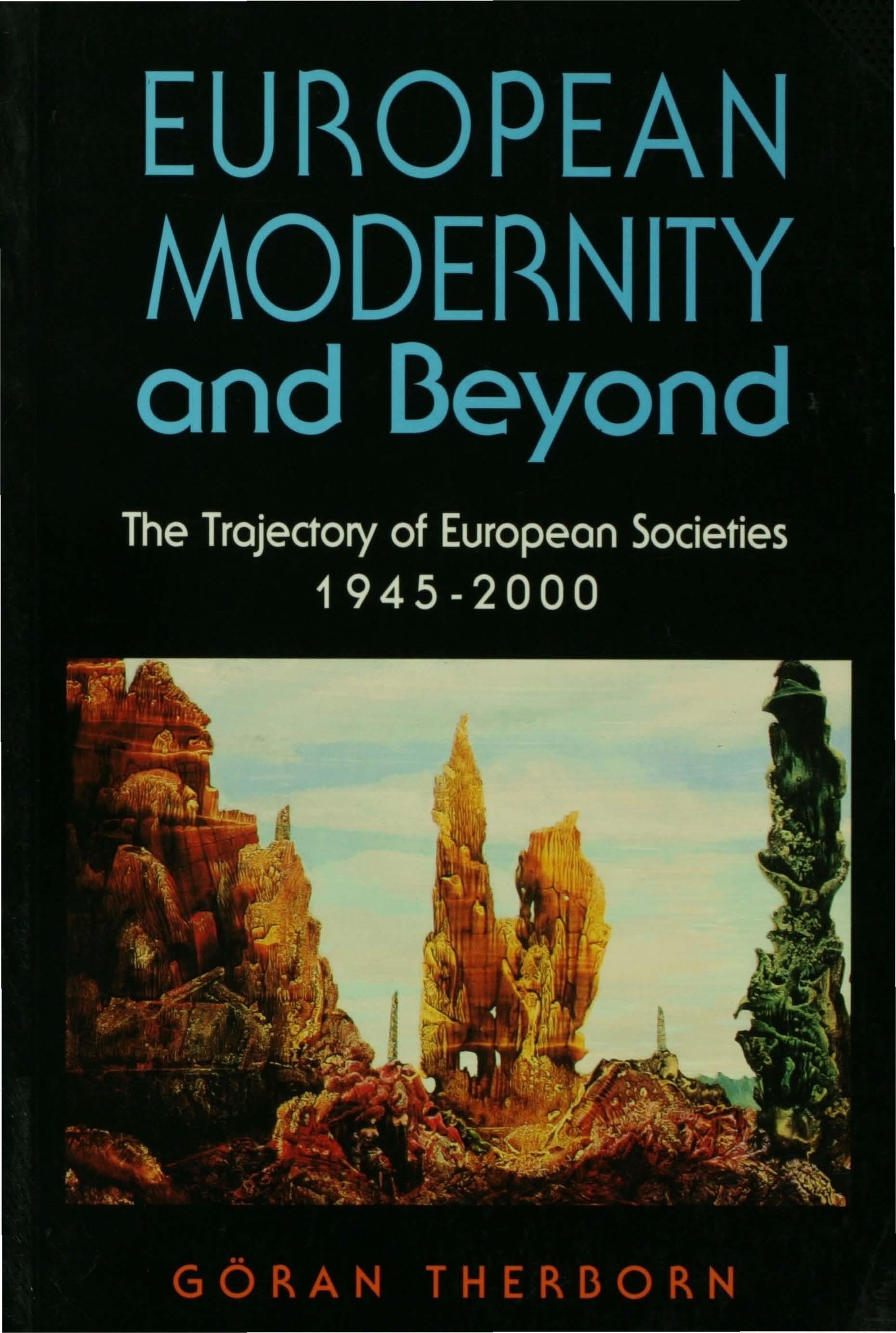
Combining theoretical depth with factual analysis, Göran Therborn addresses the questions that underpin an understanding of the nature of European modernity, including: To what extent is the period 1945-2000 producing fundamental change and what are the areas of continuity? Have the societies of Europe become more similar to others on the globe or more distinctively European? What are the prospects of Europe after decades of postwar change and the end of the Cold War?
Issues covered include the division of paid and unpaid labour, patterns of rights in different social spheres, the development of mass consumption, the evolution of risks, the spatial range of economic and cultural change, collective memory and identities, the geography of happiness, and modes of collective action. The author relates these issues to the two great social steering projects of the period - socialism in the East and the European Union in the West.
Betala smidigt med kort, Klarna, Apple Pay eller Google Pay. Är du inte nöjd har du alltid 14 dagars ångerrätt. Läs mer i våra villkor. Har du några frågor, mejla oss på hello@memmo.org.
Memmo gör det enklare att plugga – var du än är i världen. Hos oss samlar du kursböcker och smarta studieverktyg på ett och samma ställe: sammanfattningar, quiz, poddar och flashcards. Och så Ted, din studiekompis som svarar på allt du undrar. Över 50 000 studenter pluggar redan här – byggt för att du ska lära dig snabbare och stressa mindre.