
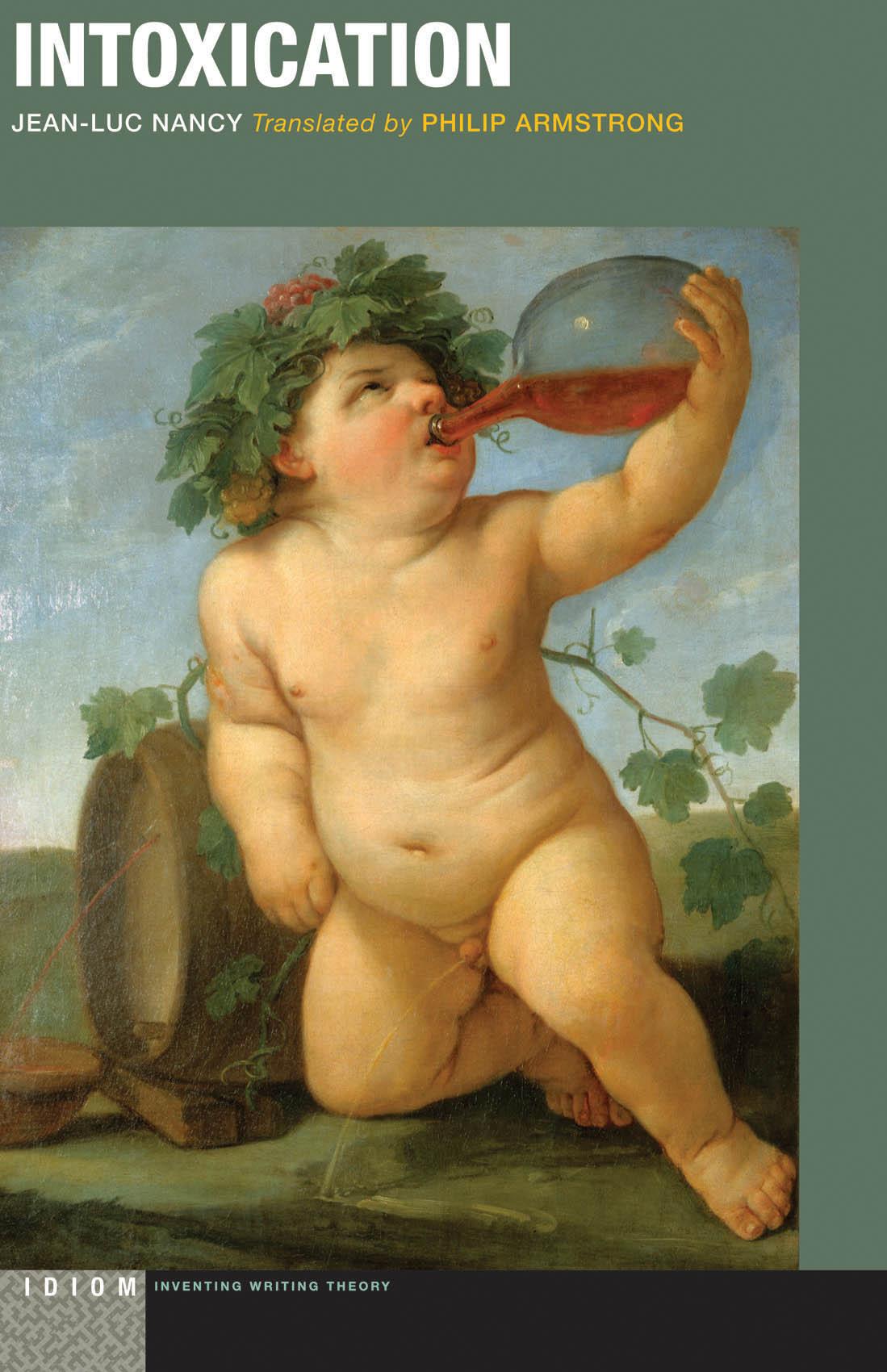
From Plato’s Symposium to Hegel’s truth as a “Bacchanalian revel,” from the Bacchae of Euripedes to Nietzsche, philosophy holds a deeply ambivalent relation to the pleasures of intoxication. At the same time, from Baudelaire to Lowry, from Proust to Dostoyevsky, literature and poetry are also haunted by scenes of intoxication, as if philosophy and literature share a theme that announces and navigates their proximities and differences.
For Nancy, intoxication constitutes an excess that both fascinates and questions philosophy’s sober ambitions for appropriate forms of philosophical behavior and conceptual lucidity. At the same time, intoxication displaces a number of established dualities—reason and passion, mind and body, rationality and desire, rigor and excess, clarity and confusion, logic and eros.
Taking its point of departure from Baudelaire’s categorical imperative to understand modernity—“be drunk always”—Nancy’s little book is composed in fragments, quotations, drunken asides, and inebriated repetitions. His contemporary “banquet” addresses a range of related themes, including the role of alcohol and intoxication in rituals, myths, divine sacrifice, and religious symbolism, all those toasts to the sacred “spirits” involving libations and different forms of speech and enunciation—to the gods, to modernity, to the Absolute. Affecting both mind and body, Nancy’s subject becomes intoxicated: Ego sum, ego existo ebrius—I am, I exist—drunk.
Betala smidigt med kort, Klarna, Apple Pay eller Google Pay. Är du inte nöjd har du alltid 14 dagars ångerrätt. Läs mer i våra villkor. Har du några frågor, mejla oss på hello@memmo.org.
Memmo gör det enklare att plugga – var du än är i världen. Hos oss samlar du kursböcker och smarta studieverktyg på ett och samma ställe: sammanfattningar, quiz, poddar och flashcards. Och så Ted, din studiekompis som svarar på allt du undrar. Över 50 000 studenter pluggar redan här – byggt för att du ska lära dig snabbare och stressa mindre.