
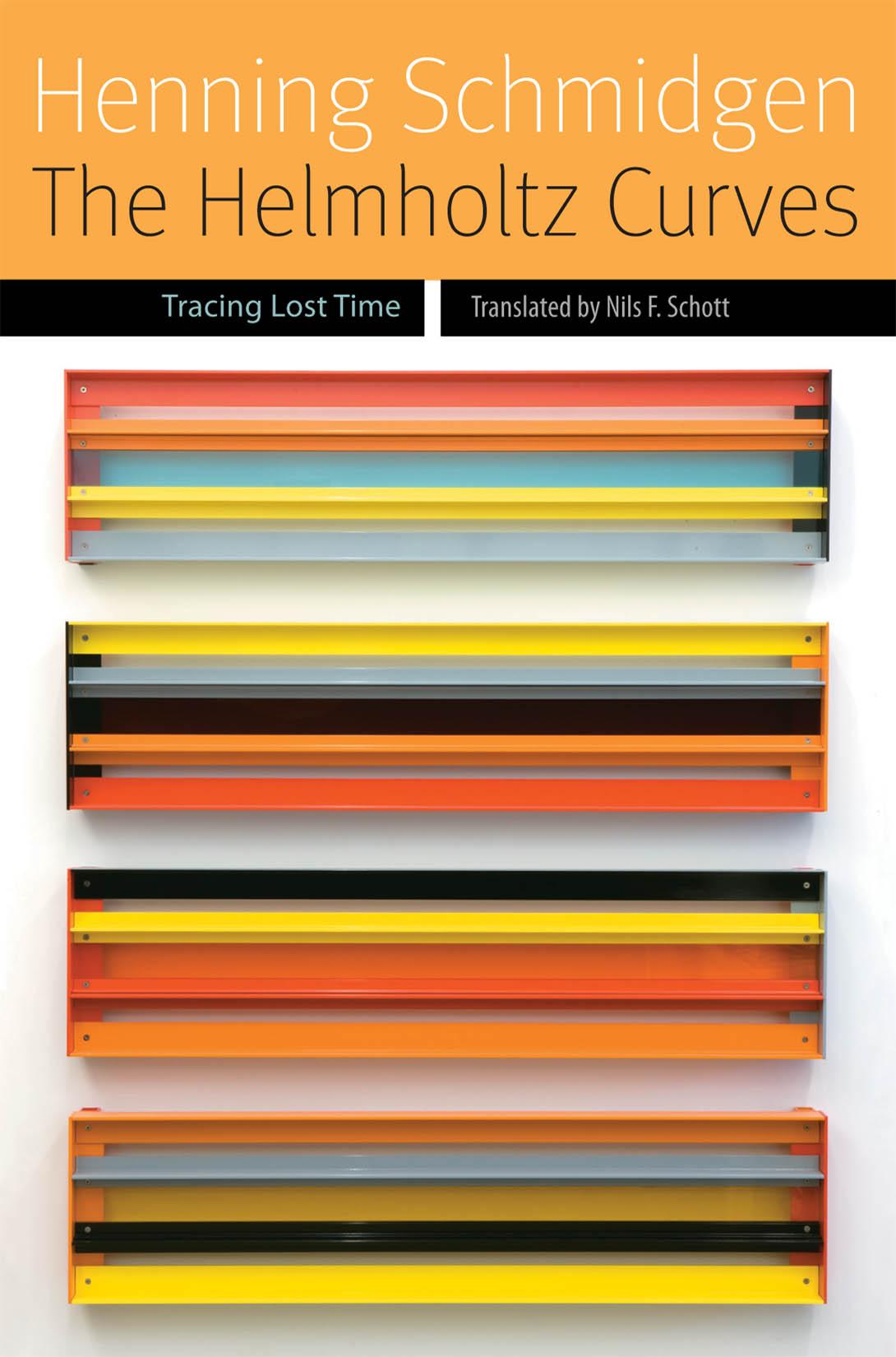
This book reconstructs the emergence of the phenomenon of “lost time” by engaging with two of the most significant time experts of the nineteenth century: the German physiologist Hermann von Helmholtz and the French writer Marcel Proust.
Its starting point is the archival discovery of curve images that Helmholtz produced in the context of pathbreaking experiments on the temporality of the nervous system in 1851. With a “frog drawing machine,” Helmholtz established the temporal gap between stimulus and response that has remained a core issue in debates between neuroscientists and philosophers.
When naming the recorded phenomena, Helmholtz introduced the term temps perdu, or lost time. Proust had excellent contacts with the biomedical world of late-nineteenth-century Paris, and he was familiar with this term and physiological tracing technologies behind it. Drawing on the machine philosophy of Deleuze, Schmidgen highlights the resemblance between the machinic assemblages and rhizomatic networks within which Helmholtz and Proust pursued their respective projects.
Betala smidigt med kort, Klarna, Apple Pay eller Google Pay. Är du inte nöjd har du alltid 14 dagars ångerrätt. Läs mer i våra villkor. Har du några frågor, mejla oss på hello@memmo.org.
Memmo gör det enklare att plugga – var du än är i världen. Hos oss samlar du kursböcker och smarta studieverktyg på ett och samma ställe: sammanfattningar, quiz, poddar och flashcards. Och så Ted, din studiekompis som svarar på allt du undrar. Över 50 000 studenter pluggar redan här – byggt för att du ska lära dig snabbare och stressa mindre.