
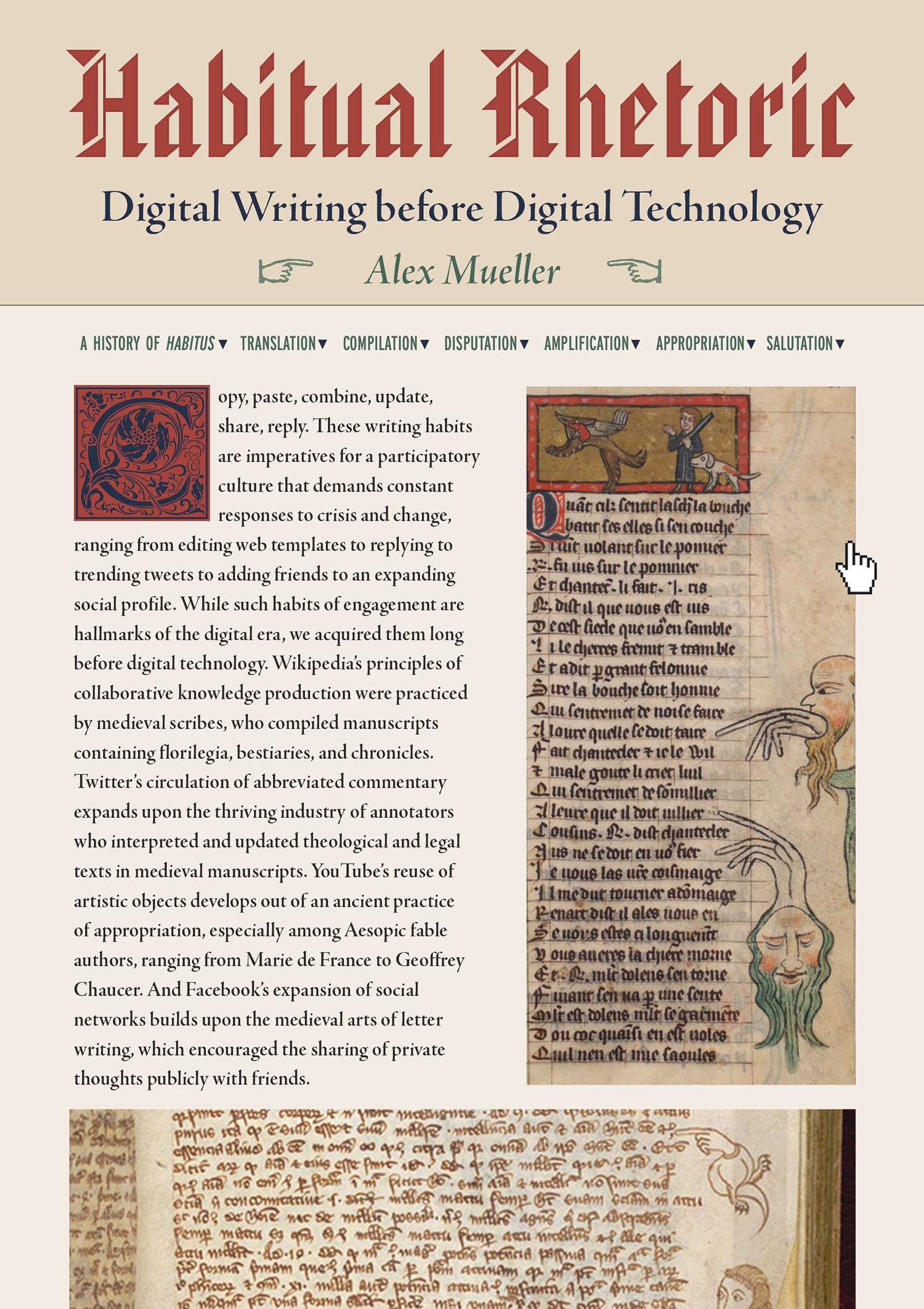
Writing has always been digital. Just as digits scribble with the quill or tap the typewriter, digits compose binary code and produce text on a screen. Over time, however, digital writing has come to be defined by numbers and chips, not fingers and parchment. We therefore assume that digital writing began with the invention of the computer and created new writing habits, such as copying, pasting, and sharing. Habitual Rhetoric: Digital Writing before Digital Technology makes the counterargument that these digital writing practices were established by the handwritten cultures of early medieval universities, which codified rhetorical habits—from translation to compilation to disputation to amplification to appropriation to salutation—through repetitive classroom practices and within annotatable manuscript environments. These embodied habits have persisted across time and space to develop durable dispositions, or habitus, which have the potential to challenge computational cultures of disinformation and surveillance that pervade the social media of today.
Betala smidigt med kort, Klarna, Apple Pay eller Google Pay. Är du inte nöjd har du alltid 14 dagars ångerrätt. Läs mer i våra villkor. Har du några frågor, mejla oss på hello@memmo.org.
Memmo gör det enklare att plugga – var du än är i världen. Hos oss samlar du kursböcker och smarta studieverktyg på ett och samma ställe: sammanfattningar, quiz, poddar och flashcards. Och så Ted, din studiekompis som svarar på allt du undrar. Över 50 000 studenter pluggar redan här – byggt för att du ska lära dig snabbare och stressa mindre.
Du kanske också gillar
Köp boken0