
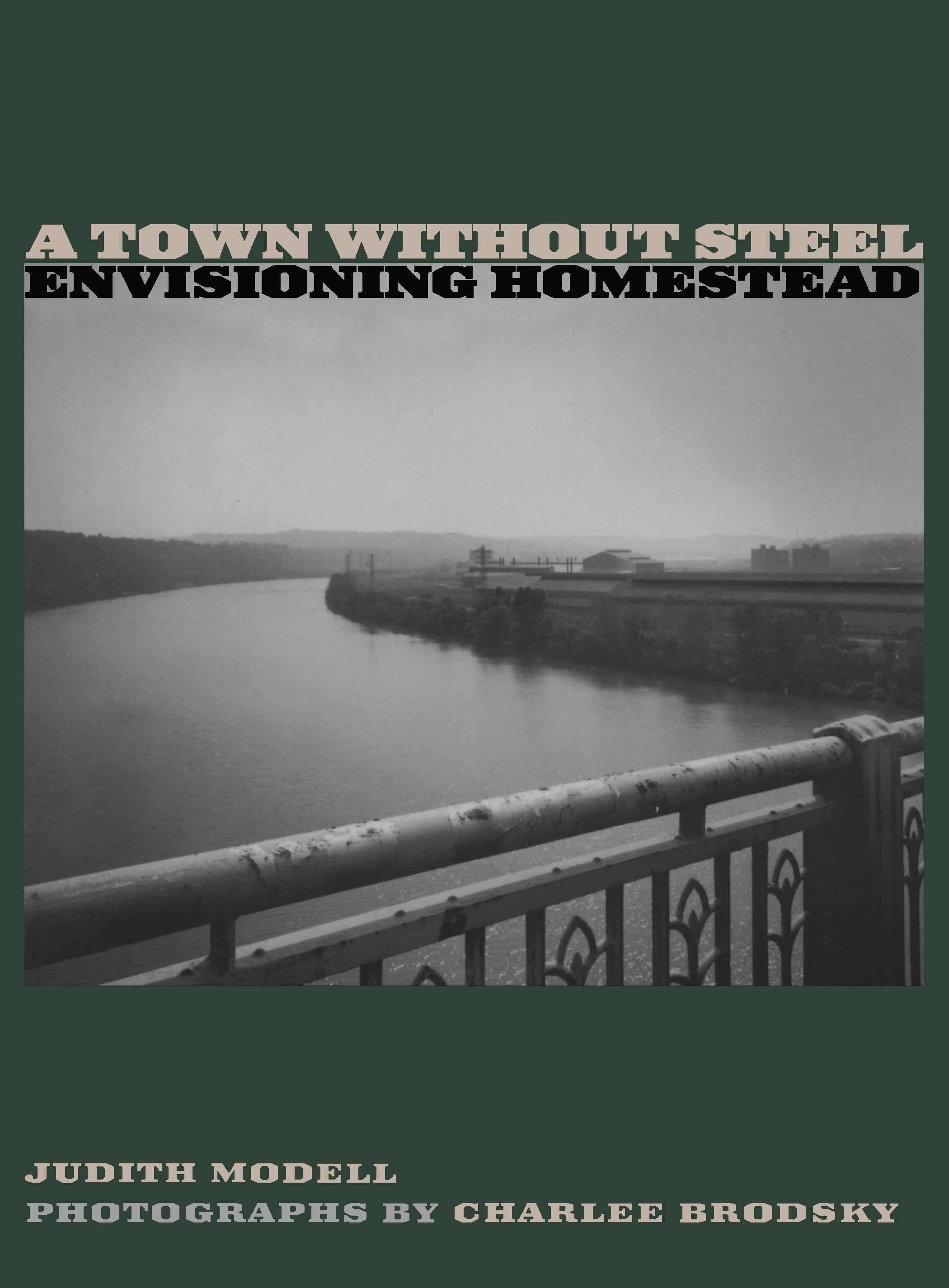
Photographs by Charlee Brodsky
In 1986, with little warning, the USX Homestead Works closed. Thousands of workers who depended on steel to survive were left without work. A Town Without Steel looks at the people of Homestead as they reinvent their views of household and work and place in this world. The book details the modifications and revisions of domestic strategies in a public crisis. In some ways unique, and in some ways typical of American industrial towns, the plight of Homestead sheds light on social, cultural, and political developments of the late twentieth century. In this anthropological and photographic account of a town facing the crisis of deindustrialization, A Town Without Steel focuses on families. Reminiscent of Margaret Byington and Lewis Hine's approach in Homestead, Charlee Brodsky's photographs document the visual dimension of change in Homestead. The mill that dominated the landscape transformed to a vast, empty lot; a crowded commercial street turns into a ghost town; and an abundance of well-kept homes become an abandoned street of houses for sale. The individual narratives and family snapshots, Modell's interpretations, and Brodsky's photographs all evoke the tragedy and the resilience of a town whose primary source of self-identification no longer exists.
In 1986, with little warning, the USX Homestead Works closed. Thousands of workers who depended on steel to survive were left without work. A Town Without Steel looks at the people of Homestead as they reinvent their views of household and work and place in this world. The book details the modifications and revisions of domestic strategies in a public crisis. In some ways unique, and in some ways typical of American industrial towns, the plight of Homestead sheds light on social, cultural, and political developments of the late twentieth century. In this anthropological and photographic account of a town facing the crisis of deindustrialization, A Town Without Steel focuses on families. Reminiscent of Margaret Byington and Lewis Hine's approach in Homestead, Charlee Brodsky's photographs document the visual dimension of change in Homestead. The mill that dominated the landscape transformed to a vast, empty lot; a crowded commercial street turns into a ghost town; and an abundance of well-kept homes become an abandoned street of houses for sale. The individual narratives and family snapshots, Modell's interpretations, and Brodsky's photographs all evoke the tragedy and the resilience of a town whose primary source of self-identification no longer exists.
Betala smidigt med kort, Klarna, Apple Pay eller Google Pay. Är du inte nöjd har du alltid 14 dagars ångerrätt. Läs mer i våra villkor. Har du några frågor, mejla oss på hello@memmo.org.
Memmo gör det enklare att plugga – var du än är i världen. Hos oss samlar du kursböcker och smarta studieverktyg på ett och samma ställe: sammanfattningar, quiz, poddar och flashcards. Och så Ted, din studiekompis som svarar på allt du undrar. Över 50 000 studenter pluggar redan här – byggt för att du ska lära dig snabbare och stressa mindre.
Du kanske också gillar
Köp boken0