
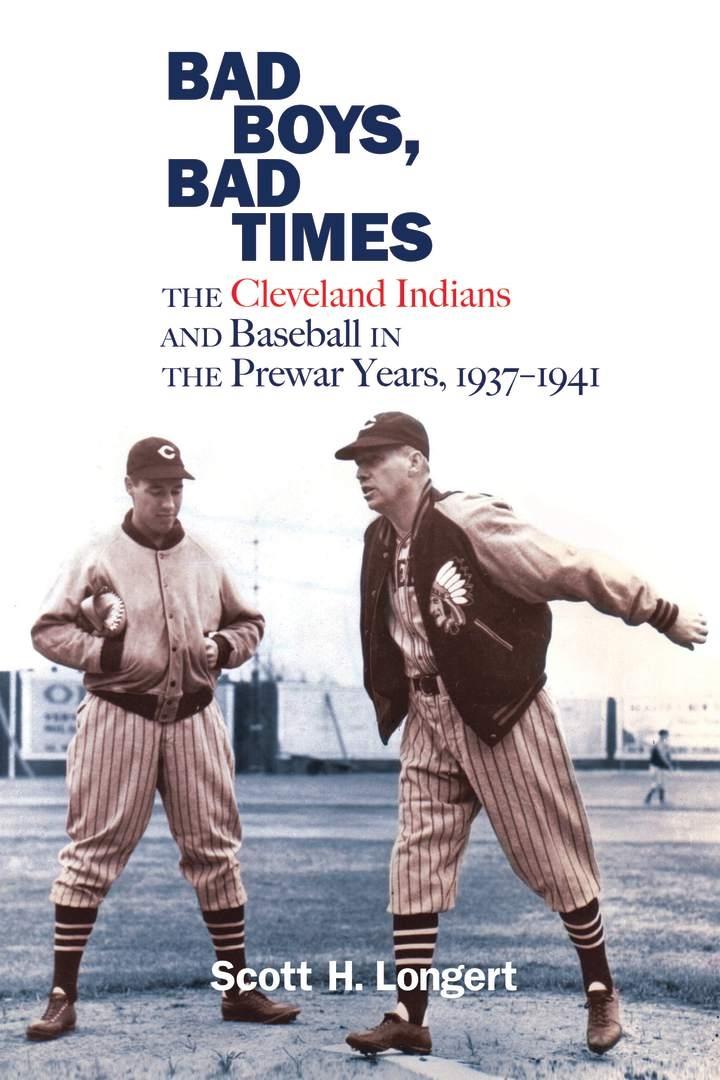
In 1937, the Great Depression was still lingering, but at baseball parks across the country there was a sense of optimism. Major League attendance was on a sharp rise. Tickets to an Indians game at League Park on Lexington and East 66th were $1.60 for box seats, $1.35 for reserve seats, and $.55 for the bleachers. Cleveland fans were particularly upbeat—Bob Feller, the teenage phenomenon, was a farm boy with a blistering fast ball. Night games were an exciting development. Better days were ahead.
But there were mounting issues facing the Indians. For one thing, it was rumored that the team had illegally signed Feller. Baseball Commissioner Judge Kenesaw Mountain Landis was looking into that matter and one other. Issues with an alcoholic catcher, dugout fights, bats thrown into stands, injuries, and a player revolt kept things lively.
In Bad Boys, Bad Times: The Cleveland Indians and Baseball in the Prewar Years, 1937–1941—the follow-up to his No Money, No Beer, No Pennants: The Cleveland Indians and Baseball in the Great Depression—baseball historian Scott H. Longert writes about an exciting period for the team, with details and anecdotes that will please fans all over.
Betala smidigt med kort, Klarna, Apple Pay eller Google Pay. Är du inte nöjd har du alltid 14 dagars ångerrätt. Läs mer i våra villkor. Har du några frågor, mejla oss på hello@memmo.org.
Memmo gör det enklare att plugga – var du än är i världen. Hos oss samlar du kursböcker och smarta studieverktyg på ett och samma ställe: sammanfattningar, quiz, poddar och flashcards. Och så Ted, din studiekompis som svarar på allt du undrar. Över 50 000 studenter pluggar redan här – byggt för att du ska lära dig snabbare och stressa mindre.