
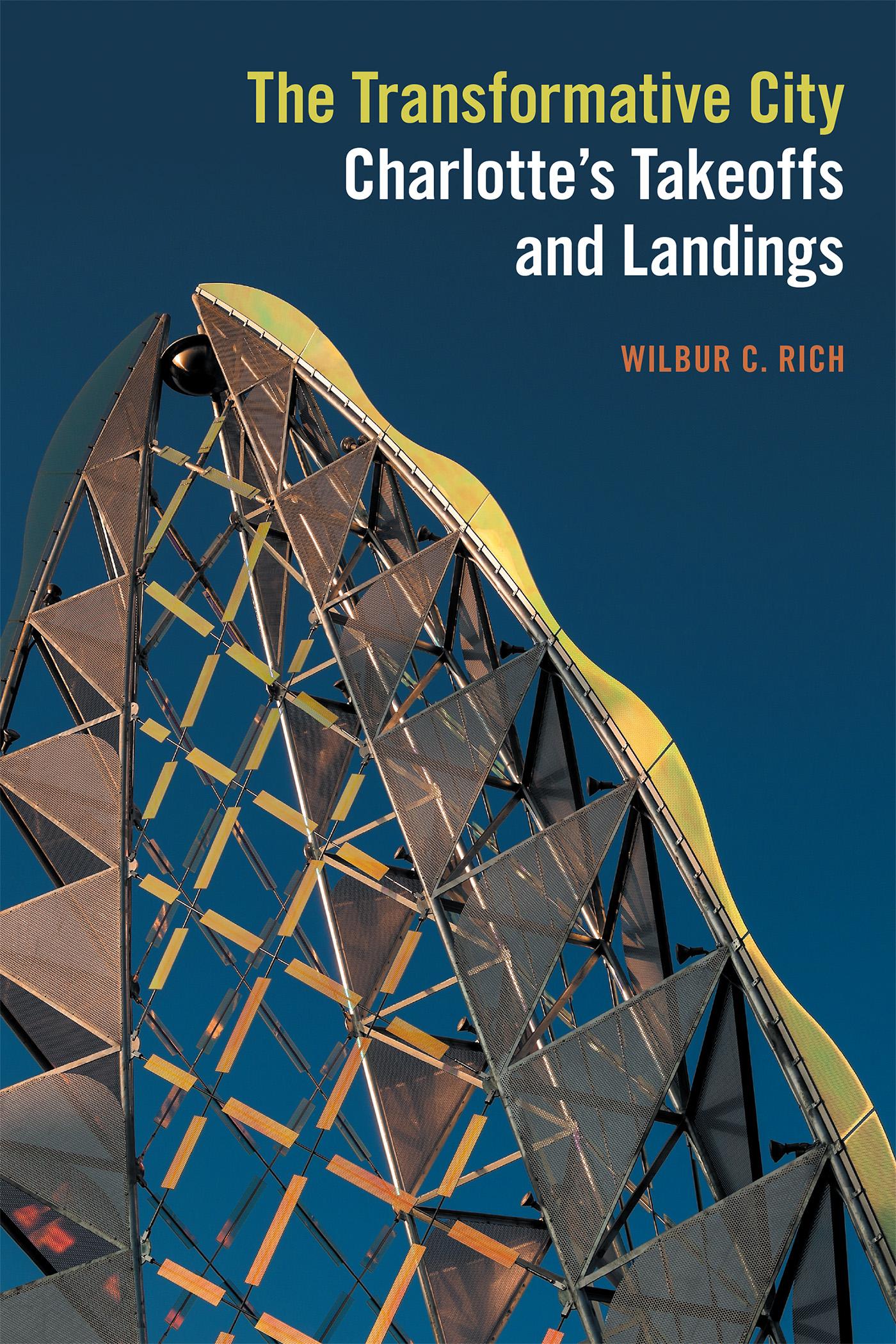
Sunbelt cities like Atlanta, Charlotte, and Miami, with their international airports, have a transportation advantage that overwhelms global competition from other southern cities. Why? The short answer to this question seems to be intuitive, but the long answer lies at the intersection of built infrastructure policies, civic boosterism, and the changing nature of American cities. Simply put, Charlotte leaders invested in the future and took advantage of its opportunities. In the twentieth century Charlotte, North Carolina, underwent several generational changes in leadership and saw the emergence of a pro-growth coalition active in matters of the city’s ambience, race relations, business decisions, and use of state and federal government grants-in-aid.
In The Transformative City, Wilbur C. Rich examines the complex interrelationships of these factors to illustrate the uniqueness of North Carolina’s most populous city and explores the ways in which the development and success of Charlotte Douglas International Airport has in turn led to development in the city itself, including the growth of both the financial industries and political sectors. Rich also examines the role the federal government had in airport development, banking, and race relation reforms. The Transformative City traces the economic transformation of Charlotte as a city and its airport as an agent of change.
Betala smidigt med kort, Klarna, Apple Pay eller Google Pay. Är du inte nöjd har du alltid 14 dagars ångerrätt. Läs mer i våra villkor. Har du några frågor, mejla oss på hello@memmo.org.
Memmo gör det enklare att plugga – var du än är i världen. Hos oss samlar du kursböcker och smarta studieverktyg på ett och samma ställe: sammanfattningar, quiz, poddar och flashcards. Och så Ted, din studiekompis som svarar på allt du undrar. Över 75 000 studenter pluggar redan här – byggt för att du ska lära dig snabbare och stressa mindre.