
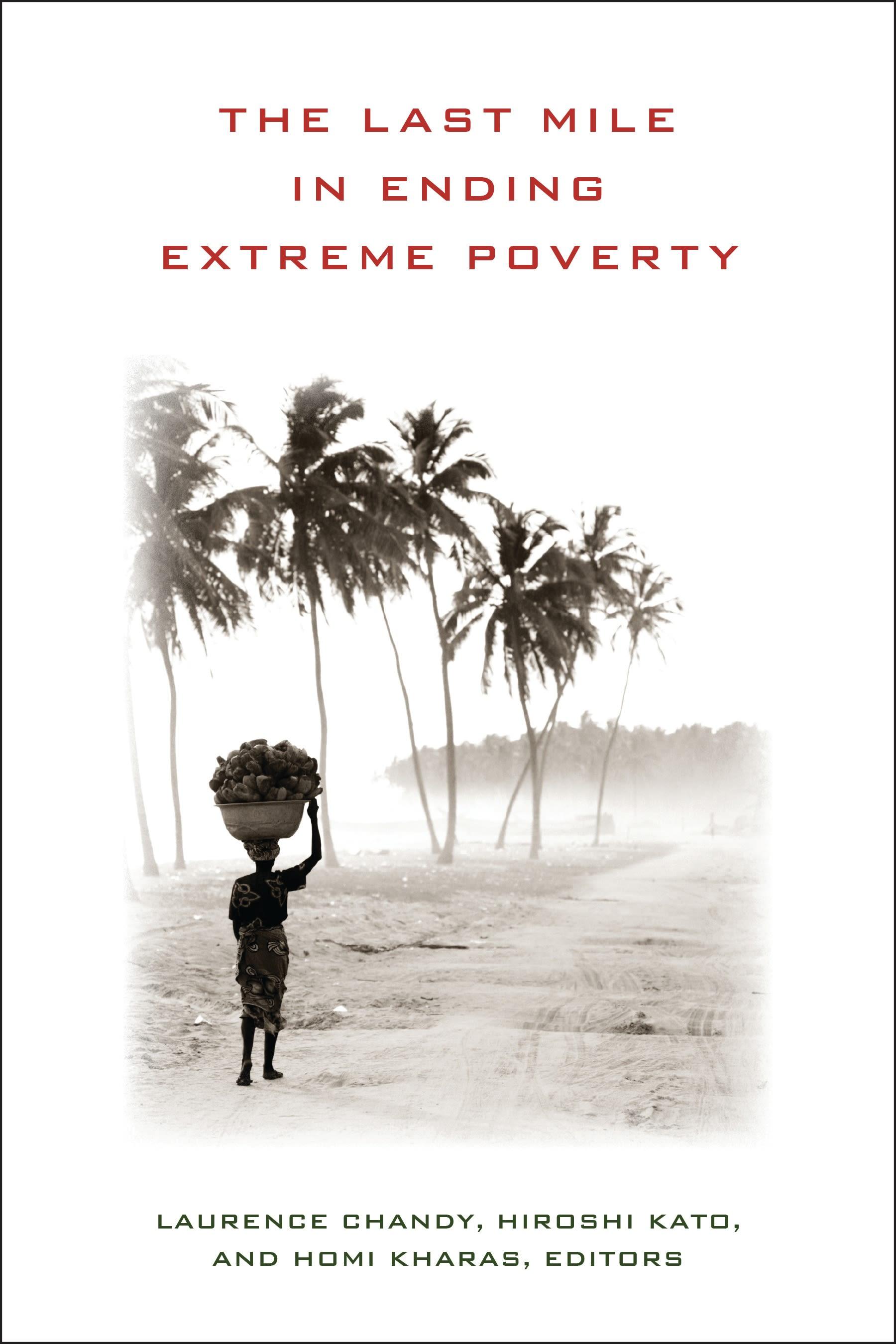
Viewed from a global scale, steady progress has been made in reducing extreme povertydefined by the $1.25-a-day poverty lineover the past three decades. This success has sparked renewed enthusiasm about the possibility of eradicating extreme poverty within a generation. However, progress is expected to become more difficult, and slower, over time. This book will examine three central changes that need to be overcome in traveling the last mile: breaking cycles of conflict, supporting inclusive growth, and managing shocks and risks. By uncovering new evidence and identifying new ideas and solutions for spurring peace, jobs, and resilience in poor countries, The Last Mile in Ending Extreme Poverty will outline an agenda to inform poverty reduction strategies for governments, donors, charities, and foundations around the world.
Contents
Part I: Peace: Breaking the Cycle of Conflict
External finance for state and peace building, Marcus Manuel and Alistair McKechnie, Overseas Development Institute
Reforming international cooperation to improve the sustainability of peace, Bruce Jones, Brookings and New York University
Bridging state and local communities through livelihood improvements, Ryutaro Murotani, JICA, and Yoichi Mine, JICA-RI and Doshisha University
Postconflict trajectories and the potential for poverty reduction, Gary Milante, SIPRI
Part II: Jobs: Supporting Inclusive Growth
Structural change and Africa's poverty puzzle, John Page, Brookings
Public goods for private jobs: lessons from the Pacific, Shane Evans, Michael Carnahan and Alice Steele, Department of Foreign Affairs and Trade, Government of Australia
Strategies for inclusive development in agrarian Sub-Saharan countries, Akio Hosono, JICA-RI
The role of agriculture in poverty reduction, John McArthur, Brookings, UN Foundation, and Fung Global Institute
Part III: Resilience: Managing Shocks and Risks
Environmental stress and conflict, Stephen Smith, George Washington University and Brookings
Toward community resilience: The role of social capital after disasters, Go Shimada, JICA-RI
Social protection and the end of extreme poverty, Raj Desai, Georgetown University and Brookings
Contents
Part I: Peace: Breaking the Cycle of Conflict
External finance for state and peace building, Marcus Manuel and Alistair McKechnie, Overseas Development Institute
Reforming international cooperation to improve the sustainability of peace, Bruce Jones, Brookings and New York University
Bridging state and local communities through livelihood improvements, Ryutaro Murotani, JICA, and Yoichi Mine, JICA-RI and Doshisha University
Postconflict trajectories and the potential for poverty reduction, Gary Milante, SIPRI
Part II: Jobs: Supporting Inclusive Growth
Structural change and Africa's poverty puzzle, John Page, Brookings
Public goods for private jobs: lessons from the Pacific, Shane Evans, Michael Carnahan and Alice Steele, Department of Foreign Affairs and Trade, Government of Australia
Strategies for inclusive development in agrarian Sub-Saharan countries, Akio Hosono, JICA-RI
The role of agriculture in poverty reduction, John McArthur, Brookings, UN Foundation, and Fung Global Institute
Part III: Resilience: Managing Shocks and Risks
Environmental stress and conflict, Stephen Smith, George Washington University and Brookings
Toward community resilience: The role of social capital after disasters, Go Shimada, JICA-RI
Social protection and the end of extreme poverty, Raj Desai, Georgetown University and Brookings
Sidor: 320
Kategori: Ekonomi & Utveckling
e-ISBN: 9780815726340
Fraktvikt: 1.2 kg
Skickas inom: 1-2 dagar
Betala smidigt med kort, Klarna, Apple Pay eller Google Pay. Är du inte nöjd har du alltid 14 dagars ångerrätt. Läs mer i våra villkor. Har du några frågor, mejla oss på hello@memmo.org.
Memmo gör det enklare att plugga – var du än är i världen. Hos oss samlar du kursböcker och smarta studieverktyg på ett och samma ställe: sammanfattningar, quiz, poddar och flashcards. Och så Ted, din studiekompis som svarar på allt du undrar. Över 50 000 studenter pluggar redan här – byggt för att du ska lära dig snabbare och stressa mindre.