
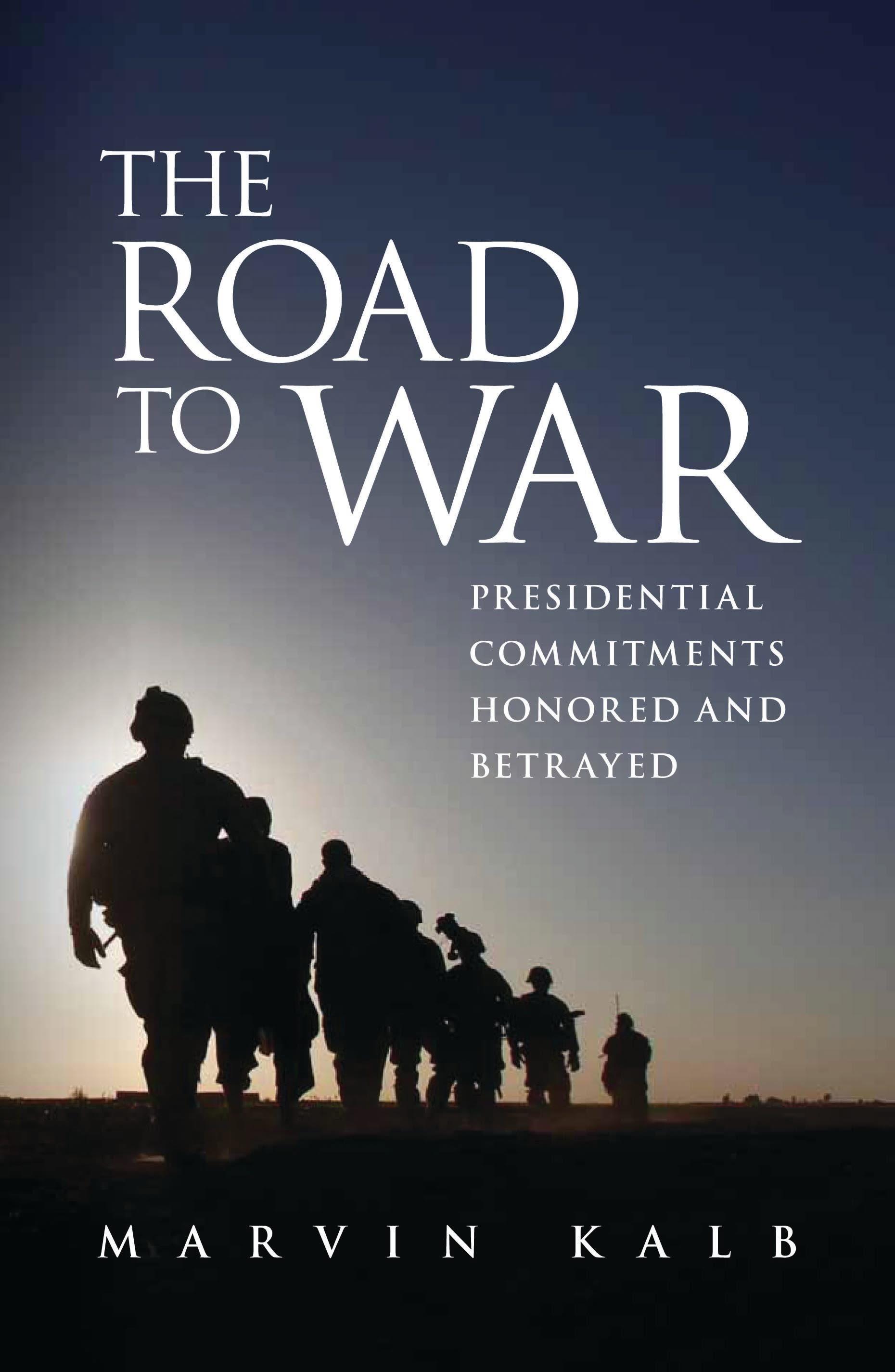
Not since Pearl Harbor has an American president gone to Congress to request a declaration of war. Nevertheless, since then, one president after another, from Truman to Obama, has ordered American troops into wars all over the world. From Korea to Vietnam, Panama to Grenada, Lebanon to Bosnia, Afghanistan to Iraqwhy have presidents sidestepped declarations of war? Marvin Kalb, former chief diplomatic correspondent for CBS and NBC News, explores this key question in his thirteenth book about the presidency and U.S. foreign policy.
Instead of a declaration of war, presidents have justified their war-making powers by citing "commitments," private and public, made by former presidents. Many of these commitments have been honored, but some betrayed. Surprisingly, given the tight U.S.-Israeli relationship, Israeli leaders feel that at times they have been betrayed by American presidents. Is it time for a negotiated defense treaty between the United States and Israel as a way of substituting for a string of secret presidential commitments?
From Israel to Vietnam, presidential commitments have proven to be tricky and dangerous. For example, one president after another committed the United States to the defense of South Vietnam, often without explanation. Over the years, these commitments mushroomed into national policy, leading to a war costing 58,000 American lives. Few in Congress or the media chose to question the war's provenance or legitimacy, until it was too late. No president saw the need for a declaration of war, considering one to be old-fashioned.
The word of a president can morph into a national commitment. It can become the functional equivalent of a declaration of war. Therefore, whenever a president "commits"the United States to a policy or course of action with, or increasingly without, congressional approval, watch outthe White House may be setting the nation on a road toward war.
The Road to War was a 2013 Foreword Reviews honorable mention in the subject of War & Military.
Instead of a declaration of war, presidents have justified their war-making powers by citing "commitments," private and public, made by former presidents. Many of these commitments have been honored, but some betrayed. Surprisingly, given the tight U.S.-Israeli relationship, Israeli leaders feel that at times they have been betrayed by American presidents. Is it time for a negotiated defense treaty between the United States and Israel as a way of substituting for a string of secret presidential commitments?
From Israel to Vietnam, presidential commitments have proven to be tricky and dangerous. For example, one president after another committed the United States to the defense of South Vietnam, often without explanation. Over the years, these commitments mushroomed into national policy, leading to a war costing 58,000 American lives. Few in Congress or the media chose to question the war's provenance or legitimacy, until it was too late. No president saw the need for a declaration of war, considering one to be old-fashioned.
The word of a president can morph into a national commitment. It can become the functional equivalent of a declaration of war. Therefore, whenever a president "commits"the United States to a policy or course of action with, or increasingly without, congressional approval, watch outthe White House may be setting the nation on a road toward war.
The Road to War was a 2013 Foreword Reviews honorable mention in the subject of War & Military.
Sidor: 287
Kategori: Statsvetenskap & Politik
e-ISBN: 9780815724438
Fraktvikt: 1.2 kg
Skickas inom: 1-2 dagar
Betala smidigt med kort, Klarna, Apple Pay eller Google Pay. Är du inte nöjd har du alltid 14 dagars ångerrätt. Läs mer i våra villkor. Har du några frågor, mejla oss på hello@memmo.org.
Memmo gör det enklare att plugga – var du än är i världen. Hos oss samlar du kursböcker och smarta studieverktyg på ett och samma ställe: sammanfattningar, quiz, poddar och flashcards. Och så Ted, din studiekompis som svarar på allt du undrar. Över 50 000 studenter pluggar redan här – byggt för att du ska lära dig snabbare och stressa mindre.