
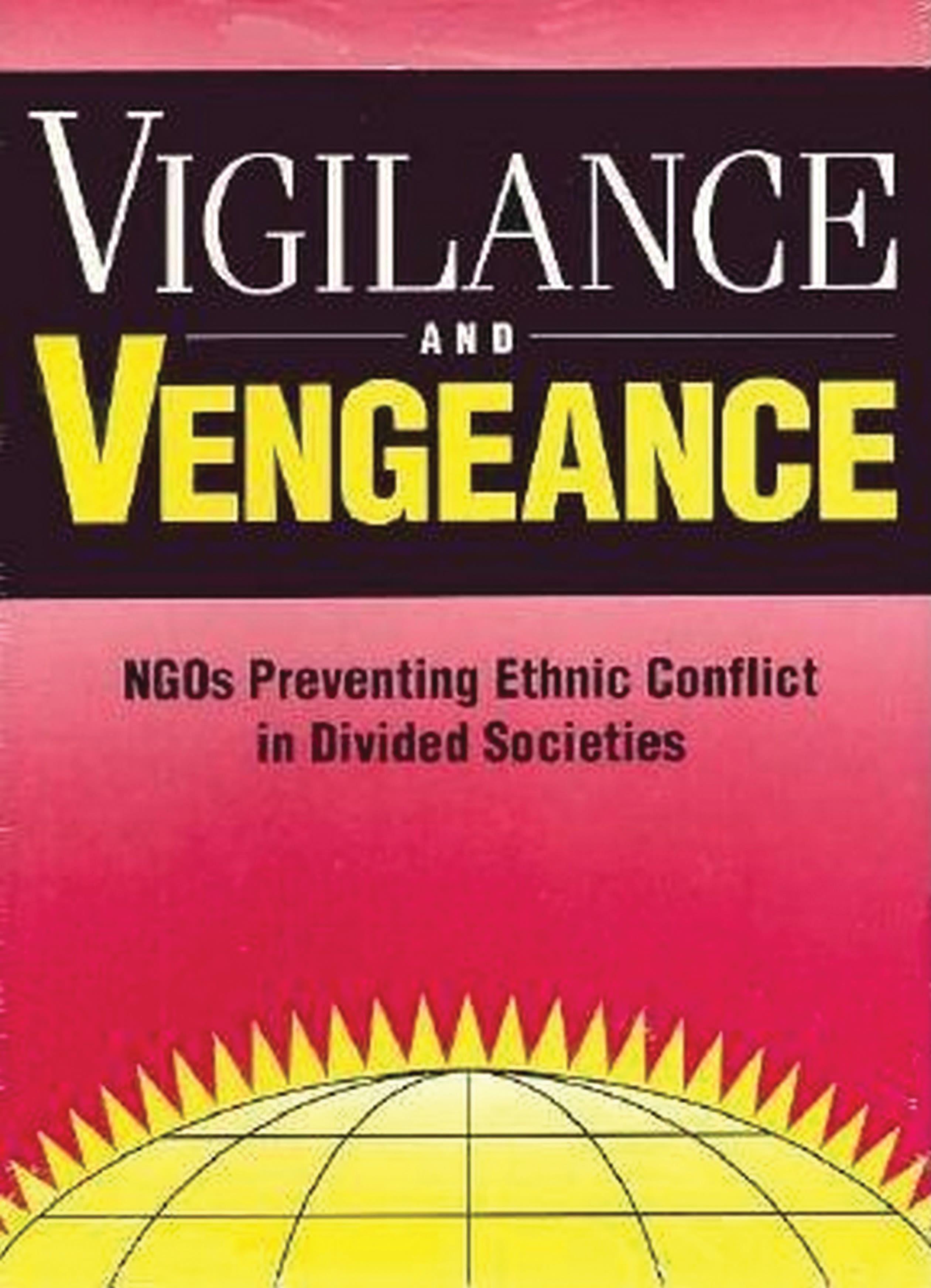
The world is awash with ethnic and religious conflict. Nearly 5 million people have lost their lives and more than 50 million have been displaced in the maelstrom of intergroup conflict since 1990. During that same period, there have been about 60 civil wars and war-like intrastate battles. While ethnic, religious, and cultural fratricide remain a constant global theme, there are regions where preventive diplomacy has avoided, limited, or restrained such hostilities. In some situations, early warning was timely, but no one listened. In others, early warning was converted into effective action.
What lessons can be learned for the future of early warning, early action, and preventive diplomacy? This volume examines whether those lessons can be discerned, whether continuing hostilities around the globe can be held in check, and in particular whether nongovernmental organizations (NGOs) can contribute to peace through preventive diplomacy.
The contributors explore the role of NGOs in reducing ethnic and religious conflict and diminishing bloodshed and killings in troubled countries. Using case studies on Burundi, Guatemala, Macedonia, Nigeria, Rwanda, Sri Lanka, and the Sudan, they explore theory and practice, drawing out lessons for preventive diplomacy and early warning. The cases reveal that preventive diplomacy represents ambitious efforts on the part of both local and international NGOs. They also illustrate that early warning embraces a kaleidoscope of early, not-so-early, and belated signals. In Rwanda those signals were heeded too late; in Macedonia, and Burundi, early warning has been sufficient. The case studies represent a combination of failures and successes and of different and significant lessons for enhancing the effectiveness of early warning, early action, and preventive diplomacy.
In addition to Rotberg, the contributors are Melissa E. Crow, International Tribunal for Rwanda; Francis M. Deng, the Brookings Institution; Alison L. Des Forges, Africa Watch; Eran Fraenkel, Search for Common Ground, Macedonia; Darren Kew, Council on Foreign Relations; Tom Lent, Save the Children; Rachel M. McCleary, Georgetown University; Kalypso Nicolaidis, Harvard University; Clement Nwankwo, Constitutional Rights Project, Nigeria; Violeta Petroska Beska, University of Skopje, Macedonia; Richard A. Sollom, Tufts University; Neelan Tiruchelvam, International Centre for Ethnic Studies, Sri Lanka.
A Brookings Institution and World Peace Foundation copublication
What lessons can be learned for the future of early warning, early action, and preventive diplomacy? This volume examines whether those lessons can be discerned, whether continuing hostilities around the globe can be held in check, and in particular whether nongovernmental organizations (NGOs) can contribute to peace through preventive diplomacy.
The contributors explore the role of NGOs in reducing ethnic and religious conflict and diminishing bloodshed and killings in troubled countries. Using case studies on Burundi, Guatemala, Macedonia, Nigeria, Rwanda, Sri Lanka, and the Sudan, they explore theory and practice, drawing out lessons for preventive diplomacy and early warning. The cases reveal that preventive diplomacy represents ambitious efforts on the part of both local and international NGOs. They also illustrate that early warning embraces a kaleidoscope of early, not-so-early, and belated signals. In Rwanda those signals were heeded too late; in Macedonia, and Burundi, early warning has been sufficient. The case studies represent a combination of failures and successes and of different and significant lessons for enhancing the effectiveness of early warning, early action, and preventive diplomacy.
In addition to Rotberg, the contributors are Melissa E. Crow, International Tribunal for Rwanda; Francis M. Deng, the Brookings Institution; Alison L. Des Forges, Africa Watch; Eran Fraenkel, Search for Common Ground, Macedonia; Darren Kew, Council on Foreign Relations; Tom Lent, Save the Children; Rachel M. McCleary, Georgetown University; Kalypso Nicolaidis, Harvard University; Clement Nwankwo, Constitutional Rights Project, Nigeria; Violeta Petroska Beska, University of Skopje, Macedonia; Richard A. Sollom, Tufts University; Neelan Tiruchelvam, International Centre for Ethnic Studies, Sri Lanka.
A Brookings Institution and World Peace Foundation copublication
Sidor: 304
Kategori: Statsvetenskap & Politik
e-ISBN: 9780815720607
Fraktvikt: 1.2 kg
Skickas inom: 1-2 dagar
Betala smidigt med kort, Klarna, Apple Pay eller Google Pay. Är du inte nöjd har du alltid 14 dagars ångerrätt. Läs mer i våra villkor. Har du några frågor, mejla oss på hello@memmo.org.
Memmo gör det enklare att plugga – var du än är i världen. Hos oss samlar du kursböcker och smarta studieverktyg på ett och samma ställe: sammanfattningar, quiz, poddar och flashcards. Och så Ted, din studiekompis som svarar på allt du undrar. Över 50 000 studenter pluggar redan här – byggt för att du ska lära dig snabbare och stressa mindre.