
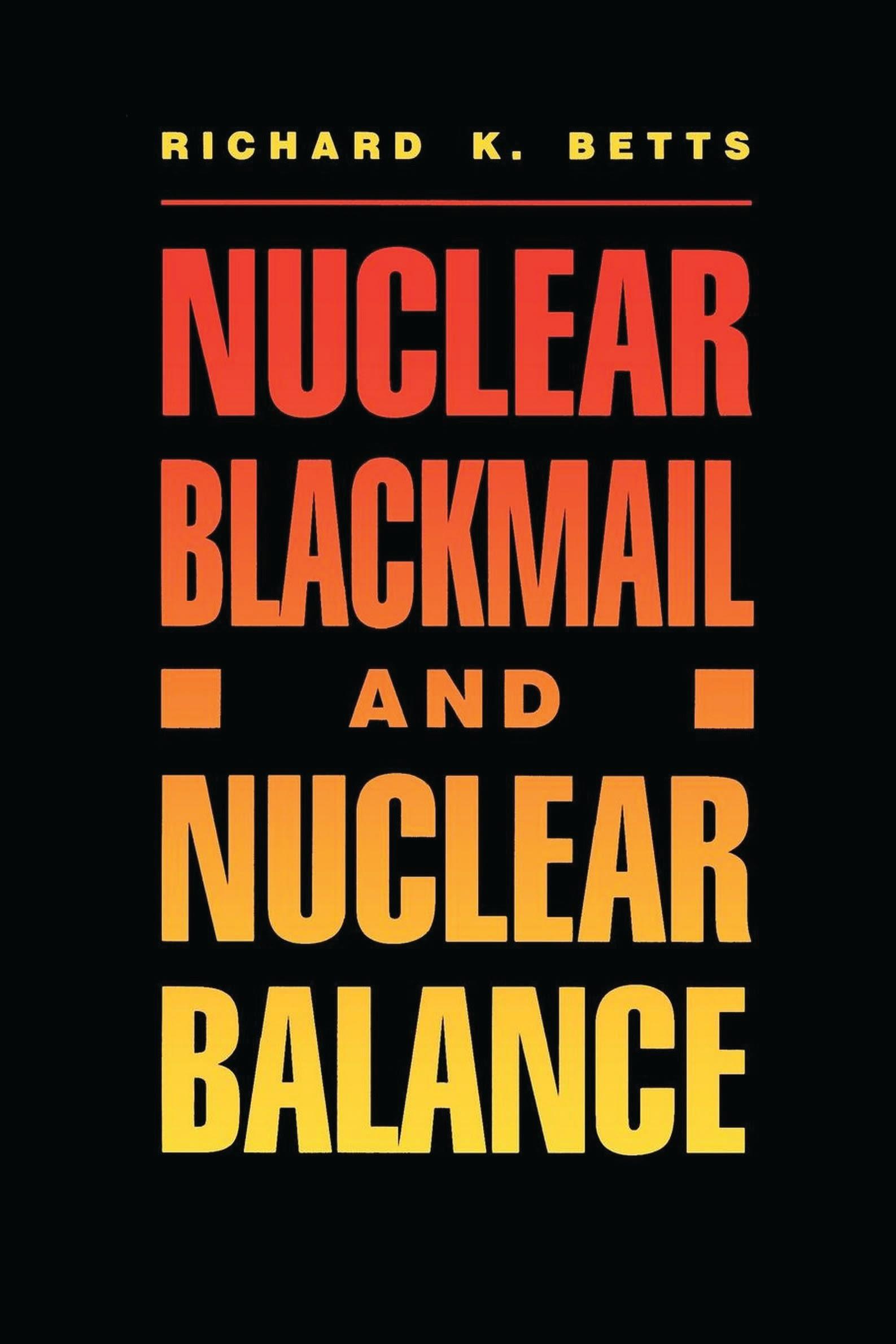
In numerous crises after World War IIBerlin, Korea, the Taiwan Straits, and the Middle Eastthe United States resorted to vague threats to use nuclear weapons in order to deter Soviet or Chinese military action. On a few occasions the Soviet Union also engaged in nuclear saber-ratling. Using declassified documents and other sources, this volume examines those crises and compares the decisionmaking processes of leaders who considered nuclear threats with the commonly accepted logic of nuclear deterrence and coercion.
Rejecting standard explanations of our leader's logic in these cases, Betts suggests that U.S. presidents were neither consciously blufffing when they made nuclear threats, nor prepared to face the consequences if their threats failed. The author also challenges the myth that the 1950s was a golden age of low vulberability for the United Stateas and details how nuclear parity has, and has not, altered conditions that gave rise to nuclear blackmail in the past.
Rejecting standard explanations of our leader's logic in these cases, Betts suggests that U.S. presidents were neither consciously blufffing when they made nuclear threats, nor prepared to face the consequences if their threats failed. The author also challenges the myth that the 1950s was a golden age of low vulberability for the United Stateas and details how nuclear parity has, and has not, altered conditions that gave rise to nuclear blackmail in the past.
Sidor: 240
Kategori: Statsvetenskap & Politik
e-ISBN: 9780815717089
Fraktvikt: 1.2 kg
Skickas inom: 1-2 dagar
Betala smidigt med kort, Klarna, Apple Pay eller Google Pay. Är du inte nöjd har du alltid 14 dagars ångerrätt. Läs mer i våra villkor. Har du några frågor, mejla oss på hello@memmo.org.
Memmo gör det enklare att plugga – var du än är i världen. Hos oss samlar du kursböcker och smarta studieverktyg på ett och samma ställe: sammanfattningar, quiz, poddar och flashcards. Och så Ted, din studiekompis som svarar på allt du undrar. Över 50 000 studenter pluggar redan här – byggt för att du ska lära dig snabbare och stressa mindre.