
2009 Choice Outstanding Academic Title
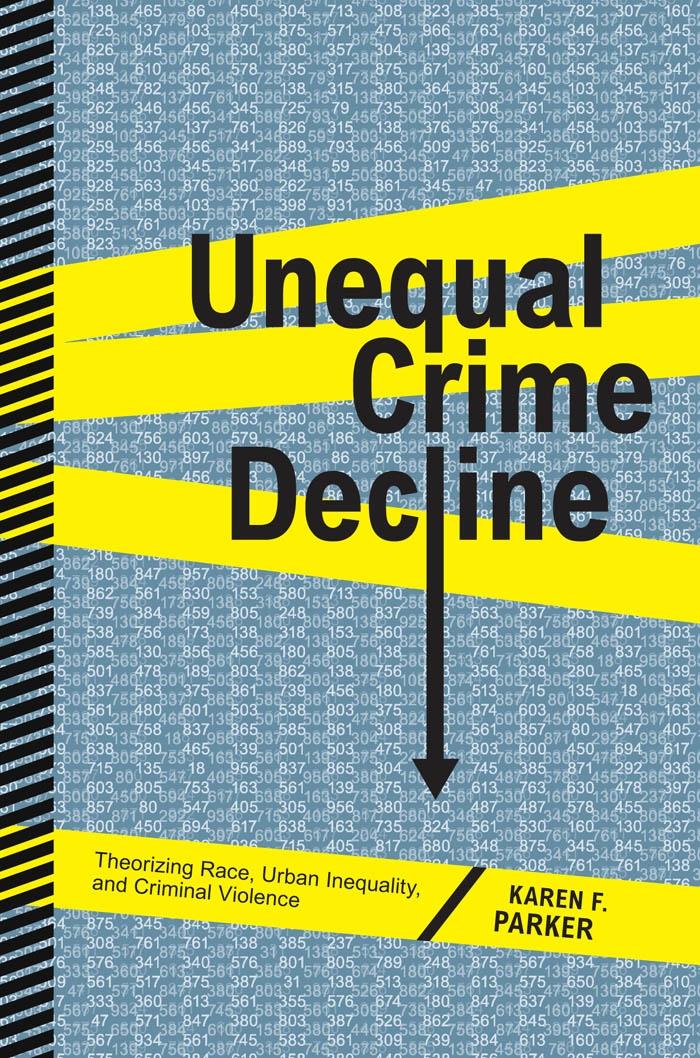
Crime in most urban areas has been falling since 1991. While the decline has been well-documented, few scholars have analyzed which groups have most benefited from the crime decline and which are still on the frontlines of violence—and why that might be. In Unequal Crime Decline, Karen F. Parker presents a structural and theoretical analysis of the various factors that affect the crime decline, looking particularly at the past three decades and the shifts that have taken place, and offers original insight into which trends have declined and why.
Taking into account such indicators as employment, labor market opportunities, skill levels, housing, changes in racial composition, family structure, and drug trafficking, Parker provides statistics that illustrate how these factors do or do not affect urban violence, and carefully considers these factors in relation to various crime trends, such as rates involving blacks, whites, but also trends among black males, white females, as well as others. Throughout the book she discusses popular structural theories of crime and their limitations, in the end concentrating on today’s issues and important contemporary policy to be considered. Unequal Crime Decline is a comprehensive and theoretically sophisticated look at the relationship among race, urban inequality, and violence in the years leading up to and following America’s landmark crime drop.
Betala smidigt med kort, Klarna, Apple Pay eller Google Pay. Är du inte nöjd har du alltid 14 dagars ångerrätt. Läs mer i våra villkor. Har du några frågor, mejla oss på hello@memmo.org.
Memmo gör det enklare att plugga – var du än är i världen. Hos oss samlar du kursböcker och smarta studieverktyg på ett och samma ställe: sammanfattningar, quiz, poddar och flashcards. Och så Ted, din studiekompis som svarar på allt du undrar. Över 50 000 studenter pluggar redan här – byggt för att du ska lära dig snabbare och stressa mindre.