
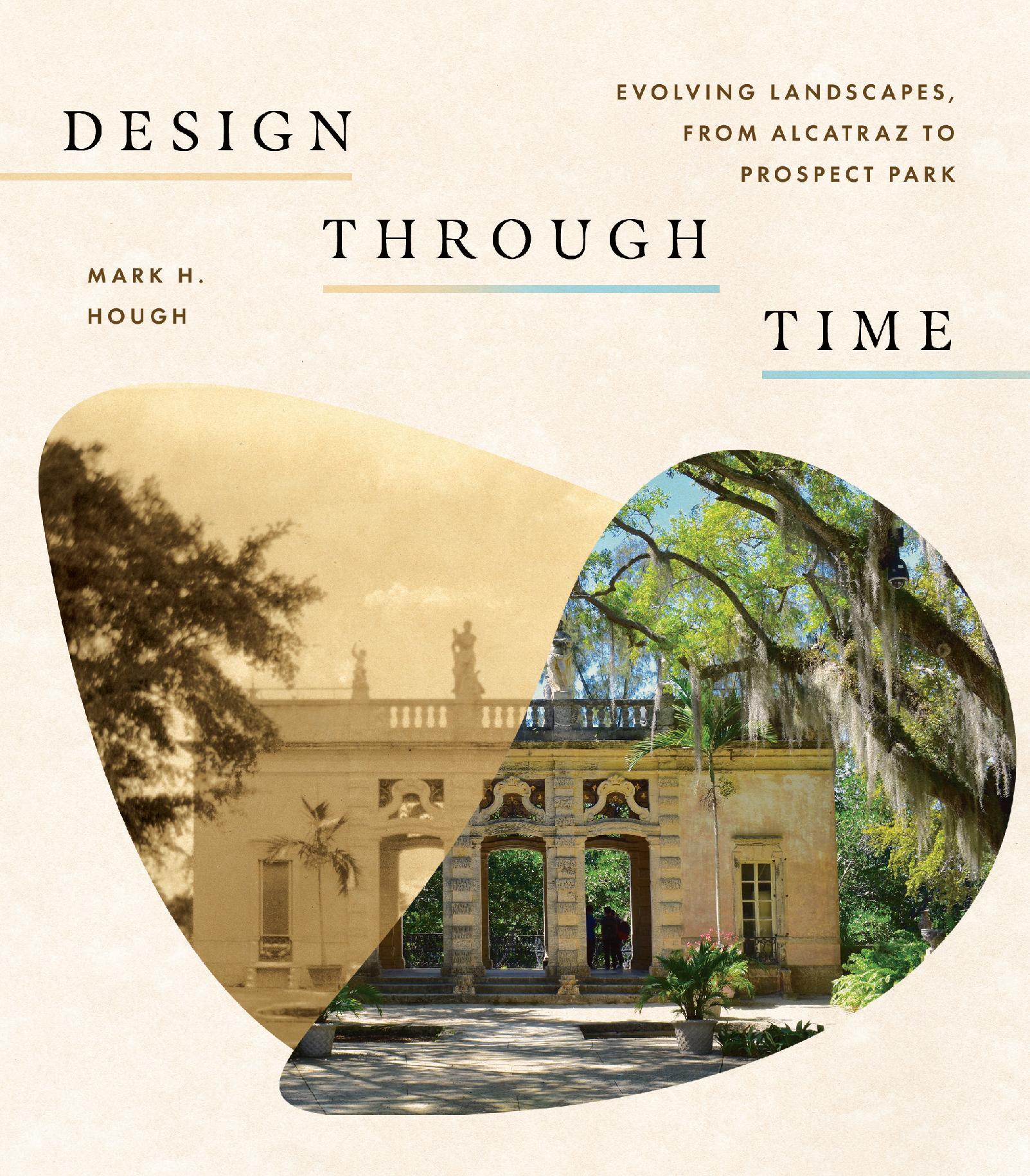
Understanding landscape design as a dynamic, not static, art form
Landscape architects do not situate their work in a vacuum. It exists in a state of constant change and is better understood as a product of continual evolution than as a work of pure design. In Design through Time, Mark Hough offers case studies of parks, gardens, campuses, communities, and cultural sites—from the Missouri Botanical Garden and Mount Auburn Cemetery to Tuskegee University and Dumbarton Oaks Park—to answer several crucial questions: Who is the proposed landscape conceived to please? How will it change, affected by both natural and societal events? How will stewards address the need for landscapes to remain relevant, attractive, and accessible?
To address these concerns, Hough analyzes the influence and impact of generations of administrators, advocates, horticulturalists, institutional leaders, elected officials, and others whose collective decisions compel landscapes to grow and change in ways that strive to respect their established legacies while adjusting to shifting cultural, ecological, and economic realities. The resulting work is a dynamic look at landscape design that reflects its status as an art form that is ever changing, never static.
Landscape architects do not situate their work in a vacuum. It exists in a state of constant change and is better understood as a product of continual evolution than as a work of pure design. In Design through Time, Mark Hough offers case studies of parks, gardens, campuses, communities, and cultural sites—from the Missouri Botanical Garden and Mount Auburn Cemetery to Tuskegee University and Dumbarton Oaks Park—to answer several crucial questions: Who is the proposed landscape conceived to please? How will it change, affected by both natural and societal events? How will stewards address the need for landscapes to remain relevant, attractive, and accessible?
To address these concerns, Hough analyzes the influence and impact of generations of administrators, advocates, horticulturalists, institutional leaders, elected officials, and others whose collective decisions compel landscapes to grow and change in ways that strive to respect their established legacies while adjusting to shifting cultural, ecological, and economic realities. The resulting work is a dynamic look at landscape design that reflects its status as an art form that is ever changing, never static.
Betala smidigt med kort, Klarna, Apple Pay eller Google Pay. Är du inte nöjd har du alltid 14 dagars ångerrätt. Läs mer i våra villkor. Har du några frågor, mejla oss på hello@memmo.org.
Memmo gör det enklare att plugga – var du än är i världen. Hos oss samlar du kursböcker och smarta studieverktyg på ett och samma ställe: sammanfattningar, quiz, poddar och flashcards. Och så Ted, din studiekompis som svarar på allt du undrar. Över 75 000 studenter pluggar redan här – byggt för att du ska lära dig snabbare och stressa mindre.
Du kanske också gillar
Köp boken0