
The first transnational comparative study of legal party capability theory
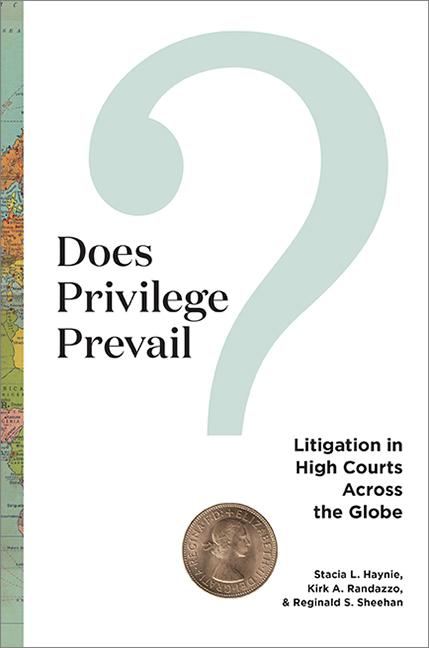
Justice is supposed to be blind. Cynics will say they know better. But what do the facts say? This groundbreaking study provides objective, data-driven answers to long-standing questions about winners and losers in courtrooms across the world. Does the party with the greater resources, such as money and influence, always prevail—and if so, why? Does Privilege Prevail? is the first book to evaluate these questions using a multi-country approach and, in doing so, assess what legal professionals and political scientists call party capability theory.
Stacia Haynie, Kirk Randazzo, and Reginald Sheehan analyze over fifteen thousand litigation outcomes of the high courts of six countries—Australia, Canada, India, the Philippines, South Africa, and the United Kingdom—from 1970 to 2000. This unprecedented trove of data reveals that while the “haves” of society do undoubtedly enjoy certain advantages in the judicial system, a more complex explanation for legal outcomes is required than party capability theory provides—especially when it comes to assessing the role of attorneys and their legal teams or the components of the docket where judges can provide avenues for the “have nots” to succeed.
Justice is supposed to be blind. Cynics will say they know better. But what do the facts say? This groundbreaking study provides objective, data-driven answers to long-standing questions about winners and losers in courtrooms across the world. Does the party with the greater resources, such as money and influence, always prevail—and if so, why? Does Privilege Prevail? is the first book to evaluate these questions using a multi-country approach and, in doing so, assess what legal professionals and political scientists call party capability theory.
Stacia Haynie, Kirk Randazzo, and Reginald Sheehan analyze over fifteen thousand litigation outcomes of the high courts of six countries—Australia, Canada, India, the Philippines, South Africa, and the United Kingdom—from 1970 to 2000. This unprecedented trove of data reveals that while the “haves” of society do undoubtedly enjoy certain advantages in the judicial system, a more complex explanation for legal outcomes is required than party capability theory provides—especially when it comes to assessing the role of attorneys and their legal teams or the components of the docket where judges can provide avenues for the “have nots” to succeed.
Betala smidigt med kort, Klarna, Apple Pay eller Google Pay. Är du inte nöjd har du alltid 14 dagars ångerrätt. Läs mer i våra villkor. Har du några frågor, mejla oss på hello@memmo.org.
Memmo gör det enklare att plugga – var du än är i världen. Hos oss samlar du kursböcker och smarta studieverktyg på ett och samma ställe: sammanfattningar, quiz, poddar och flashcards. Och så Ted, din studiekompis som svarar på allt du undrar. Över 50 000 studenter pluggar redan här – byggt för att du ska lära dig snabbare och stressa mindre.
Du kanske också gillar
Köp boken0