
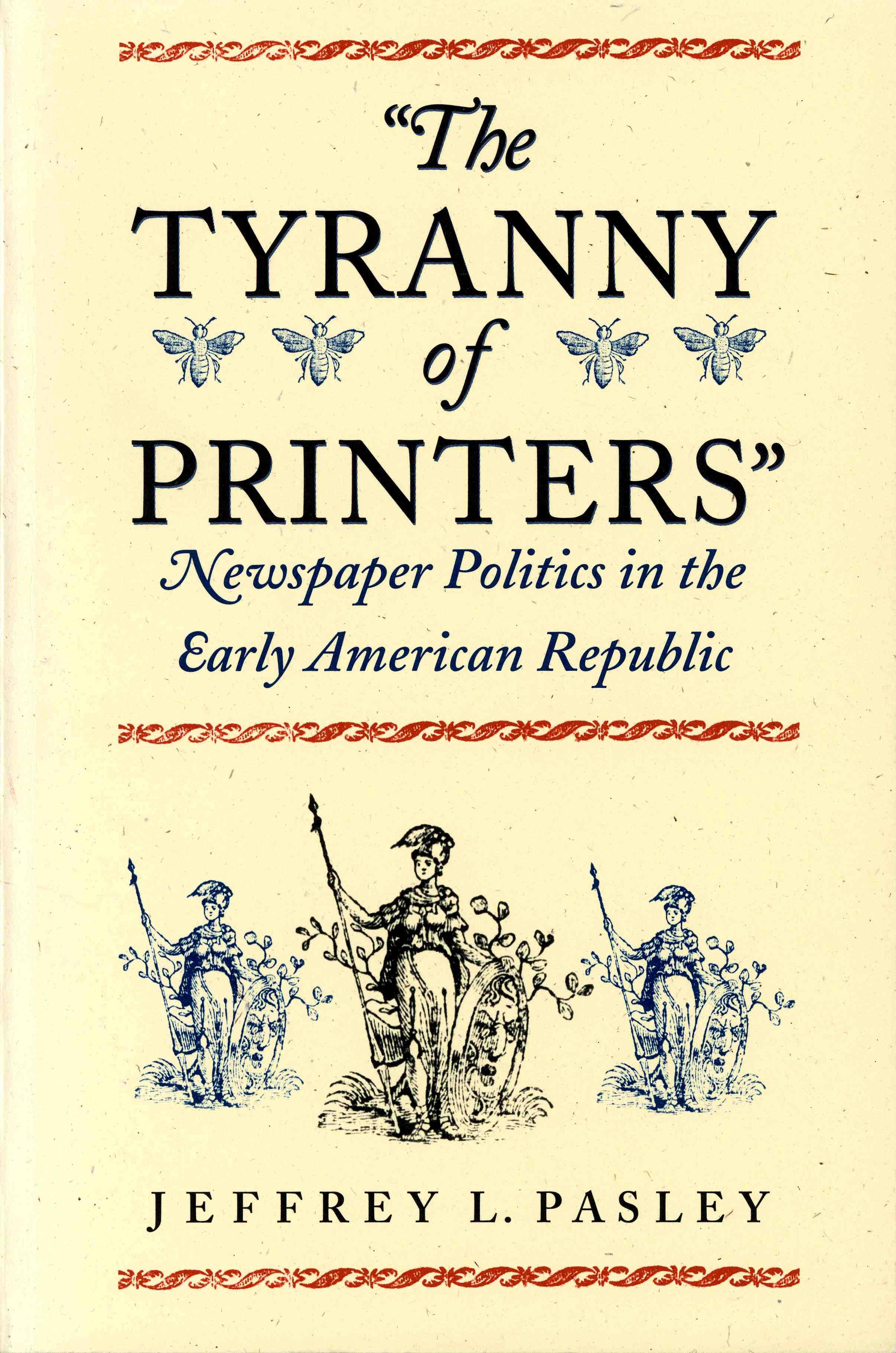
Although frequently attacked for their partisanship and undue political influence, the American media of today are objective and relatively ineffectual compared to their counterparts of two hundred years ago. From the late eighteenth to the late nineteenth century, newspapers were the republic's central political institutions, working components of the party system rather than commentators on it.
The Tyranny of Printers narrates the rise of this newspaper-based politics, in which editors became the chief party spokesmen and newspaper offices often served as local party headquarters. Beginning when Thomas Jefferson enlisted a Philadelphia editor to carry out his battle with Alexander Hamilton for the soul of the new republic (and got caught trying to cover it up), the centrality of newspapers in political life gained momentum after Jefferson's victory in 1800, which was widely credited to a superior network of papers. Jeffrey L. Pasley tells the rich story of this political culture and its culmination in Jacksonian democracy, enlivening his narrative with accounts of the colorful but often tragic careers of individual editors.
Betala smidigt med kort, Klarna, Apple Pay eller Google Pay. Är du inte nöjd har du alltid 14 dagars ångerrätt. Läs mer i våra villkor. Har du några frågor, mejla oss på hello@memmo.org.
Memmo gör det enklare att plugga – var du än är i världen. Hos oss samlar du kursböcker och smarta studieverktyg på ett och samma ställe: sammanfattningar, quiz, poddar och flashcards. Och så Ted, din studiekompis som svarar på allt du undrar. Över 50 000 studenter pluggar redan här – byggt för att du ska lära dig snabbare och stressa mindre.