
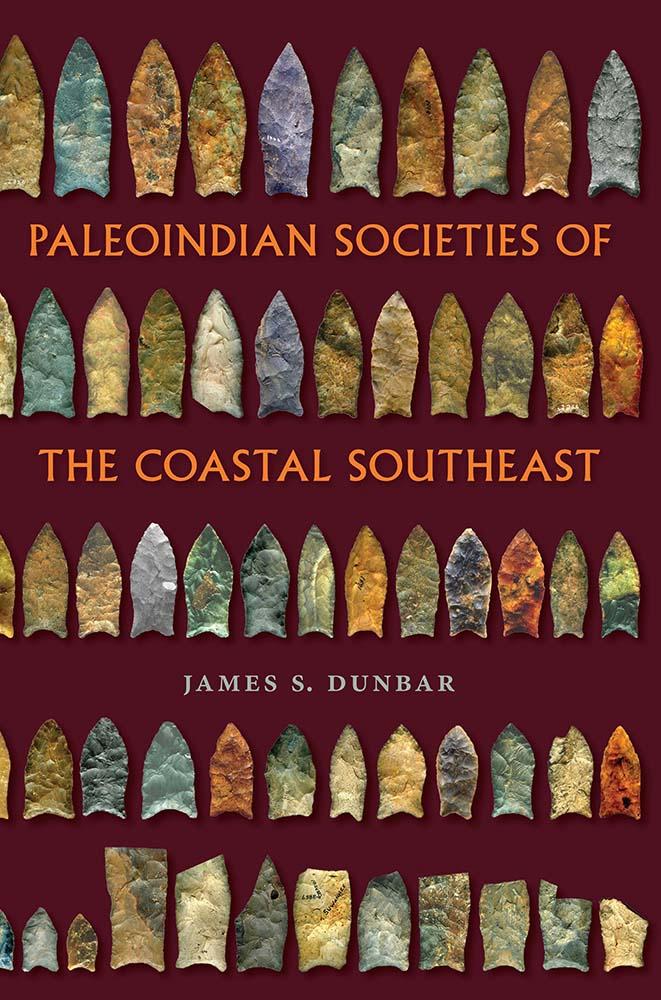
The late Pleistocene-early Holocene landscape hosted more species and greater numbers of them in the Southeast compared to any other region in North America at that time. Yet James Dunbar posits that a misguided reliance on using Old World origins to validate New World evidence has stalled research in this area. Rejecting the one-size-fits-all approach to Pleistocene archaeological sites, Dunbar analyzes five areas of contextual data—stratigraphy; chronology; paleoclimate; the combined consideration of habitat, resource availability, and subsistence; and artifacts and technology—to resolve unanswered questions surrounding the Paleoindian occupation of the Americas.
Through his extensive research, Dunbar demonstrates a masterful understanding of the lifeways of the region’s people and the animals they hunted, showing that the geography and diversity of food sources was unique to that period. He suggests that the most important archaeological and paleontological resources in the Americas still remain undiscovered in Florida’s karst river basins. Building a case for the wealth of information yet to be unearthed, he provides a fresh perspective on the distant past and an original way of thinking about early life on the land mass we call Florida.
A volume in the Florida Museum of Natural History: Ripley P. Bullen Series
Betala smidigt med kort, Klarna, Apple Pay eller Google Pay. Är du inte nöjd har du alltid 14 dagars ångerrätt. Läs mer i våra villkor. Har du några frågor, mejla oss på hello@memmo.org.
Memmo gör det enklare att plugga – var du än är i världen. Hos oss samlar du kursböcker och smarta studieverktyg på ett och samma ställe: sammanfattningar, quiz, poddar och flashcards. Och så Ted, din studiekompis som svarar på allt du undrar. Över 50 000 studenter pluggar redan här – byggt för att du ska lära dig snabbare och stressa mindre.
Du kanske också gillar
Köp boken0