
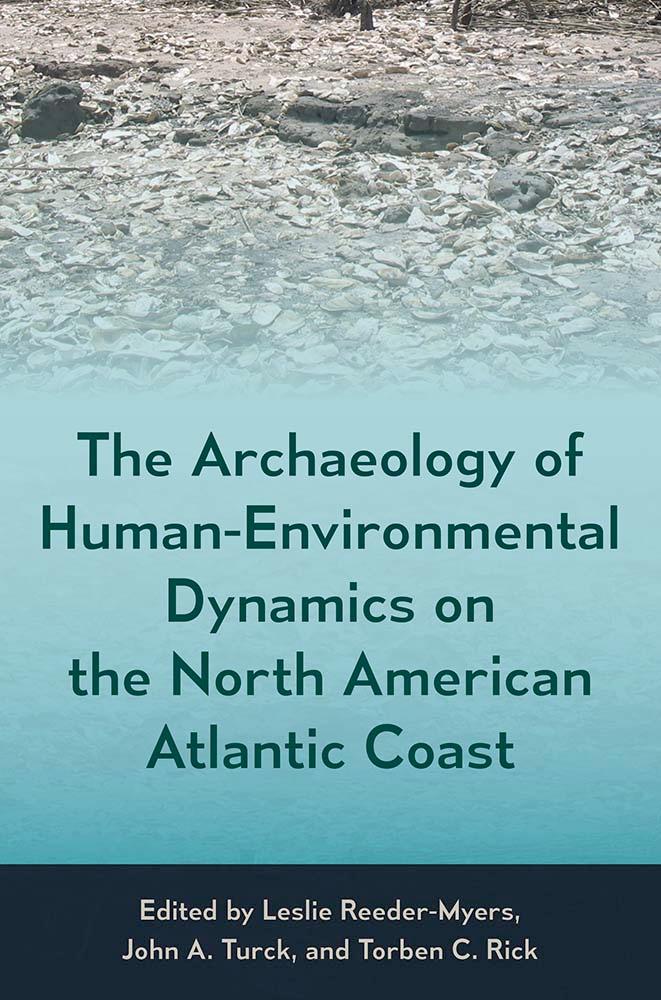
Using archaeology as a tool for understanding long-term ecological and climatic change, this volume synthesizes current knowledge about the ways Native Americans interacted with their environments along the Atlantic Coast of North America over the past 10,000 years.
Leading scholars discuss how the region’s indigenous peoples grappled with significant changes to shorelines and estuaries, from sea level rise to shifting plant and animal distributions to European settlement and urbanization. Together, they provide a valuable perspective spanning millennia on the diverse marine and nearshore ecosystems of the entire Eastern Seaboard—the icy waters of Newfoundland and the Gulf of Maine, the Middle Atlantic regions of the New York Bight and the Chesapeake Bay, and the warm shallows of the St. Johns River and the Florida Keys. This broad comparative outlook brings together populations and areas previously studied in isolation.
Today, the Atlantic Coast is home to tens of millions of people who inhabit ecosystems that are in dramatic decline. The research in this volume not only illuminates the past, but also provides important tools for managing coastal environments into an uncertain future.
A volume in the series Society and Ecology in Island and Coastal Archaeology, edited by Victor D. Thompson
Betala smidigt med kort, Klarna, Apple Pay eller Google Pay. Är du inte nöjd har du alltid 14 dagars ångerrätt. Läs mer i våra villkor. Har du några frågor, mejla oss på hello@memmo.org.
Memmo gör det enklare att plugga – var du än är i världen. Hos oss samlar du kursböcker och smarta studieverktyg på ett och samma ställe: sammanfattningar, quiz, poddar och flashcards. Och så Ted, din studiekompis som svarar på allt du undrar. Över 50 000 studenter pluggar redan här – byggt för att du ska lära dig snabbare och stressa mindre.
Du kanske också gillar
Köp boken0