
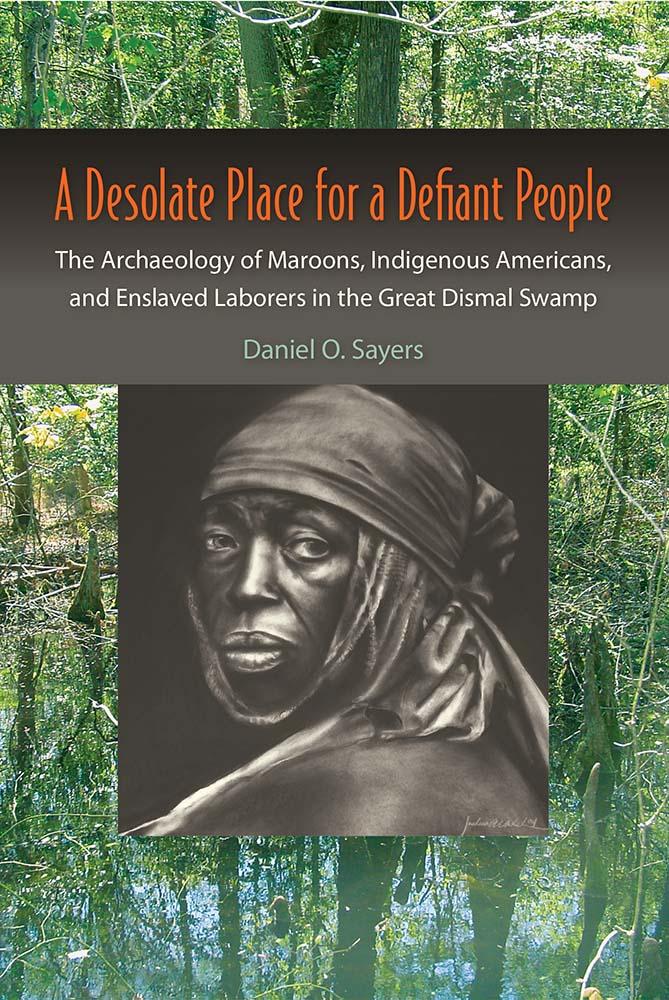
In the 250 years before the Civil War, the Great Dismal Swamp of Virginia and North Carolina was a brutal landscape—2,000 square miles of undeveloped and unforgiving wetlands, peat bogs, impenetrable foliage, and dangerous creatures. It was also a protective refuge for marginalized communities, including Native Americans, African-American maroons, free African Americans, and outcast Europeans. Here they created their own way of life, free of the exploitation and alienation they had escaped.
In the first thorough examination of this vital site, Daniel Sayers examines the area’s archaeological record, exposing and unraveling the complex social and economic systems developed by these defiant communities that thrived on the periphery. He develops an analytical framework based on the complex interplay between alienation, diasporic exile, uneven geographical development, and modes of production to argue that colonialism and slavery inevitably created sustained critiques of American capitalism.
Betala smidigt med kort, Klarna, Apple Pay eller Google Pay. Är du inte nöjd har du alltid 14 dagars ångerrätt. Läs mer i våra villkor. Har du några frågor, mejla oss på hello@memmo.org.
Memmo gör det enklare att plugga – var du än är i världen. Hos oss samlar du kursböcker och smarta studieverktyg på ett och samma ställe: sammanfattningar, quiz, poddar och flashcards. Och så Ted, din studiekompis som svarar på allt du undrar. Över 50 000 studenter pluggar redan här – byggt för att du ska lära dig snabbare och stressa mindre.