
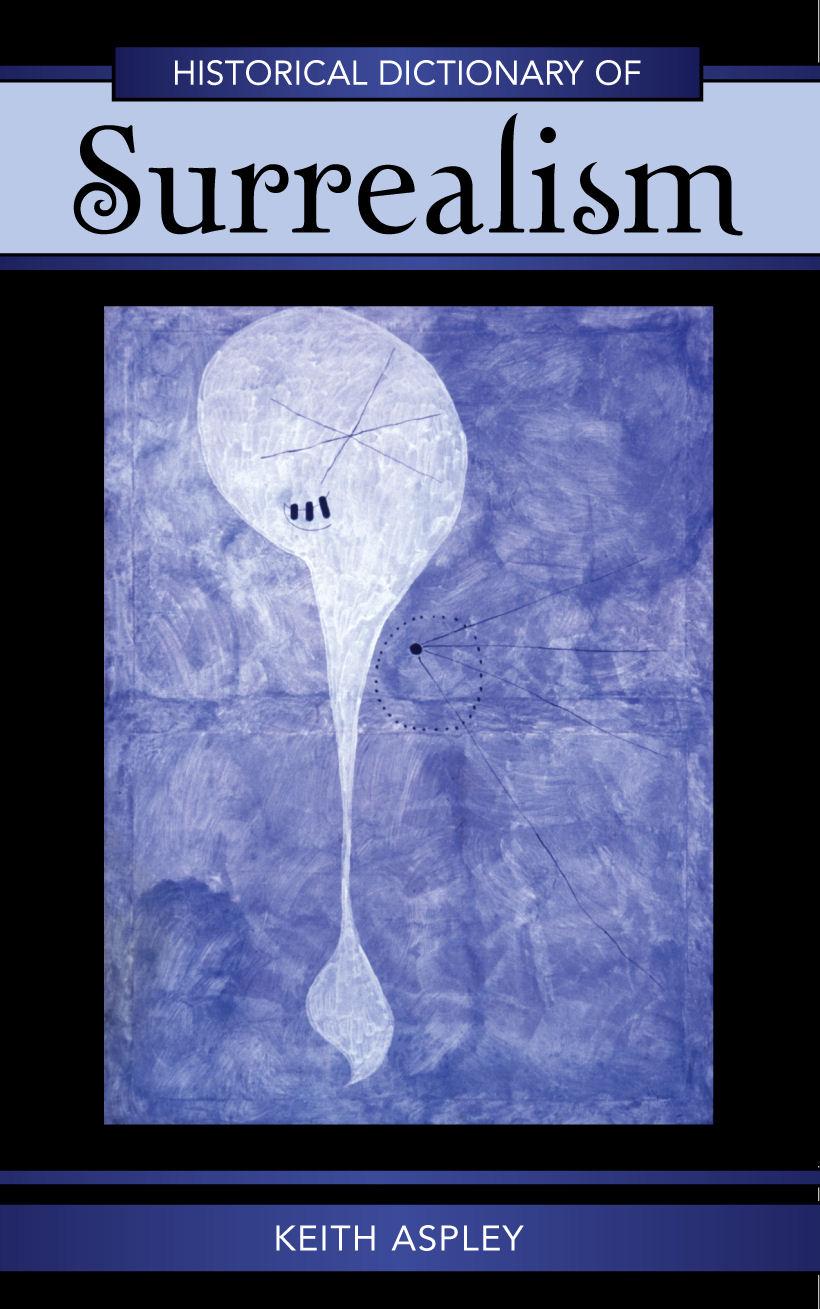
Surrealism was a broad movement, which attracted many adherents. It was organized and quite strictly disciplined, at least until the death of its leader, André Breton, in 1966. As a consequence, its membership was in a constant state of flux: persons were constantly being admitted and excluded, and often the latter continued to regard themselves as Surrealists. The wide-ranging nature of the Surrealist movement was spread over many countries and many different art forms, including painting, sculpture, cinema, photography, music, theater, and literature, most notably poetry.
The Historical Dictionary of Surrealism relates the history of this movement through a chronology, an introductory essay, a bibliography, and over 600 cross-referenced dictionary entries on persons, circles, and groups who participated in the movement; a global entry on some of the journals and reviews they produced; and a sampling of major works of art, cinema, and literature.
The Historical Dictionary of Surrealism relates the history of this movement through a chronology, an introductory essay, a bibliography, and over 600 cross-referenced dictionary entries on persons, circles, and groups who participated in the movement; a global entry on some of the journals and reviews they produced; and a sampling of major works of art, cinema, and literature.
Betala smidigt med kort, Klarna, Apple Pay eller Google Pay. Är du inte nöjd har du alltid 14 dagars ångerrätt. Läs mer i våra villkor. Har du några frågor, mejla oss på hello@memmo.org.
Memmo gör det enklare att plugga – var du än är i världen. Hos oss samlar du kursböcker och smarta studieverktyg på ett och samma ställe: sammanfattningar, quiz, poddar och flashcards. Och så Ted, din studiekompis som svarar på allt du undrar. Över 75 000 studenter pluggar redan här – byggt för att du ska lära dig snabbare och stressa mindre.