
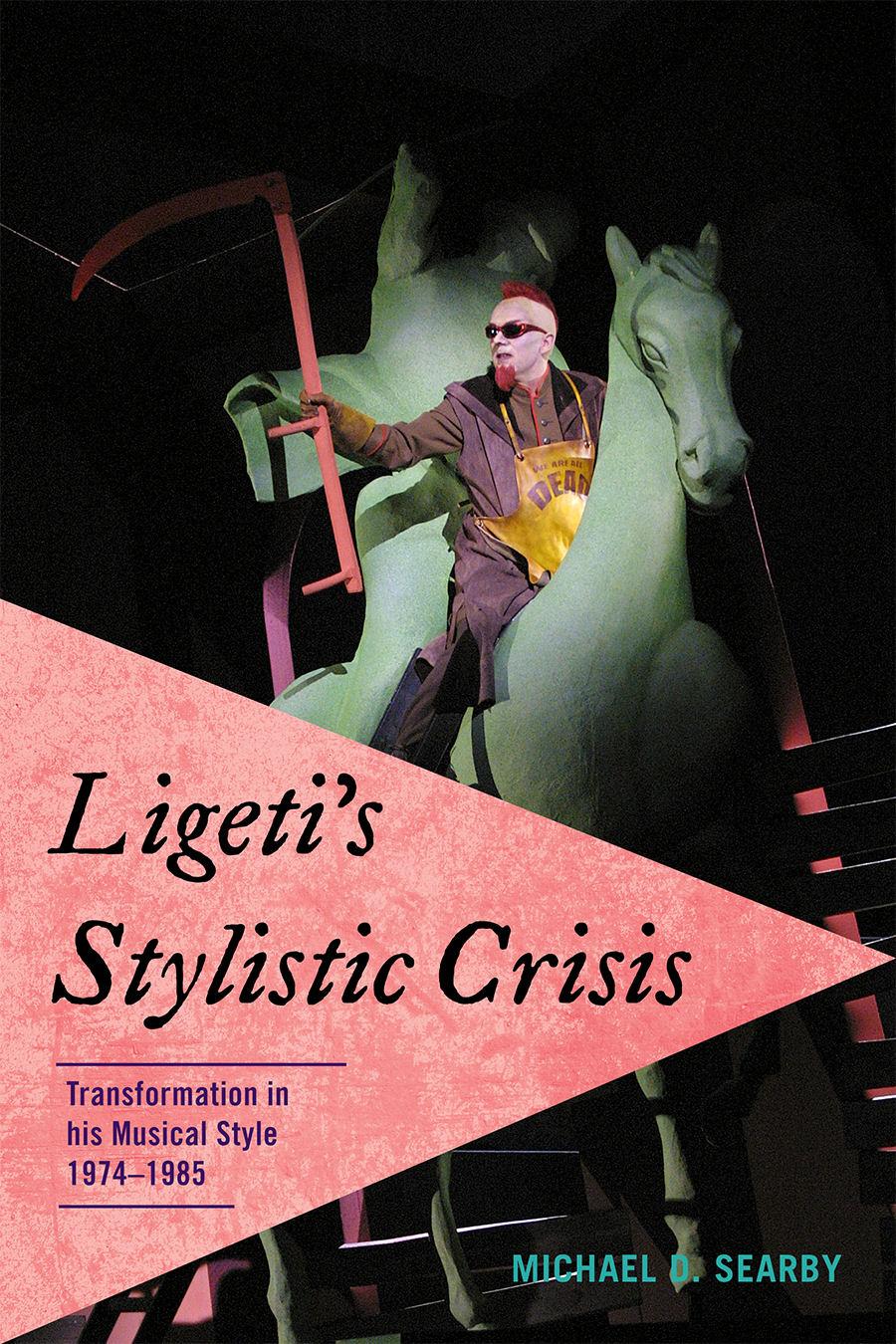
The Hungarian composer György Ligeti (1923-2006) was one of the most innovative and influential composers of the last 50 years. He was one of a number of Central and East European composers, including Witold Lutoslawski and Krzysztof Penderecki, who have created musical languages that combine elements of the modernism of the West with a more flexible attitude to compositional technique. Ligeti's Stylistic Crisis: Transformation in His Musical Style, 1974-1985 explores how Ligeti's compositional style completely transformed during and after the composition of his only opera Le Grand Macabre (1974-1977). Michael D. Searby examines Ligeti's music from 1974 to 1985 in detail, with a particular emphasis on Le Grand Macabre, analyzing the music and providing possible explanations for the stylistic and compositional changes, as well as considering the consequences for Ligeti's subsequent music.
In this first English-language book to focus on Ligeti's most significant work, Le Grand Macabre, Searby investigates Ligeti's music and its relationship to tonality, looking at his return to tradition and use of quotation and pastiche in the opera, and considering the transformation of Ligeti's style and technique after the opera. The Horn Trio (1982) with its romantic phrase structure is also analyzed to demonstrate the radical change in the composer's stylistic approach. Searby also examines Ligeti's relationship with postmodernism, addressing the modernist versus postmodernist polemic as it pertains to Ligeti's works. Many musical examples support the discussion, and an appendix summarizing the opera and photographs from a recent production, as well as an extensive bibliography, add to this valuable reference.
In this first English-language book to focus on Ligeti's most significant work, Le Grand Macabre, Searby investigates Ligeti's music and its relationship to tonality, looking at his return to tradition and use of quotation and pastiche in the opera, and considering the transformation of Ligeti's style and technique after the opera. The Horn Trio (1982) with its romantic phrase structure is also analyzed to demonstrate the radical change in the composer's stylistic approach. Searby also examines Ligeti's relationship with postmodernism, addressing the modernist versus postmodernist polemic as it pertains to Ligeti's works. Many musical examples support the discussion, and an appendix summarizing the opera and photographs from a recent production, as well as an extensive bibliography, add to this valuable reference.
Betala smidigt med kort, Klarna, Apple Pay eller Google Pay. Är du inte nöjd har du alltid 14 dagars ångerrätt. Läs mer i våra villkor. Har du några frågor, mejla oss på hello@memmo.org.
Memmo gör det enklare att plugga – var du än är i världen. Hos oss samlar du kursböcker och smarta studieverktyg på ett och samma ställe: sammanfattningar, quiz, poddar och flashcards. Och så Ted, din studiekompis som svarar på allt du undrar. Över 50 000 studenter pluggar redan här – byggt för att du ska lära dig snabbare och stressa mindre.