
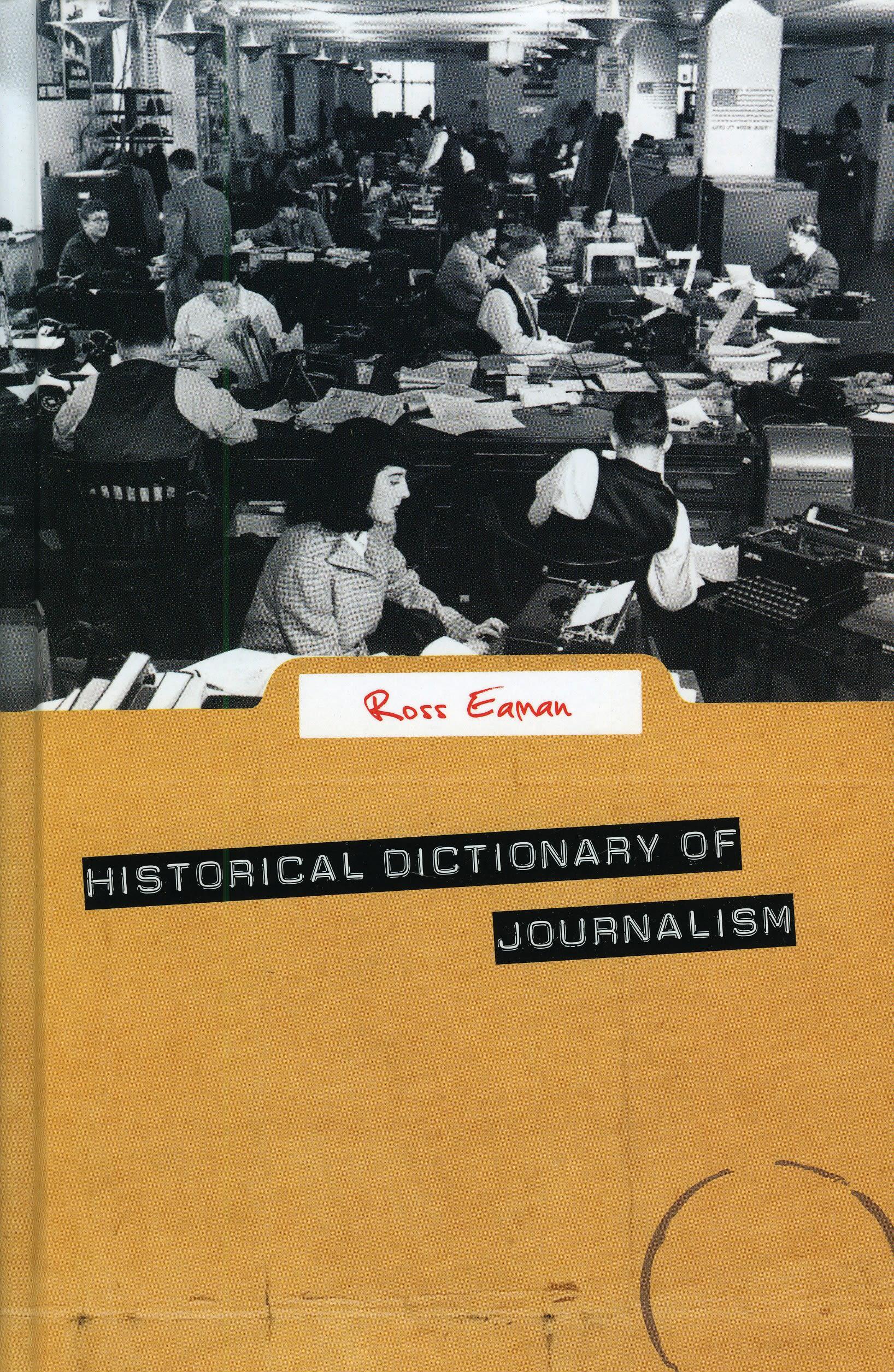
Journalism is the discipline of gathering, writing, and reporting news, and it includes the process of editing and presenting news articles. Journalism applies to various media, including but not limited to newspapers, magazines, radio, television, and the internet. The word 'journalist' started to become common in the early 18th century to designate a new kind of writer, about a century before 'journalism' made its appearance to describe what those writers produced. Though varying in form from one age and society to another, it gradually distinguished itself from other forms of writing through its focus on the present, its eye-witness perspective, and its reliance on everyday language.
The Historical Dictionary of Journalism relates how journalism has evolved over the centuries. This is done through a chronology, an introductory essay, a bibliography, and hundreds of cross-referenced dictionary entries on the different styles of journalism, the different types of media, and important writers and editors.
The Historical Dictionary of Journalism relates how journalism has evolved over the centuries. This is done through a chronology, an introductory essay, a bibliography, and hundreds of cross-referenced dictionary entries on the different styles of journalism, the different types of media, and important writers and editors.
Betala smidigt med kort, Klarna, Apple Pay eller Google Pay. Är du inte nöjd har du alltid 14 dagars ångerrätt. Läs mer i våra villkor. Har du några frågor, mejla oss på hello@memmo.org.
Memmo gör det enklare att plugga – var du än är i världen. Hos oss samlar du kursböcker och smarta studieverktyg på ett och samma ställe: sammanfattningar, quiz, poddar och flashcards. Och så Ted, din studiekompis som svarar på allt du undrar. Över 50 000 studenter pluggar redan här – byggt för att du ska lära dig snabbare och stressa mindre.