
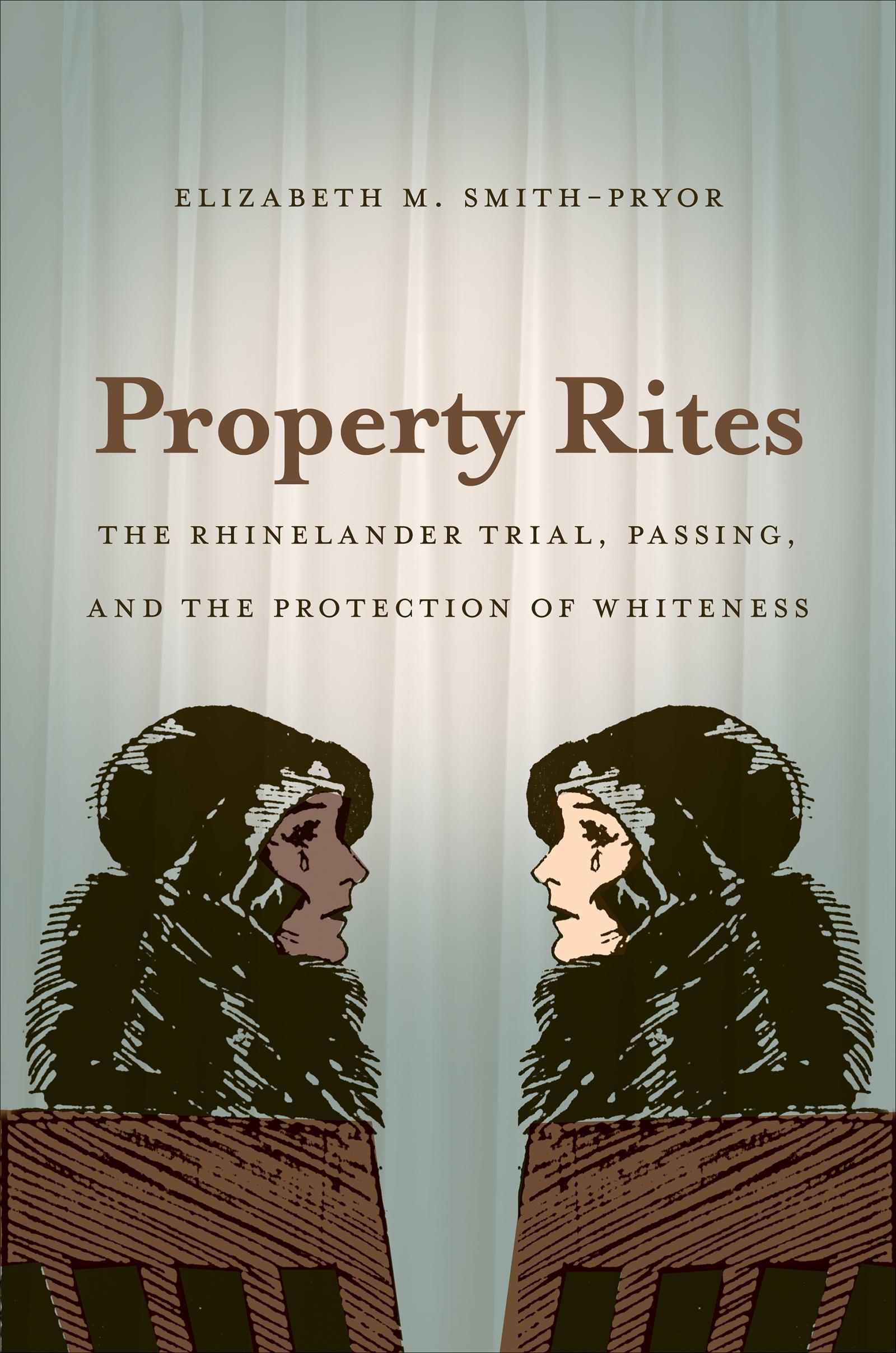
In 1925 Leonard Rhinelander, the youngest son of a wealthy New York society family, sued to end his marriage to Alice Jones, a former domestic servant and the daughter of a “colored” cabman. After being married only one month, Rhinelander pressed for the dissolution of his marriage on the grounds that his wife had lied to him about her racial background. The subsequent marital annulment trial became a massive public spectacle, not only in New York but across the nation — despite the fact that the state had never outlawed interracial marriage.
Elizabeth Smith-Pryor makes extensive use of trial transcripts, in addition to contemporary newspaper coverage and archival sources, to explore why Leonard Rhinelander was allowed his day in court. She moves fluidly between legal history, a day-by-day narrative of the trial itself, and analyses of the trial’s place in the culture of the 1920s North to show how notions of race, property, and the law were — and are — inextricably intertwined.
Elizabeth Smith-Pryor makes extensive use of trial transcripts, in addition to contemporary newspaper coverage and archival sources, to explore why Leonard Rhinelander was allowed his day in court. She moves fluidly between legal history, a day-by-day narrative of the trial itself, and analyses of the trial’s place in the culture of the 1920s North to show how notions of race, property, and the law were — and are — inextricably intertwined.
Betala smidigt med kort, Klarna, Apple Pay eller Google Pay. Är du inte nöjd har du alltid 14 dagars ångerrätt. Läs mer i våra villkor. Har du några frågor, mejla oss på hello@memmo.org.
Memmo gör det enklare att plugga – var du än är i världen. Hos oss samlar du kursböcker och smarta studieverktyg på ett och samma ställe: sammanfattningar, quiz, poddar och flashcards. Och så Ted, din studiekompis som svarar på allt du undrar. Över 50 000 studenter pluggar redan här – byggt för att du ska lära dig snabbare och stressa mindre.
Du kanske också gillar
Köp boken0