
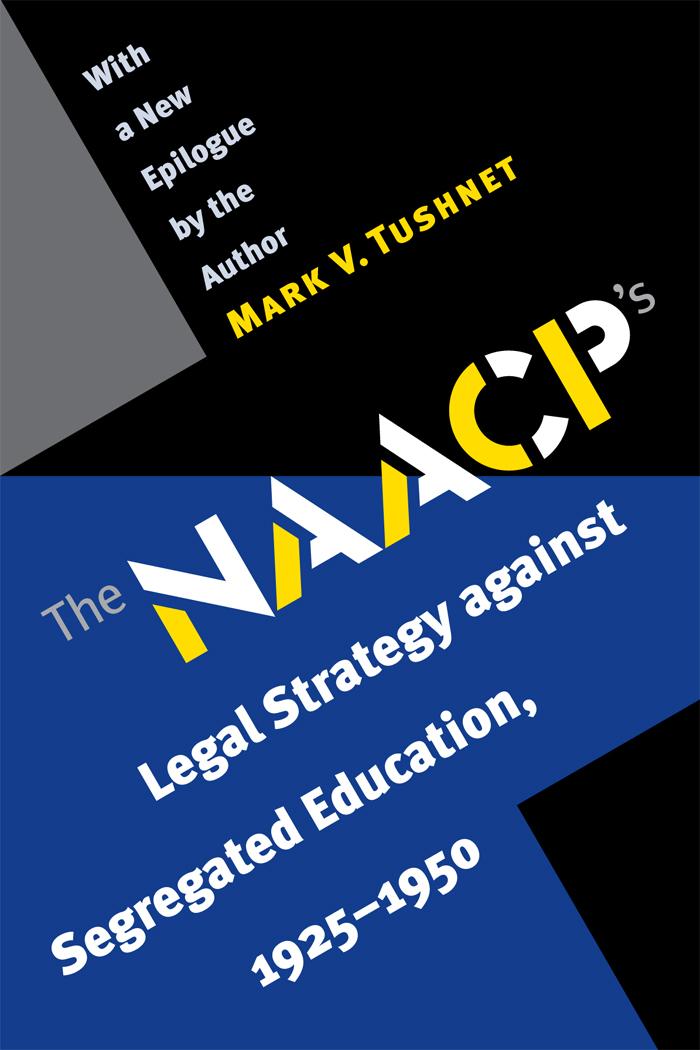
The NAACP’s fight against segregated education — the first public interest litigation campaign — culminated in the 1954 Brown decision. While touching on the general social, political, and economic climate in which the NAACP acted, Mark V. Tushnet emphasizes the internal workings of the organization as revealed in its own documents. He argues that the dedication and the political and legal skills of staff members such as Walter White, Charles Hamilton Houston, and Thurgood Marshall were responsible for the ultimate success of public interest law. This edition contains a new epilogue by the author that addresses general questions of litigation strategy, the persistent question of whether the Brown decision mattered, and the legacy of Brown through the Burger and Rehnquist courts.
Betala smidigt med kort, Klarna, Apple Pay eller Google Pay. Är du inte nöjd har du alltid 14 dagars ångerrätt. Läs mer i våra villkor. Har du några frågor, mejla oss på hello@memmo.org.
Memmo gör det enklare att plugga – var du än är i världen. Hos oss samlar du kursböcker och smarta studieverktyg på ett och samma ställe: sammanfattningar, quiz, poddar och flashcards. Och så Ted, din studiekompis som svarar på allt du undrar. Över 50 000 studenter pluggar redan här – byggt för att du ska lära dig snabbare och stressa mindre.